Fabric Architecture
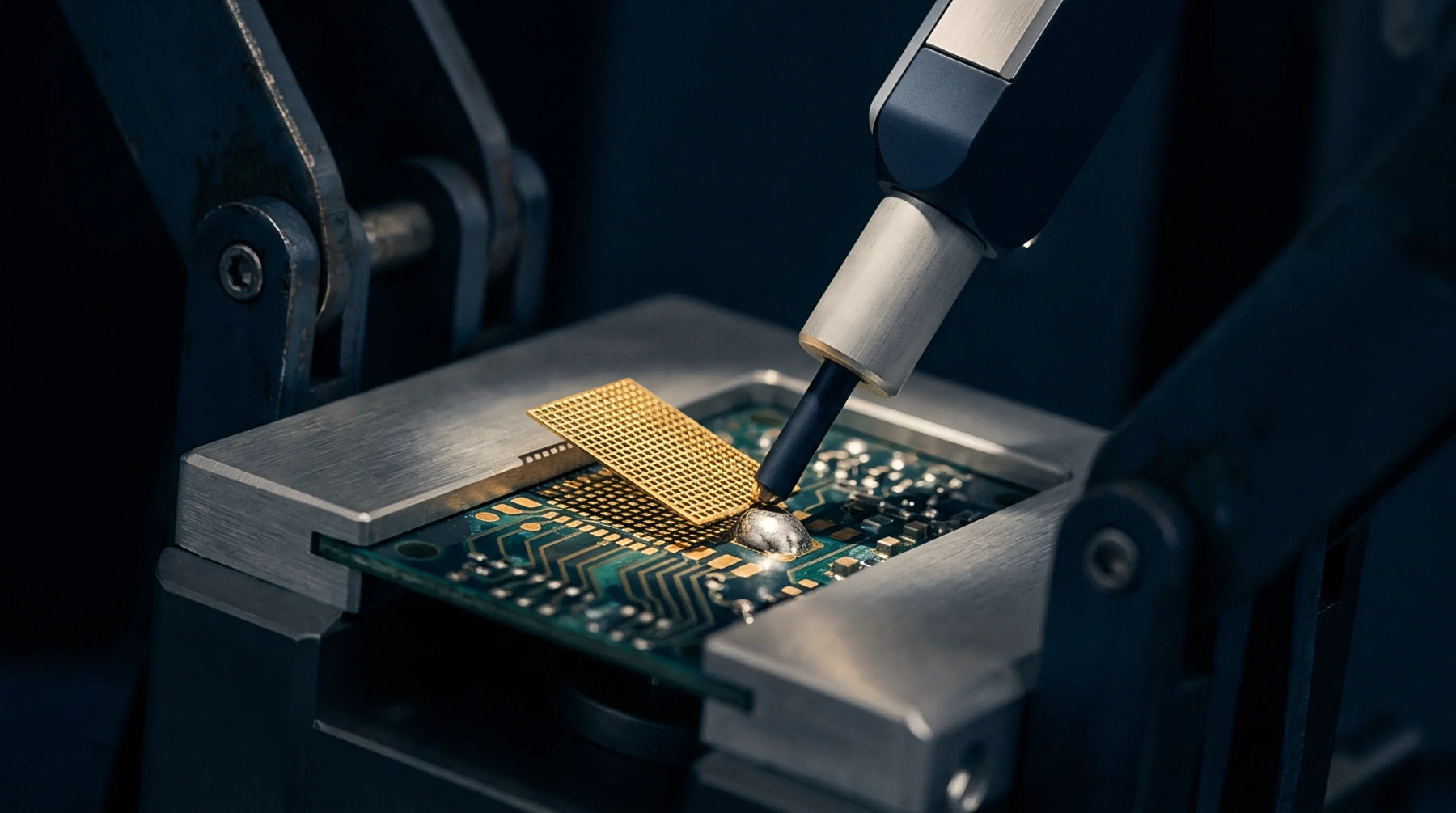
Reinforced fiberglass substrates fabricated for multi-gigabit computing backplanes utilize mechanically flattened yarn bundles to create a uniform dielectric medium. In high-speed printed circuits, style 1078 spread glass features glass yarns whose constituent filaments are spread flat by acoustic, pneumatic, or mechanical processes prior to cloth finishing. Spreading reduces the thickness of individual yarn bundles while eliminating large resin-filled gaps between adjacent yarn intersections.
Flat fiber bundles produce a thinner, more continuous glass cloth distribution across the dielectric layer. Glass cloth manufactured with standard circular yarns exhibits wide gaps where pure resin pools, creating localized variations in dielectric constant. By flattening the yarn bundles, the spread fabric layout establishes a continuous glass presence across the entire panel area.
Weave Homogeneity
Conventional glass cloths present alternating regions of dense glass filaments and low-permittivity resin cavities. Incorporating style 1078 spread glass minimizes spatial differences in dielectric constant across the horizontal plane of the core material. Standard E-glass carries a dielectric constant near six point six, while surrounding hydrocarbon or epoxy resin systems range from three point zero to three point eight.
Signal traces routed at arbitrary angles across spread glass encounter minimal dielectric variation between parallel conductor runs. Differential signal pairs running over uniform fiber distributions maintain consistent propagation velocities between complementary legs. The nominal fabric thickness of one point seven mils allows compact dielectric separations in dense multi-layer hybrid stackups.
Controlled resin wet-out during prepreg manufacturing prevents air pocket entrapment within the flattened filament bundles.
Electrical Performance
High-speed digital links operating beyond twenty-five gigabits per second suffer significant phase distortion when differential signals encounter unequal propagation delays. Applying style 1078 spread glass restricts differential skew to minimal levels, preserving signal eye opening at the receiver interface without requiring angled trace routing. Angled trace layouts consume significant board routing space, whereas spread glass permits straight, orthogonal trace routing across orthogonal board axes.
Conductor loss remains predictable because characteristic impedance stays within specified targets along the entire run length. Fiber bundle uniformity reduces high-frequency phase jitter in synchronous clock distribution networks. Transmission line pairs protected by spread glass fabrics maintain consistent eye height and jitter metrics across long server backplanes.