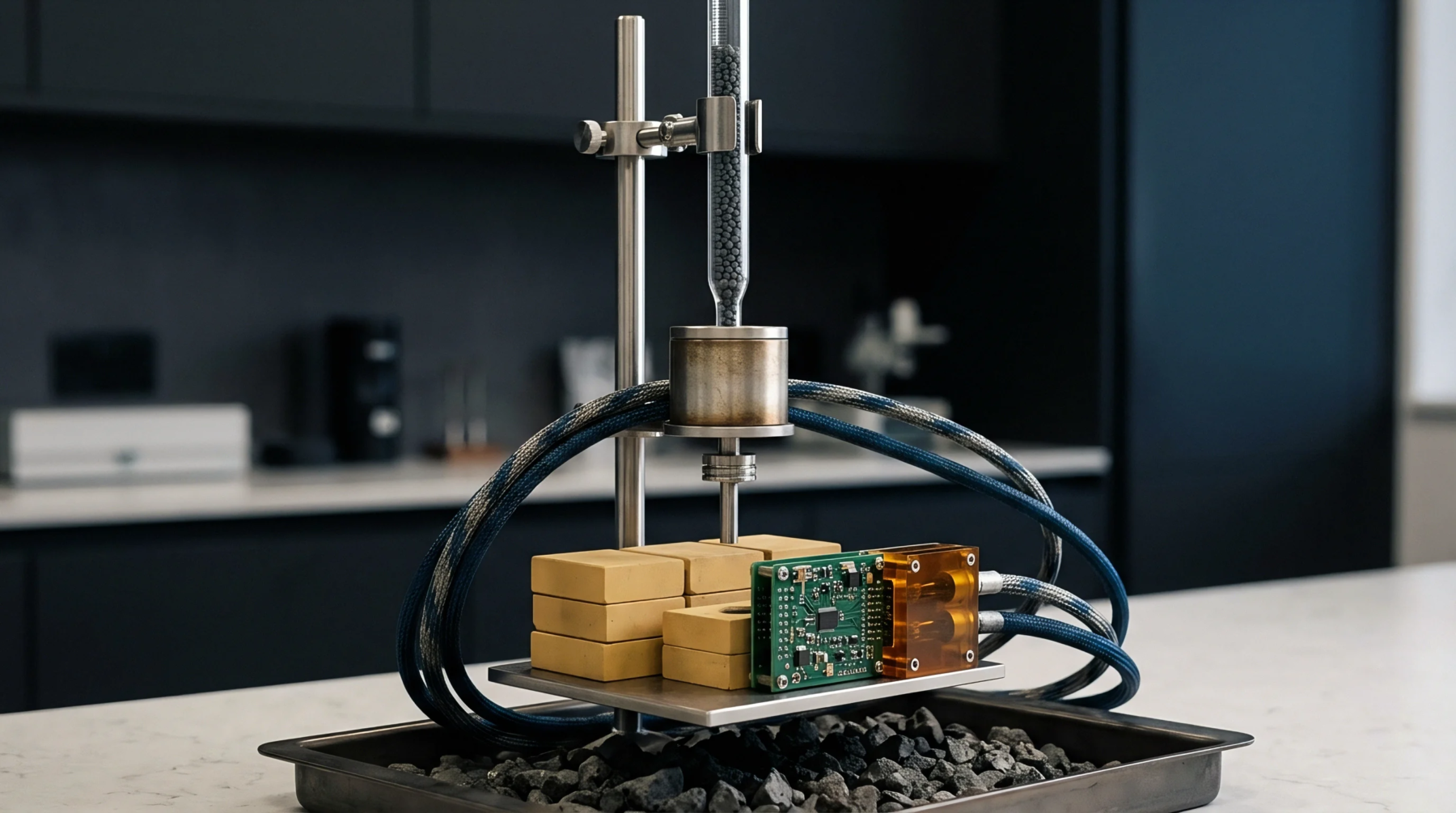
Angular Deviation Parameter
Geometric inclination of a printed circuit substrate relative to a true horizontal datum establishes the coplanarity baseline across an assembly fixture. In printed circuit board fabrication and automated surface mount manufacturing, substrate edge tilt defines the mechanical angular deviation measured at the physical perimeter of a panel or component carrier resting on conveyance rails. The parameter measures angular slope created by mechanical hold-down clamp displacement, uneven conveyor support pins, or asymmetric residual strain inside laminated copper-clad dielectric cores.
Workmanship limits in IPC-A-610 govern how much tilt can occur before assembly alignment fails. The measurement does not apply to flexible circuits unsupported by rigid carriers.
Mechanical Root Causes
Unequal mechanical clamping force along conveyor transport systems tilts the substrate relative to the machine carriage datum. Board handling edges riding over worn drive belts create asymmetrical vertical elevation across parallel conveyer rails. During circuit board fabrication, asymmetric copper balancing induces bow along the panel edge that lifts outer corners off processing pallets.
Thermal expansion mismatch across reflow carriers also elevates board perimeters when tooling clearance holes bind against pallet pins. Stamping, routing or edge profiling variations introduce slight bevels on outer board perimeters, exacerbating mechanical tilt when seated against reference stops.
Assembly Defect Propagation
Angular substrate misalignment disturbs multiple automated assembly stages across the production line. Stencil printing paste deposition distorts when substrate edge tilt causes uneven stencil-to-board contact gaps, driving solder paste smearing on the elevated side and insufficient paste deposit volume on the depressed side. Surface mount placement machines miscalculate component landing coordinates when optical height sensors register false z-axis positions across tilted perimeters.
Component leads on tilted edges strike the board prematurely, shifting small passives off pad footprints. Reflow soldering of tilted substrates induces molten solder migration down gravitational gradients, generating bridging shorts along low-lying edges and open non-wet joints on raised edges. Automated optical inspection cameras fail to focus uniformly across tilted panels, creating high rates of false defect flags.
Substrate edge tilt must be controlled through mechanical carrier adjustments to preserve high-yield surface mount operations.