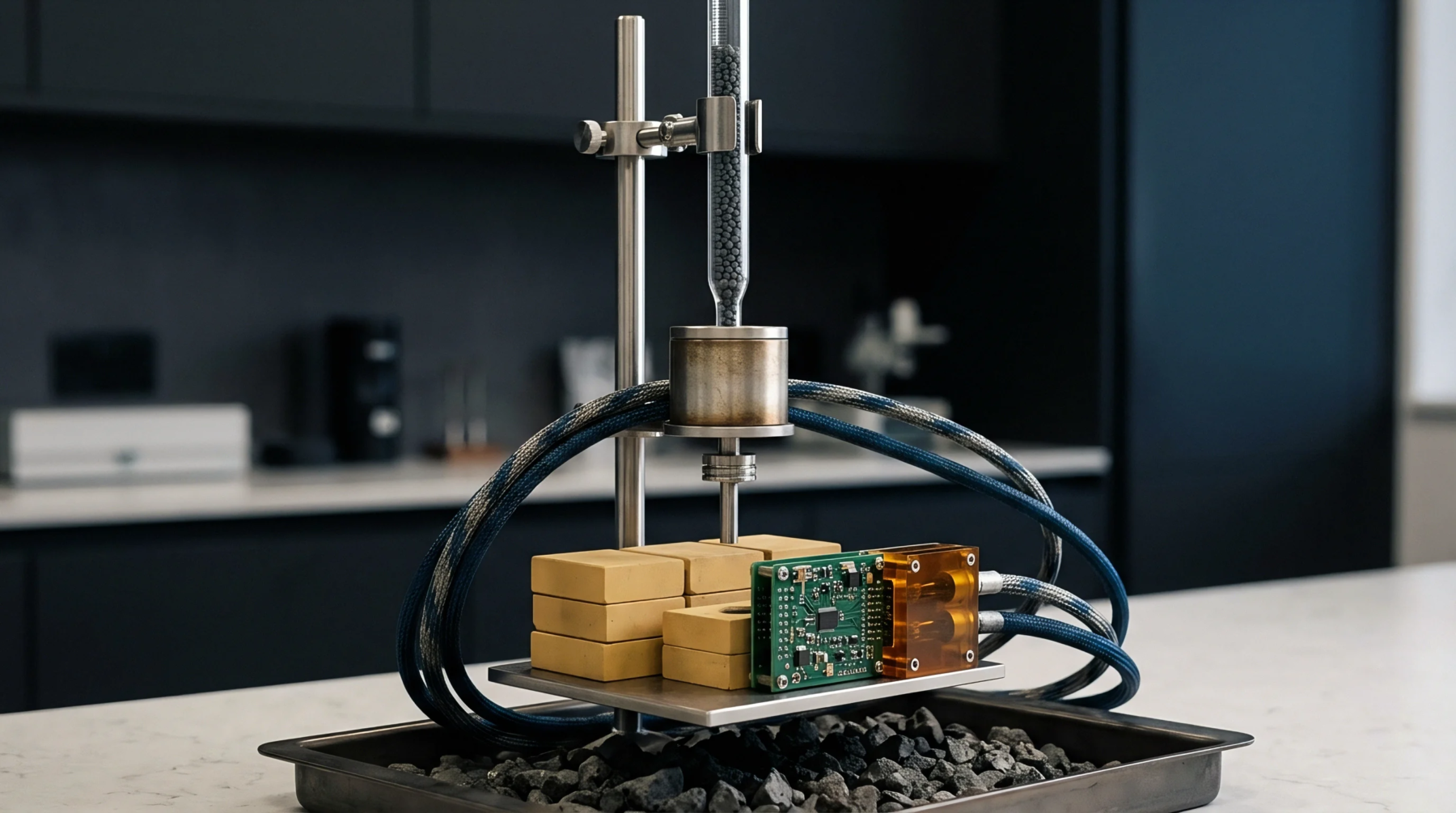
Topographical Elevation Variance
Local vertical distance separating the top surface of a printed circuit board or mounted component from an established reference plane defines topographical variance across an assembly. In electronic manufacturing inspection and quality control, surface height displacement quantifies out-of-plane deviations caused by board warpage, uneven copper plating, solder paste deposit variation, or component canting. Measurements are expressed in micrometers relative to the bare substrate plane or adjacent reference pads using non-contact optical metrology.
Acceptance standards such as IPC-A-610 establish permissible displacement thresholds for assembled devices to ensure reliable electrical connection. The term stops applying to bulk lateral positioning errors along the x and y axes.
Measurement and Detection Methods
Automated three-dimensional metrology systems use phase-shift moire interferometry and structured laser light triangulation to map local elevation points across the assembly. Laser sensors project structured light fringes onto the circuit assembly while digital camera sensors measure fringe deformation to calculate absolute z-axis coordinates. Deviations register when solder paste volumes collapse, component terminations rest unevenly on pads, or lamination pressures deform the core dielectric.
Height profiling systems distinguish intentional stepped features, such as cavities or embedded components, from unwanted mechanical distortions by comparing surface coordinate maps with nominal computer-aided design models.
Assembly Failure Modes
Excessive surface height displacement during board fabrication impairs high-density interconnect assembly. Solder paste printing yields irregular volumes when height displacement prevents complete contact between the circuit board surface and the stencil aperture foil. Component placement heads miscalculate release height over displaced pads, either crushing delicate ceramic components or dropping them above the flux layer.
During reflow soldering, severe height displacement lifts component terminations above molten solder, generating head-in-pillow joints or complete non-wet opens. In conformal coating applications, elevation extremes create uneven resin thicknesses that leave raised corners undercoated and vulnerable to environmental corrosion. Topographical height verification protects automated assembly equipment from nozzle impacts while ensuring uniform solder interconnect volume.