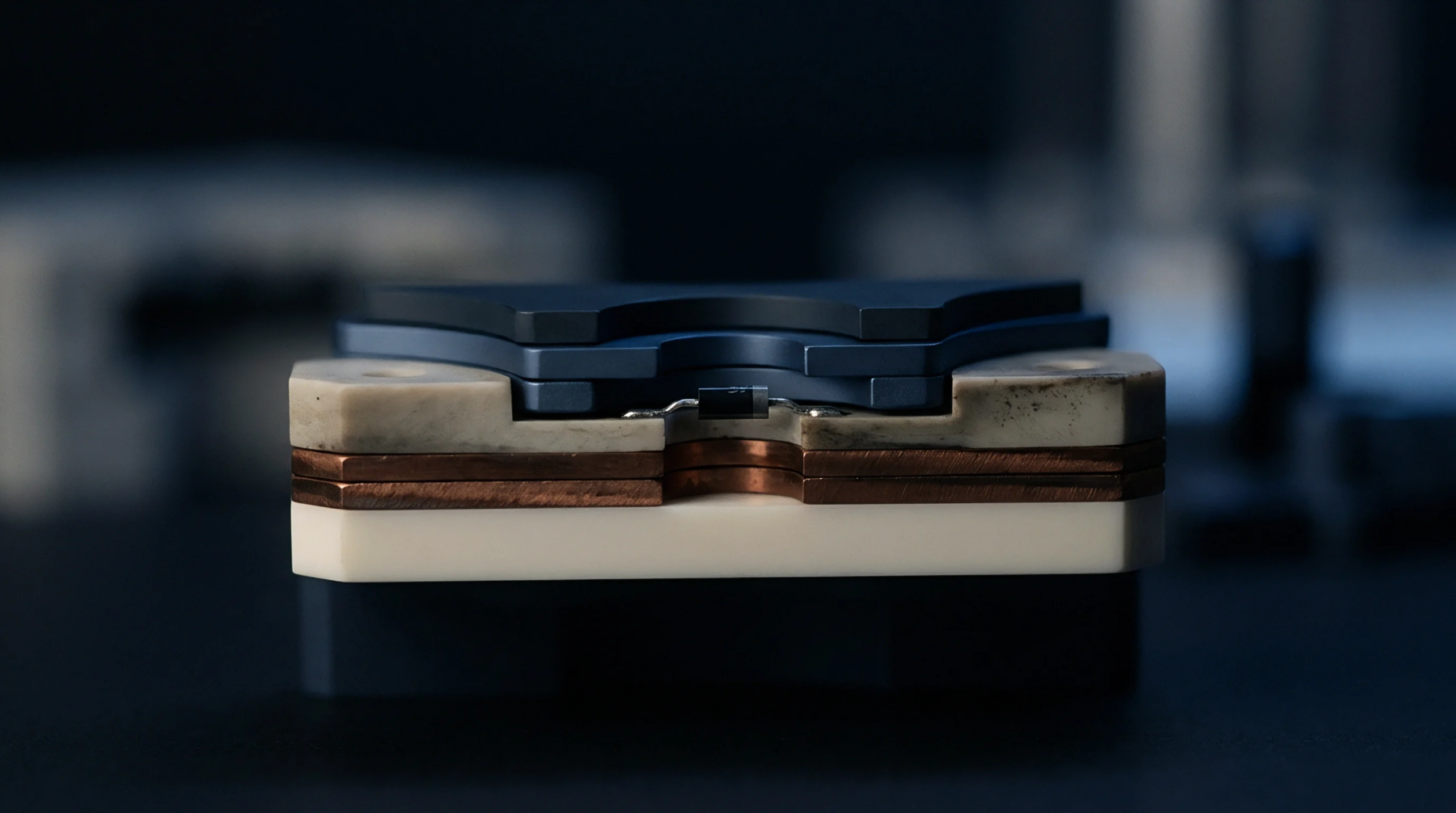
Structural Equilibrium
Interconnect design methodologies select materials with compatible thermal expansion coefficients to minimize thermomechanical stress at material interfaces. Structural alignment achieved through thermal expansion matching reduces shear strain in solder joints connecting ceramic components to organic circuit boards. Mismatch between component bodies and laminate substrates drives fatigue failure during operational thermal cycling.
Matching thermal response characteristics protects fragile interconnections from low-cycle fatigue damage.
Stress Mitigation
Thermomechanical stress concentration at solder joint boundaries scales directly with the difference in thermal expansion coefficients between joined materials. Implementation of thermal expansion matching involves selecting specialized laminate resins or metal constraining cores to bring substrate expansion close to component values. Ceramic ball grid arrays with an expansion coefficient of six parts per million per degree Celsius induce heavy solder shear strain when mounted on standard FR4 laminates expanding at seventeen parts per million per degree Celsius.
Incorporating constraining metal cores or high-performance resin systems reduces substrate expansion toward six parts per million per degree Celsius. Lower thermal mismatch mitigates solder fatigue, extending operational lifespan in high-reliability electronics.
Interface Displacement
Thermal mismatch between attached structures forces solder connections to undergo plastic deformation during temperature swings. Disregarding thermal expansion matching accelerates microcrack initiation and propagation across solder joint interfaces. Controlled thermal expansion preserves electrical continuity across severe operating environments.