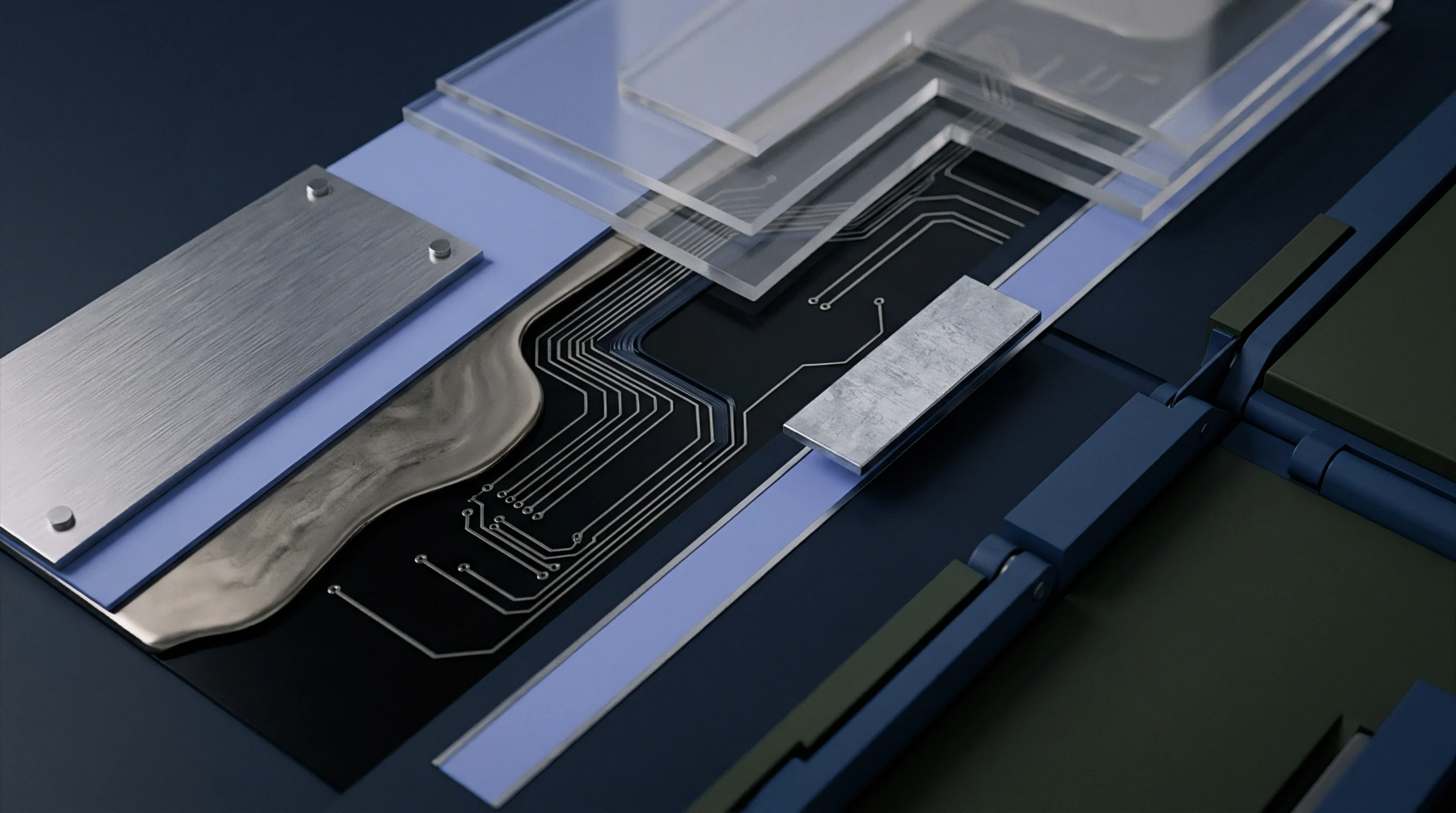
Temperature Divergence
Isothermal baseline assumptions fail when high-power electronic components create sharp temperature differences across a single circuit board layout. Thermal analysis models evaluate thermal gradient strain by measuring temperature drops between heat-generating silicon packages and cooler board regions. Localized heat dissipation drives spatial temperature variations across the substrate during power cycling.
Uneven temperature fields induce spatially varying expansion rates that flex the substrate and stress solder connections.
Transient Distortion
Dynamic power cycling generates transient thermal slopes across electronic substrates, producing severe localized mechanical stress. Power components rapidly heat adjacent board areas while distant substrate regions remain near ambient temperature. Spatial thermal slopes force localized substrate expansion against cooler, unexpanded laminate material, generating bending moments and out-of-plane distortion.
Perimeter solder joints on large power packages experience combined tension and shear forces due to localized board flexing. Rapid power transients worsen mechanical deformation because thermal diffusion rates in organic laminates are relatively slow. Dissimilar heating rates between top and bottom board layers further amplify bowing and warpage during operational start-up cycles.
Internal copper plane distribution influences heat spreading, altering local thermal slopes and resulting strain patterns.
Operational Boundary
Maximum allowable spatial temperature differences across high-density circuit board layouts are typically constrained to fifteen degrees Celsius. Exceeding spatial slope limits drastically accelerates thermomechanical fatigue in surface mount interconnects.