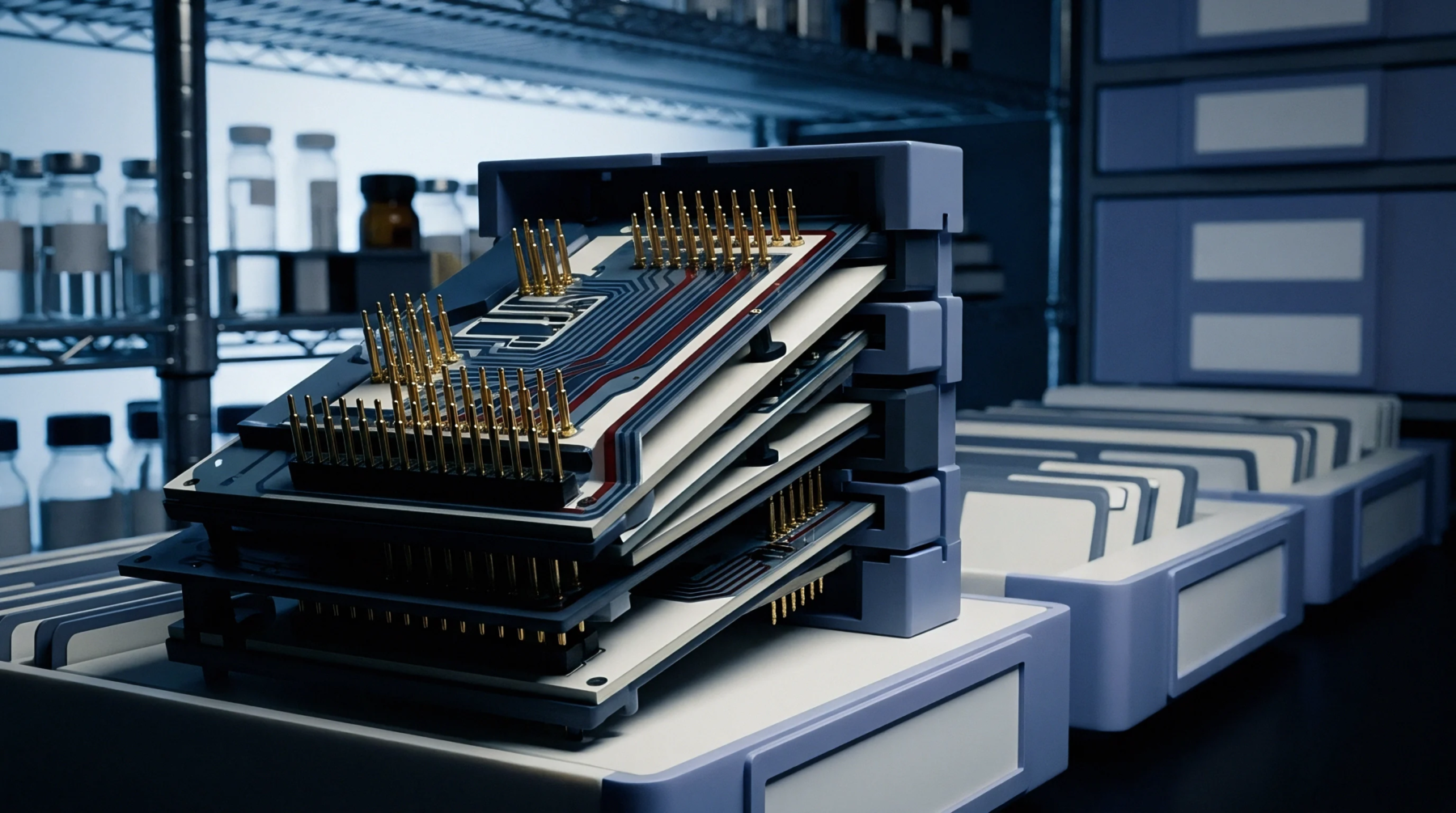
Thermal Bonding
Industrial equipment applies simultaneous heat and pressure within a controlled atmospheric chamber to eliminate voids in multilayer composite materials. A vacuum hot press facilitates the consolidation of resin-impregnated substrates by removing entrapped air before the polymerization cycle completes. High pressure plates drive the viscosity of the matrix material into weave gaps while the evacuation of the chamber prevents the formation of gaseous inclusions.
Accurate regulation of both temperature ramp and dwell time prevents delamination or thermal degradation of the laminate structure. Consistent application of clamping force across the entire platen area ensures uniform thickness throughout the final panel dimensions.
Atmospheric Control
Precise removal of oxygen and moisture from the workspace protects reactive metallic foils and sensitive dielectric polymers from oxidation during the curing sequence. The vacuum hot press maintains a negative pressure environment that pulls volatile organic compounds away from the heat zones to prevent surface contamination. Gas-tight seals around the primary chamber allow the system to reach deep vacuum levels necessary for high-density interconnect applications.
Integrated sensors monitor internal pressures to confirm that air displacement reaches the target threshold prior to the heating phase. Automated cycles hold the vacuum level constant until the resin flow transitions into a solid state.
Process Utility
Production facilities rely on this machine to achieve optimal adhesive contact in high-reliability circuit board manufacturing where interlayer bonding strength dictates overall structural integrity. The vacuum hot press effectively minimizes air pockets that contribute to dielectric breakdown or thermal expansion failures in finished electronic modules. Operating parameters depend on the specific material glass transition temperature and the desired density of the final composite stack.
Variations in cooling rates within the press dictate the internal stress profile of the bonded assembly. Mechanical pressure distributed through rigid platens offers the most reliable method for ensuring repeatable contact between disparate chemical layers under heat.