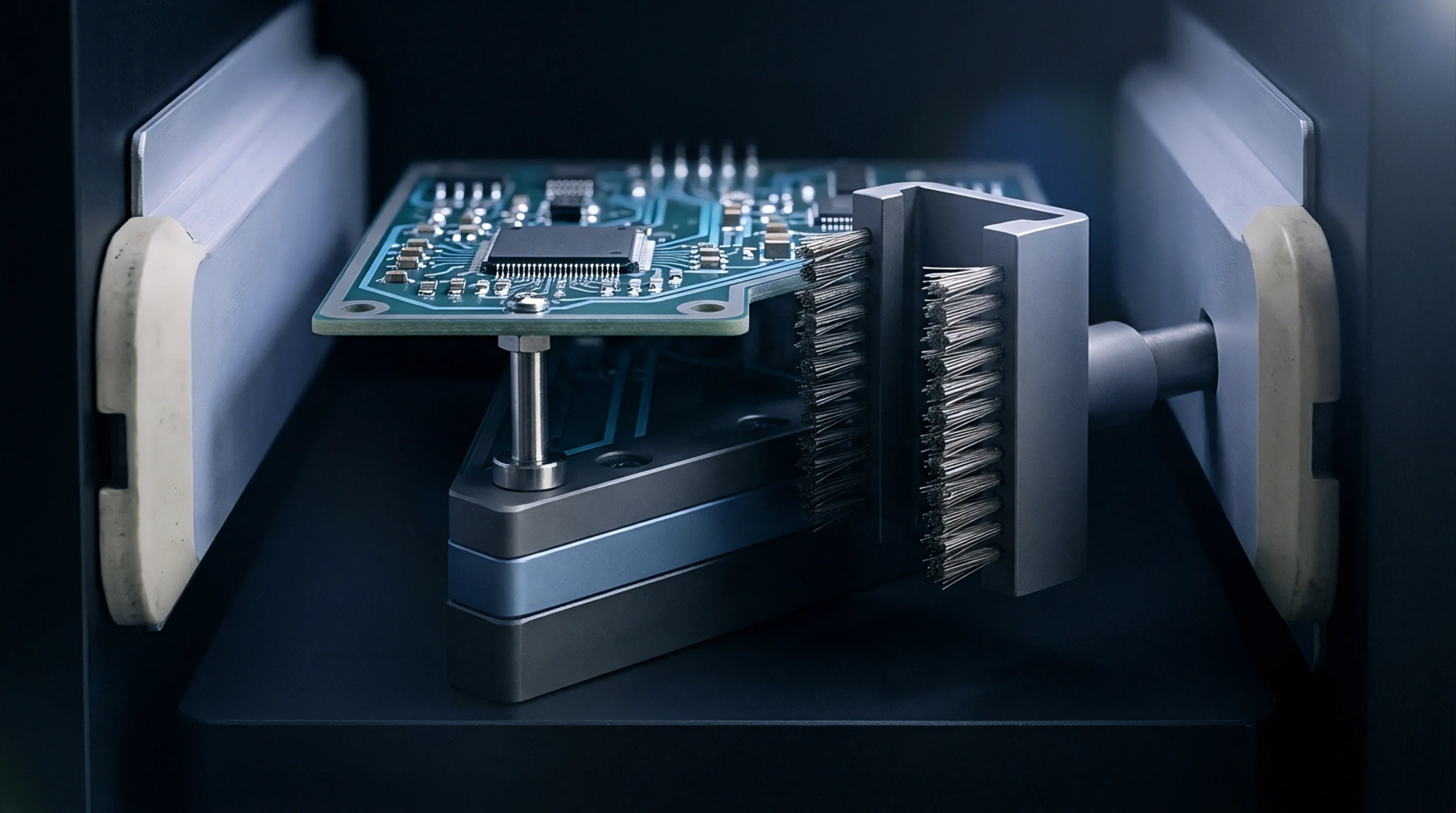
Alignment Accuracy
Optical recognition systems locate specific features on a printed circuit board to establish a precise coordinate frame for automated assembly equipment before the placement of components. Vision registration creates this spatial reference by comparing detected fiducial marks against expected positions defined in the design data. This process accounts for physical board expansion or shifting during the reflow heating cycle.
Correct execution allows the mounting head to adjust its path for variations in panel geometry without human intervention. Calibration of the camera focal plane governs the fidelity of these measurements. Failure to achieve proper alignment results in tombstoning or bridging during the solder connection phase.
Coordinate Tolerance
Cameras scan predefined points to determine the exact location of the substrate relative to the machine bed. Software algorithms translate raw pixel data into a numerical offset to calculate the delta between the actual board edge and the programmed anchor. High speed processing units execute these calculations within milliseconds to ensure the placement cycle maintains maximum throughput.
When the system identifies a fiducial mark that deviates beyond set margins, the software commands an automatic recalibration of the suction nozzle path. Light intensity adjustments improve contrast on complex substrates or multilayer boards. Precise detection ensures that pads align perfectly with lead geometries on fine pitch packages.
Verification Protocol
Secondary inspection routines check the integrity of the image processing results after the alignment phase finishes. Machine operators review the data logs to confirm that the vision registration parameters remain within defined operational limits throughout the entire production run. These checks prevent the propagation of errors when the board fabrication process introduces minor dimensional inconsistencies.
Variations in surface reflectivity or substrate color require specific lighting wavelengths to maintain signal strength during the scanning sequence. High intensity sources produce sharper boundaries for small fiducial patterns. Automated validation confirms the software applies the necessary compensation vectors before the machine commits to the final component placement.
Accurate registration establishes the foundation for consistent solder joint formation across large panel arrays.