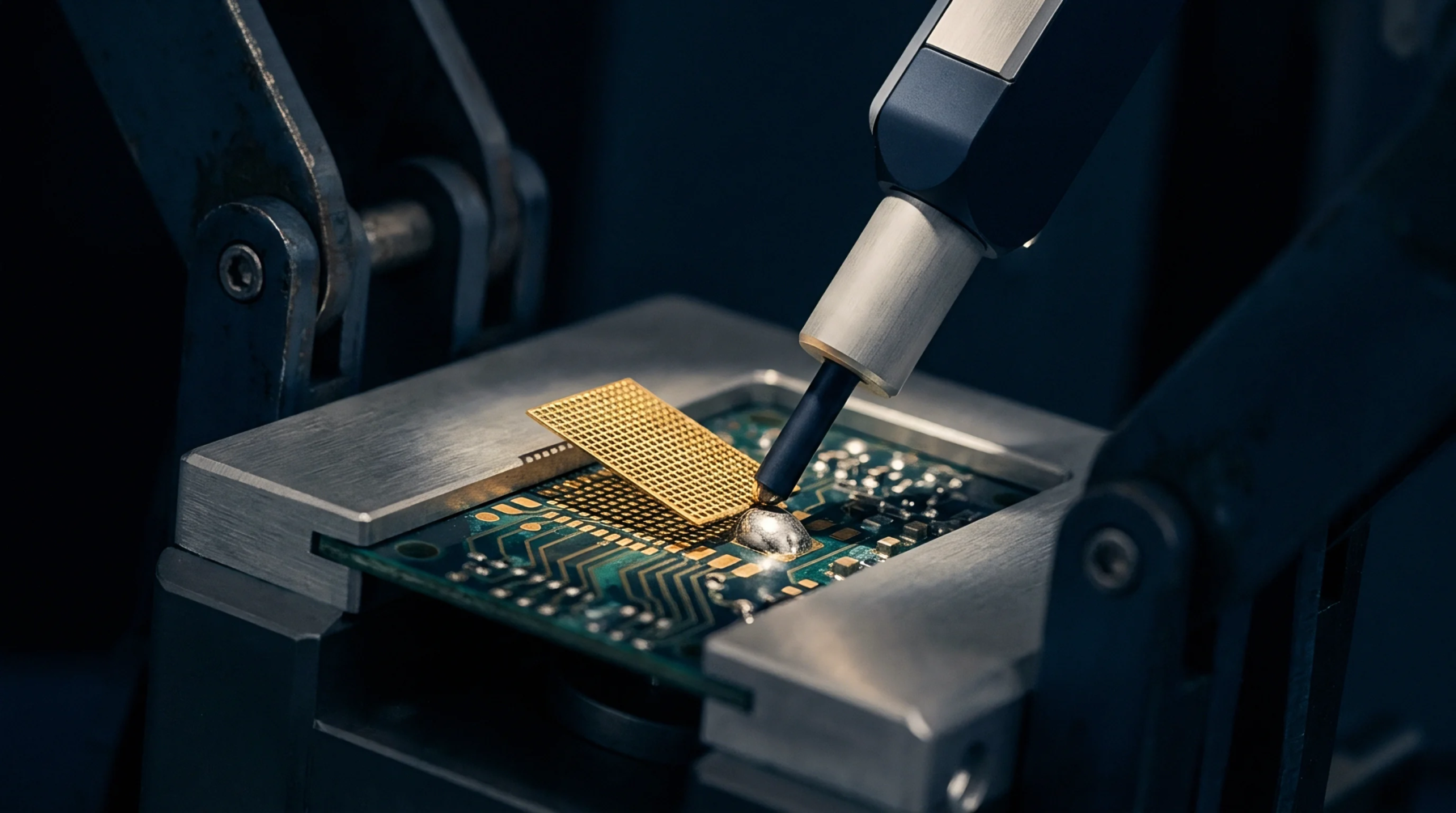
Aperture Partition
Segmented stencil configuration describes a deposition tooling geometry that divides a large continuous solder pad opening into an array of smaller distinct apertures separated by narrow metal webbing. Surface mount technology engineers specify a window pane layout on stencils when depositing solder paste onto extensive thermal ground planes beneath leadless power packages. The segmented pattern stops applying once pad dimensions shrink below normal discrete passive component sizes where unsegmented single apertures function reliably.
Outgassing Management
Continuous paste deposits beneath large component packages trap volatilizing flux solvents as reflow heating boils off paste chemistry. Applying a window pane aperture pattern creates empty pathways between solder bricks that allow boiling flux vapors to escape freely before liquid solder coalesces. Unvented solder deposits generate enormous gas voids and cause component floating across printed circuit pads.
Reducing paste coverage to fifty or seventy percent of the total pad area keeps joint thickness uniform while preventing component tilt. Webbing bridges also reinforce stencil stability, preventing squeegee blades from scooping paste out of broad aperture pockets.
Fluoroscopic Verification
Inline automated X-ray inspection evaluates void percentages within large solder joints beneath quad flat no-lead components and power packages. Workmanship standards mandate assembly rejection when inadequate window pane stencil printing produces cumulative voiding exceeding twenty-five percent of the thermal interface area. Automated solder paste inspection verifies that individual paste deposits maintain uniform height and volume across segmented aperture arrays.