Intermetallic Formation
The primary reaction product formed at the interface between molten solder and copper substrates during thermal processing is Cu6Sn5. Molten tin attacks base copper during wave soldering and surface mount reflow, dissolving the metal into the liquid phase until saturation triggers precipitation. Thermal aging continues this growth mechanism within solid state regimes, thickening the compound layer at the joint boundary.
Voids nucleate when rapid diffusion creates Kirkendall imbalances near the interface during high temperature exposure.
Mechanical Vulnerability
Brittle fracture behavior characterizes thick intermetallic zones subjected to mechanical shock or vibration loading during field operation. Shear strength degrades proportionally as the crystalline grains coarsen beyond acceptable dimensional limits during extended thermal soak cycles. Microcracks propagate easily through the continuous planar morphology of the compound layer because plastic deformation remains severely restricted within the phase boundaries.
Thermal expansion mismatches between the copper substrate and the surrounding bulk solder alloy generate continuous cyclic stresses across the rigid plane.
Process Control
Reflow profile optimization limits excessive growth by restricting the time molten solder contacts bare copper surfaces during assembly operations. Barrier plating deposition prevents direct dissolution of the base metal through nickel underlayers placed beneath the wettable finish. Shear testing verifies bond integrity after thermal stress conditioning to confirm that intermetallic thickness stays within acceptable manufacturing tolerances.
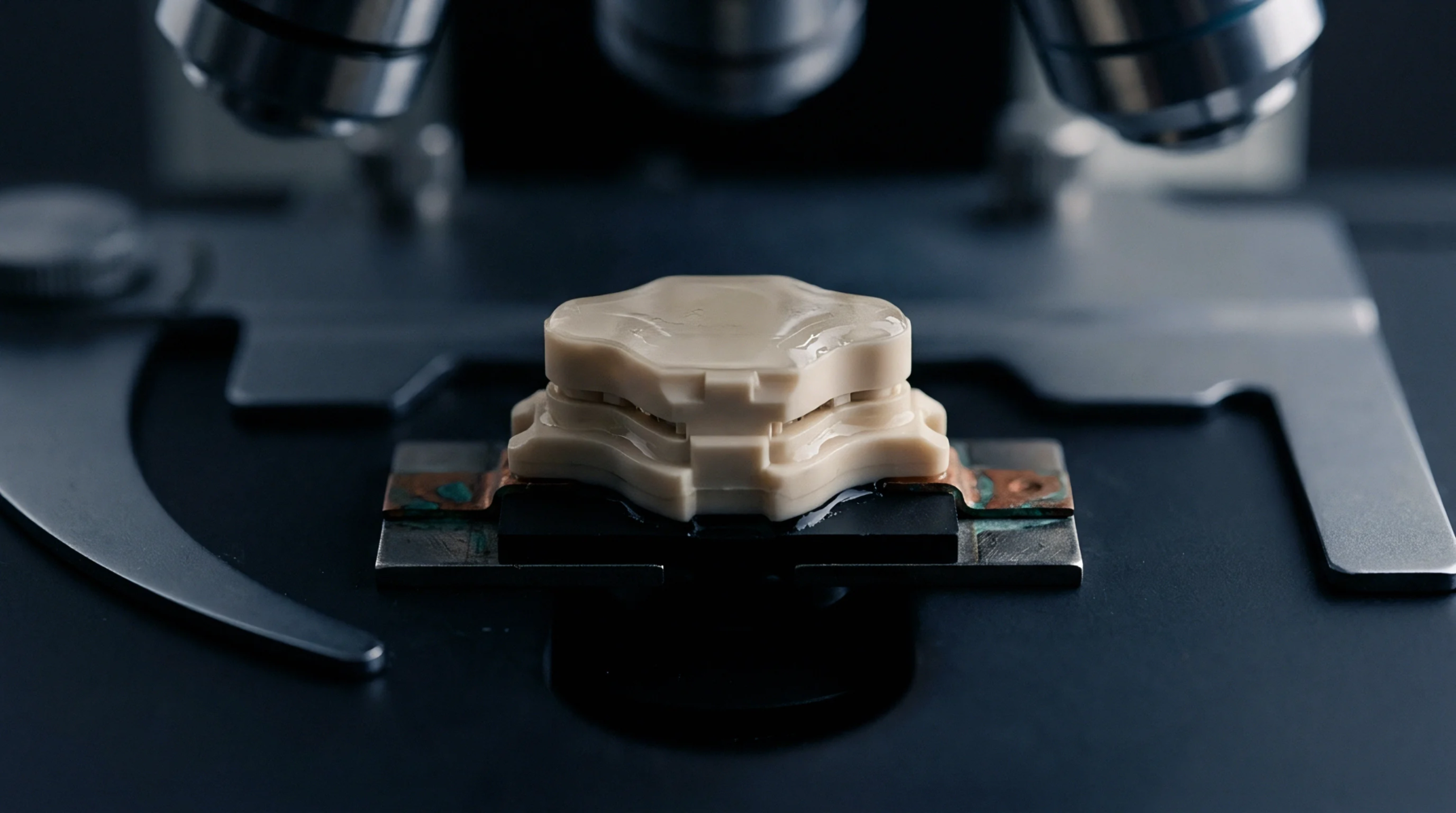
Microscopic cross section analysis reveals the morphological structure of the boundary layer during routine quality audits.