Managing Cross-Border Escrow Mechanisms for Proprietary In-Circuit Test Executable Files
Cross-border escrow for in-circuit test executables isolates raw vector source while delivering hardware-locked binaries through verified neutral vaulting.

Vault

Cryptographic Asset Segregation
Test engineering groups managing overseas manufacturing lines separate raw source files from compiled binaries to safeguard design IP. A complete In-Circuit Test package pools fixture wiring schematics, pin assignment maps, device model libraries, and vector source code developed for specific platforms like the Keysight i3070 or Teradyne TestStation. Releasing uncompiled vector files to offshore Contract Manufacturers reveals internal node addresses, ASIC pin assignments, and board topology to anyone with console access.
The assembly floor only requires the target binary executed by the tester during a production run.
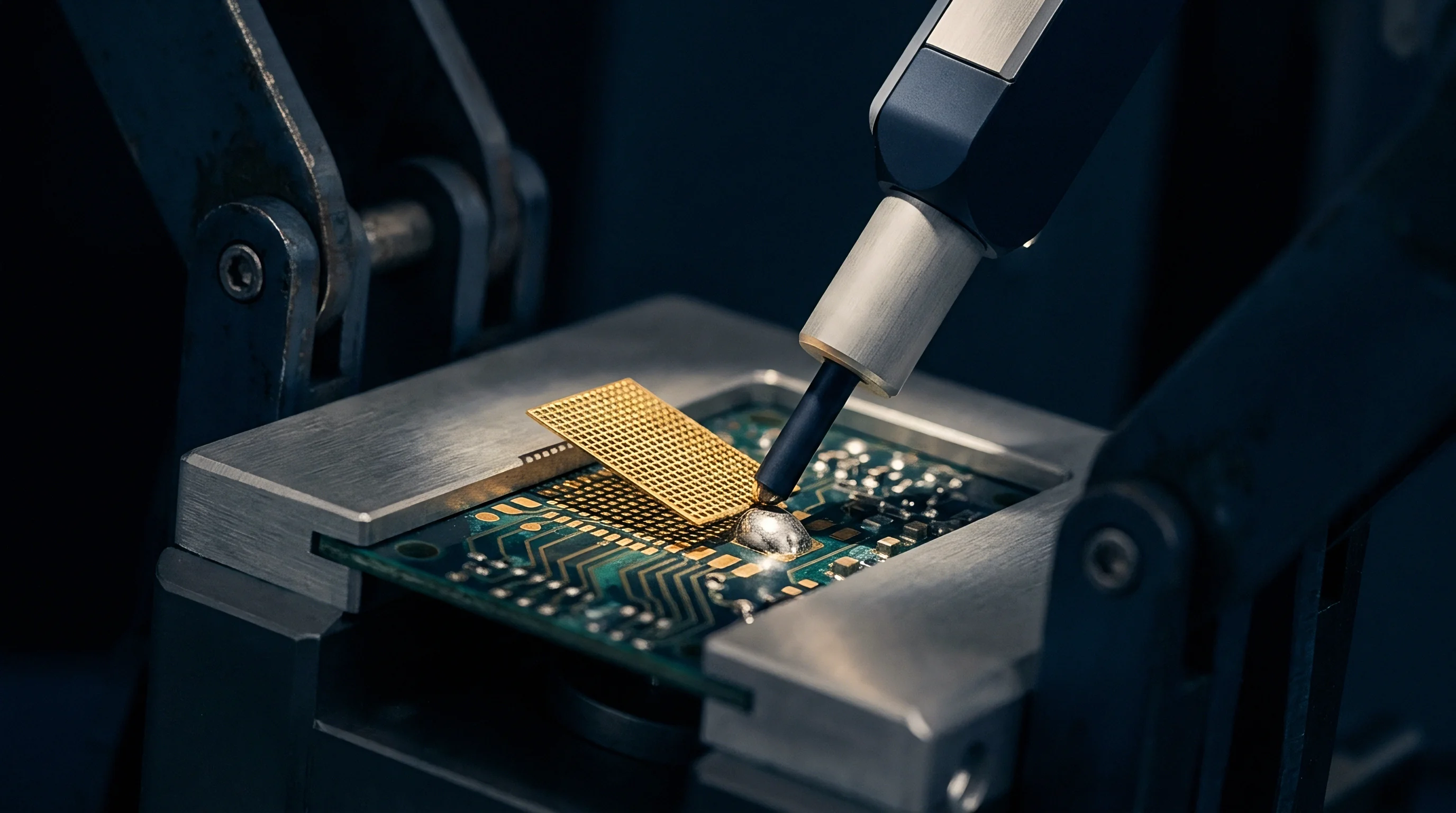
Neutral cryptographic repositories hold these runtime binaries alongside only the configuration files needed for execution. Storage vaults run Hardware Security Modules with asymmetric key pairs: public keys encrypt incoming binary packages, while the matching private keys remain trapped inside physical HSM hardware housed in neutral jurisdictions. A typical deposit covers pre-compiled vector objects, fixture calibration parameters, and board boundary-scan topologies stripped of netlist labels.
Detailed access logs trace every download attempt, key request, and checksum query directed at the repository.
Section 4.2 of the neutral custody agreement binds the escrow agent to re-verify cryptographic hashes within four hours of receiving a modified fixture build.
Automated ingestion scripts calculate SHA-256 digests before file transfer begins. The vault engine then matches the result against the manifest generated during compilation, aborting ingestion immediately if any mismatch surfaces. The table below outlines the structural components held in escrow alongside their access controls and encryption profiles.
| Asset Type | Contents and File Formats | Escrow Storage State | Access Entitlement |
|---|---|---|---|
| Target Executables | Compiled vector binary files (.xip, o, platform runtime objects) | Encrypted payload with MAC-bound access keys | Offshore Contract Manufacturer line operators |
| Fixture Topologies | Node pinouts, multiplexer maps, probe location drill files | AES-256 encrypted archive | Third-party fixture builder upon authorized release |
| Device Libraries | Model definitions for IC functional tests, boundary scan BSDL files | Asymmetrically encrypted repository object | OEM test development group and technical escrow agent |
| Source Test Scripts | Uncompiled vector code, diagnostic subroutines, board netlists | Air-gapped physical vault with multi-signature authorization | Original design manufacturer or IP owner exclusively |
Bypassing asset segregation leaves vector source code open to reverse engineering on the factory floor. Compiling routines directly on local tester consoles exposes plain source files in system memory. If a contract facility suffers an intrusion, unencrypted netlists and ASIC boundary scan vectors leak outward, effectively erasing proprietary design advantages before legal remedies can even be filed.


Compilation

System Hardware Binding Mechanisms
Binary generation converts high-level test routines into machine instructions tailored to a specific hardware layout. Vector compilation binds board-level physical connections to the pin cards, driver-sensor banks, and multiplexer channels installed on the target bench. From there, platform compilers build locked executable packages that refuse to run unless hardware serial numbers or system MAC addresses match the build profile.
Hardware binding relies on physical security dongles and signed license tokens loaded onto the tester console. Before allocating memory buffers for vector execution, the executable inspects the local bench for an active license, a matching host ID, and valid system clock stamps. Once verification clears, vector patterns load straight into driver-sensor RAM cards without writing unencrypted intermediate files to the local disk.
These hardware locks break whenever maintenance technicians swap out a damaged controller board or replace worn pin cards. Altering a console’s MAC address invalidates the signature on locked packages, halting the production line without warning. Well-structured escrow agreements anticipate maintenance swaps by building automated re-binding routines directly into the vault workflow.
- System Host ID Pinning locks binary execution to the physical motherboard controller board inside the tester chassis.
- Hardware Security Key Cryptography uses USB security dongles containing encrypted tokens that validate vector signatures at runtime.
- Time-Bounded Execution Windows restrict executable operation to fixed calendar dates, demanding periodic cryptographic check-ins with escrow servers.
- Interface Board Serial Matching verifies that driver-sensor card serial numbers match the physical fixture build manifest prior to applying pin voltages.
Hardware binding procedures can generate friction during routine maintenance. System locks take test lines offline when an individual driver card fails, conflicting with output targets that encourage local, unencrypted compilation.


Custody
Cross-Border Legal Frameworks
Structuring cross-border escrow requires selecting neutral territory for asset storage. Placing the vault in a jurisdiction foreign to both the equipment designer and the manufacturing partner prevents local court injunctions from seizing binaries or compelling source disclosure. Switzerland, Singapore, and Liechtenstein remain common choices because of their established trust frameworks and protective commercial data statutes.
The governing contracts set strict terms covering data sovereignty, jurisdiction, and transfer mechanisms. Serving as a neutral fiduciary, the escrow agent holds binaries, source archives, and decryption keys until defined operational triggers occur. Courts in the contract factory’s home territory have no direct authority over neutral offshore custodians, requiring formal international arbitration before assets can be accessed.
An escrow release latency exceeding 48 hours during an offshore assembly stoppage consumes $14,000 per line shift in idle overhead.
Cross-border movement of encrypted engineering data intersects with local residency mandates. Both the European Union General Data Protection Regulation and the Chinese Cybersecurity Law restrict how technical files leave national borders, requiring explicit compliance tracking for export classifications and cloud storage localization when moving proprietary test binaries.
Standard escrow covenants rely on explicit terms to bridge disparate legal regimes. The contract clause below illustrates the operational controls typically used in cross-border manufacturing agreements.
The Custodian shall hold the Deposit Materials in air-gapped, cryptographically isolated infrastructure within the legal jurisdiction of the Swiss Confederation. Release of Deposit Materials to the Licensee requires either joint written authorization signed by authorized officers of both Depositor and Licensee, or a final, non-appealable award issued by the International Chamber of Commerce International Court of Arbitration. Under no circumstances shall local administrative orders issued outside the designated jurisdiction compel the Custodian to alter decryption keys or grant physical or remote access to the escrowed binaries.
Explicit jurisdictional isolation shields technical property from localized administrative orders. Agreements that fail to designate a neutral forum leave production binaries exposed to foreign court actions in the manufacturer’s home country, undermining the trade secret protections established during development.


Trigger

Automated Release Verification Protocols
Formal condition checks precede any transfer of escrowed binaries or source files. Trigger events generally fall into financial defaults, operational abandonment, or insolvency. A financial default occurs when an OEM stops paying support invoices or drops maintenance contracts, whereas operational abandonment involves failing to resolve critical fixture or vector bugs within contractual response windows, leaving lines idle.
Automated verification pipelines test binaries immediately upon arrival in the repository. Deposited files run inside Hardware-In-The-Loop simulators configured to mirror the target tester platform, checking that binaries boot cleanly, multiplexing maps align with virtual fixtures, and pass-fail routines output valid flags. Corrupted builds or mismatched objects fail this check automatically, alerting both parties right away.
| Stage Name | Technical Action Executed | Pass Criteria | Failure Consequence |
|---|---|---|---|
| Ingestion Check | SHA-256 hash comparison against developer manifest | Bit-exact digest match | Deposit rejected; primary contact alerted within 15 minutes |
| HIL Emulation | Executable execution inside virtual tester hardware engine | Zero memory faults; successful pin initialization sequence | Automated quarantine; re-compilation ticket issued to OEM |
| Sanity Test | Execution against standardized golden board digital twin | Fault detection coverage meets minimum contractual threshold | Escrow state flagged as non-compliant; support clock starts |
| Release Audit | Multi-signature decryption key assembly upon trigger event | Valid cryptographic key reconstruction via secret sharing | Binary payload remains encrypted; manual arbitration invoked |
The calculation below tracks the operational recovery timeline following an escrow release trigger on an active production line, based on a facility operating two shifts daily at 1,200 units per shift with a unit contribution margin of $35.
- Calculated shift revenue risk: 1,200 units per shift multiplied by $35 per unit equals $42,000 per shift.
- Escrow notification and cryptographic key assembly window: 12 hours (1.5 shifts), generating $63,000 in delayed margin exposure.
- Binary download, target tester hardware deployment, and local fixture re-binding: 6 hours (0.75 shifts), adding $31,500 in line down exposure.
- Validation run on 50 golden units including fault injection checks: 4 hours (0.5 shifts), adding $21,000 in verification downtime.
- Total recovery time equals 22 hours (2.75 shifts), producing an aggregate margin exposure of $115,500 prior to line restart.
When an offshore facility alleges operational default during a manufacturing dispute, neutral technical arbitrators must distinguish whether a test failure originates from defective escrowed binaries or unannounced hardware modifications on the physical fixture.


Friction

Export Controls and Customs Verification
Moving industrial test software across international borders triggers strict export control classifications. Executables designed for high-density interconnect boards, avionics, or advanced packaging often fall under Dual-Use controls governed by Export Control Classification Numbers like 3E001 or 3A001 under the Export Administration Regulations. Shipping these encrypted files without valid licenses invites customs impoundment, fines, or loss of export privileges.
Customs authorities increasingly monitor digital traffic crossing national borders. Secure transfers through border firewalls face automated inspection, and encrypted binary streams lacking clear classification metadata can trigger throttling or outright blocks, cutting off offshore benches from the licensing servers they need to operate.
Separating fixture wiring topology from executable test vectors prevents third-party manufacturing facilities from reversing board pinouts.

How Do Local Customs Audits Threaten Encrypted Fixture Executables?
Physical media routed through commercial freight undergoes manual customs inspection at points of entry. Inspectors examining encrypted solid-state drives or hardware tokens require formal classification filings, commercial valuation paperwork, and verified export licenses. Discrepancies lead to immediate confiscation and regulatory scrutiny over unmanifested software transfers.
Cloud-based escrow bypasses physical ports by routing encrypted assets into regional data centers inside the destination country. Storing encrypted packages on local mirror nodes satisfies domestic residency mandates while preserving technical isolation. The local facility holds the payload at rest, releasing decryption keys only after an authenticated handshake from the primary international controller.
Local mirrors prevent national firewall disruptions from spilling onto the factory floor. Relying on continuous cross-border license verification without local caching leaves lines vulnerable to downtime whenever gateway firewalls update routing tables or tighten packet filters.


Remedy

Commercial Enforcement and Financial Risk Mitigation
Dispute provisions in escrow agreements attempt to balance IP security against the financial realities of line downtime. Liquidated damages clauses penalize OEM test developers if a bad binary deposit idles a plant, while companion penalties target contract manufacturers that try to strip executable locks, scrape vector routines, or clone test builds onto unapproved lines.
Contracts establish monetary limits for specific technical defaults. Indemnity caps shield neutral escrow providers from consequential damages tied to manufacturing delays, restricting liability to the service fees collected over the term. Meanwhile, audit clauses allow independent technical inspectors to examine factory consoles, review access logs, and confirm that active binaries match the signatures registered with the custodian.
Letters of credit fund emergency engineering work if an escrow release produces unusable binaries. When released files fail qualification or turn out to be corrupt, the buyer draws against these reserved funds to hire outside test developers immediately, tying technical compliance to clear commercial penalties.
Logging routines embedded within the compiled binary record cycle counts, board failure rates, detected pin shorts, and console timestamps. The binary appends these metrics to encrypted logs on local memory cards. During quarterly audits, forensic test engineers pull the files and check cycle totals against reported output, identifying ghost shifts or unauthorized second-sourcing.
Structured liability models balance the commercial value of design IP against the hourly losses of an idle line. Tying legal terms directly to hardware metrics creates self-enforcing incentives: neither party benefits from cutting corners, and relying on cryptographic records resolves operational disputes far faster than traditional litigation.