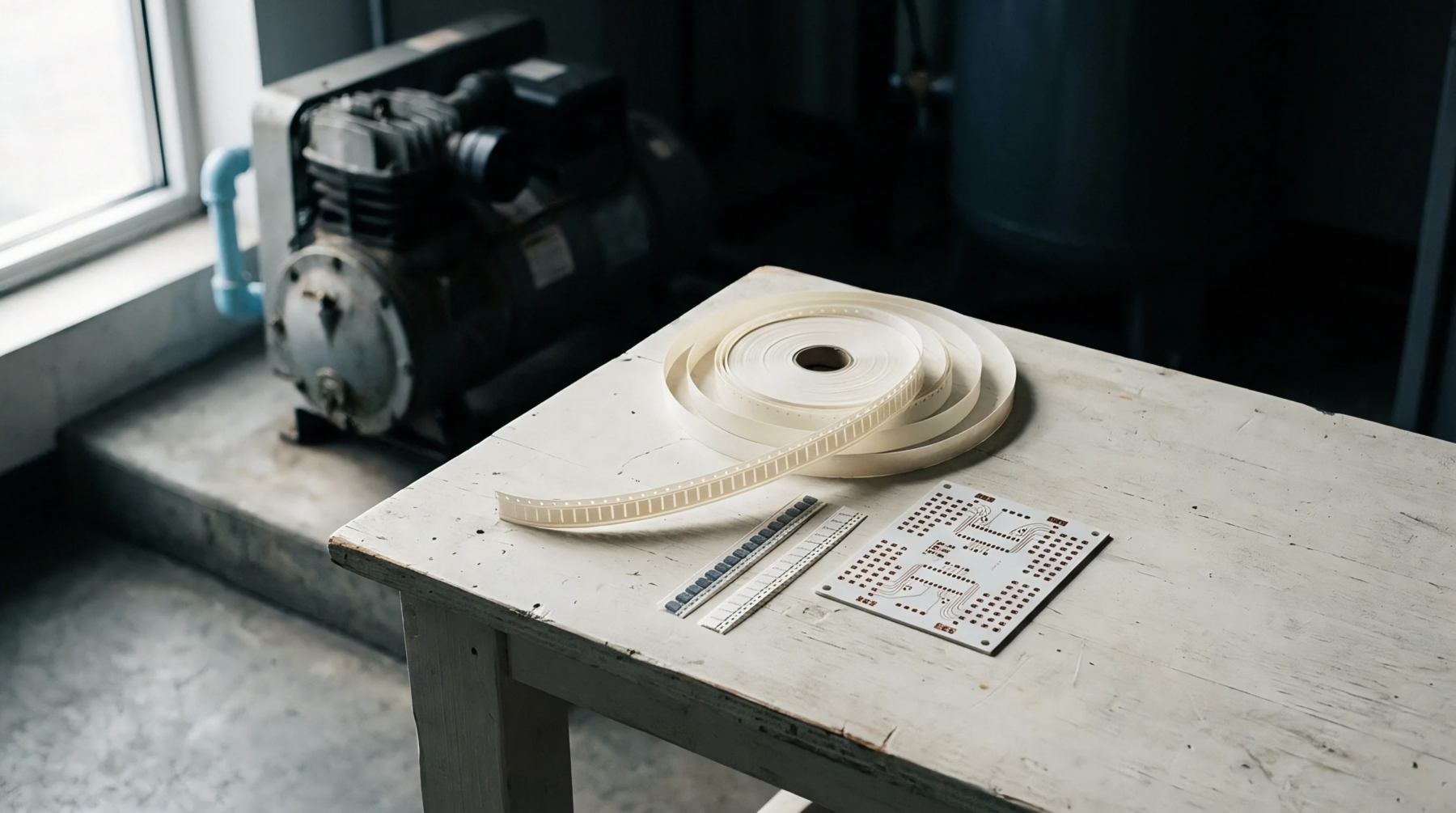
Dimensional Adjustment
Modification of stencil opening dimensions represents a standard engineering practice to control the volume of solder paste deposited onto printed circuit board pads. Through aperture reduction, the surface area of the stencil opening is decreased relative to the copper landing pad on the board. This modification prevents excess paste from spilling beyond the pad boundaries during the printing stroke.
It is typically applied to fine-pitch components, where the risk of bridging during reflow is high due to the small distance between adjacent terminals.
Volumetric Control
The calculation of the area ratio governs the mechanical behavior of the paste during stencil separation. Designers implement aperture reduction by scaling down the aperture dimensions by a fixed percentage or a uniform mil distance per side. For example, a ten percent reduction in the area of a square aperture of length twenty mils on a four-mil thick stencil reduces the wet paste volume from sixteen hundred cubic mils to fourteen hundred and forty cubic mils.
This volumetric correction directly prevents the formation of solder beads between passive chip components. It ensures that the stencil release is clean and leaves a consistent brick height across all pads on the substrate.
Release Optimization
Maintaining an area ratio greater than zero point six six is required to avoid this defect. If the reduction is too aggressive, the paste will remain trapped inside the stencil opening due to the high surface tension against the metal walls. When the stencil is lifted, a clean release occurs only if the pad surface area exceeds the total surface area of the aperture walls.