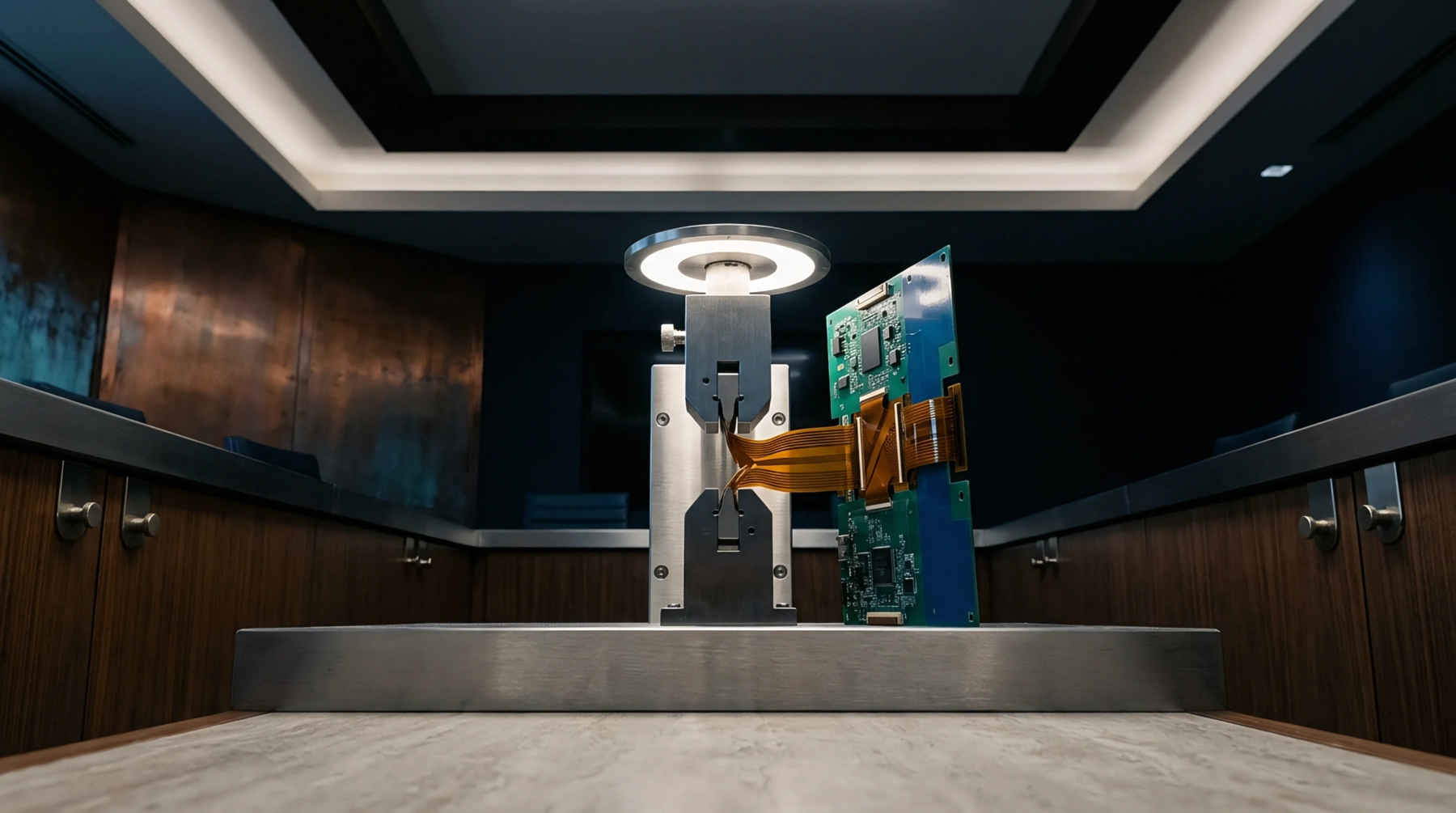
Adhesion Failure
Surface separation between the base substrate and the conductive copper layer signals a loss of mechanical bond strength. Copper foil delamination occurs when the chemical treatment or the resin matrix fails to hold the metallic interface during thermal cycles or mechanical stress. This condition prevents reliable operation of high-density interconnects by compromising circuit integrity.
Industry standards categorize the loss of interfacial contact as a structural rejection criterion during printed circuit board fabrication.
Process Mechanism
Thermal expansion mismatch triggers internal forces that overcome the surface energy of the laminate bond. When the dielectric material expands faster than the conductive layer during wave soldering or reflow, the shear force pushes the copper away from the resin surface. Voids or contamination trapped during the pressing of the laminate layers accelerate this progression by creating weak points where the bonding agent lacks sufficient penetration.
Moisture absorption also lowers the effective glass transition temperature of the epoxy, which further reduces the resistance of the assembly to lifting under localized heat.
Acceptance Criteria
Electrical open circuits and intermittent signal paths follow the physical detachment of the conductor from the dielectric body. Visual inspection tools detect this discrepancy when the metallic traces appear blistered or lifted away from the base material after standard stress conditioning. Testing protocols confirm the severity of the separation by measuring the force required to pull the trace away from the circuit board surface, verifying that the bond meets the established pull strength requirements for structural reliability.