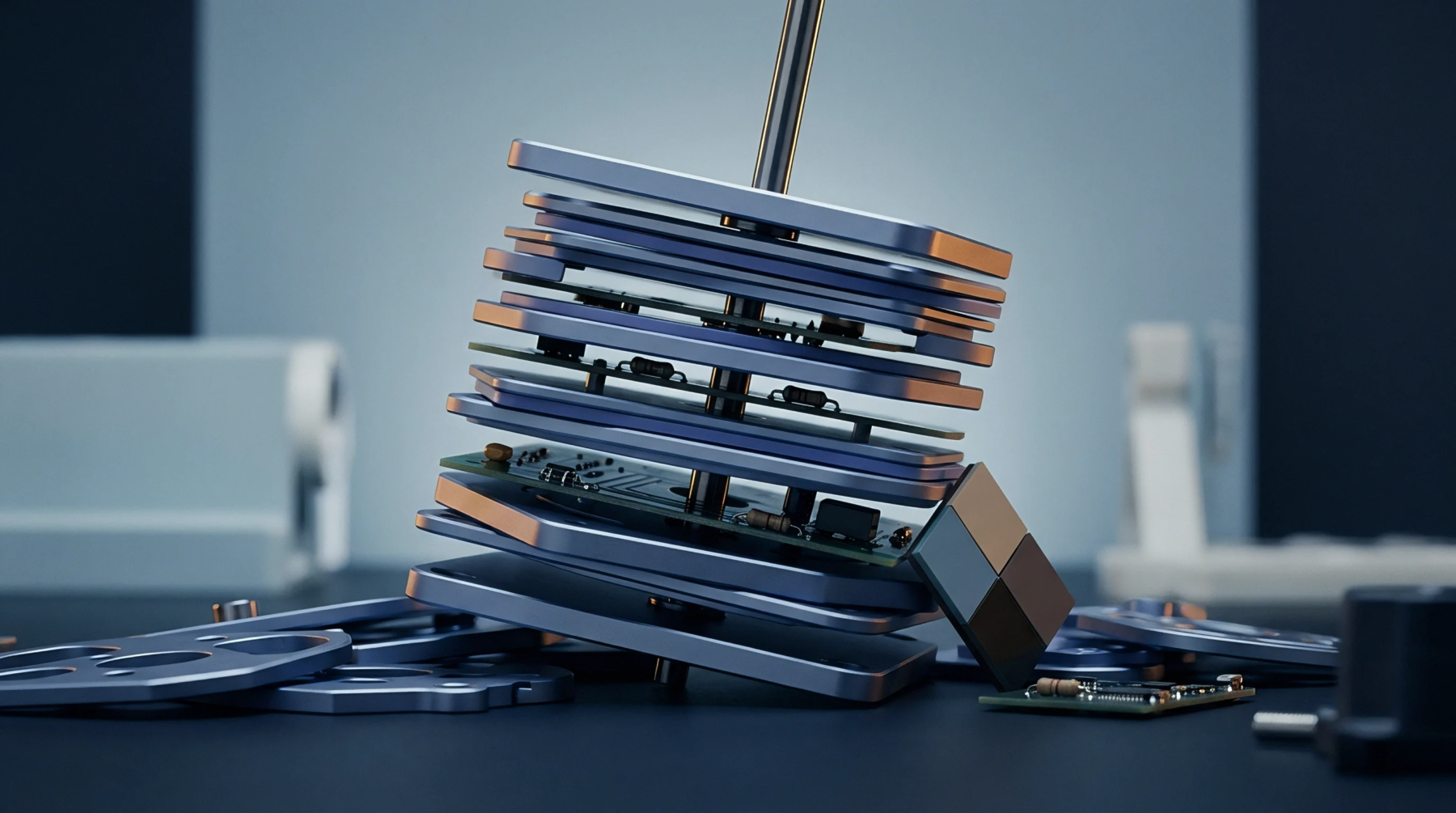
Mechanical Interaction
Physical relationships between the in-plane stretching and the out-of-plane bending of a composite laminate determine how a board reacts to external or internal forces. The coupling stiffness matrix quantifies these interactions by linking the mid-plane strains to the curvatures of the panel. In a perfectly symmetric stackup, the values within this matrix are zero, meaning that stretching the board does not cause it to curve.
Warp Prediction
Engineers use the values in this matrix to identify if a specific layer arrangement will result in a twisted or bowed shape after thermal processing. A non-zero coupling stiffness matrix indicates that the board is prone to deformation when the temperature changes during soldering or lamination. This mathematical tool allows for the optimization of the stackup before any physical prototype is manufactured.
Design Symmetry
Maintaining a balanced distribution of copper and dielectric materials around the center of the board is the primary method for controlling these mechanical couplings. When an asymmetrical design is required for electrical performance, the matrix provides a way to calculate the expected distortion and determine if it falls within the acceptable tolerance for assembly. This analysis ensures that the board remains flat enough for the automated placement of fine-pitch components.