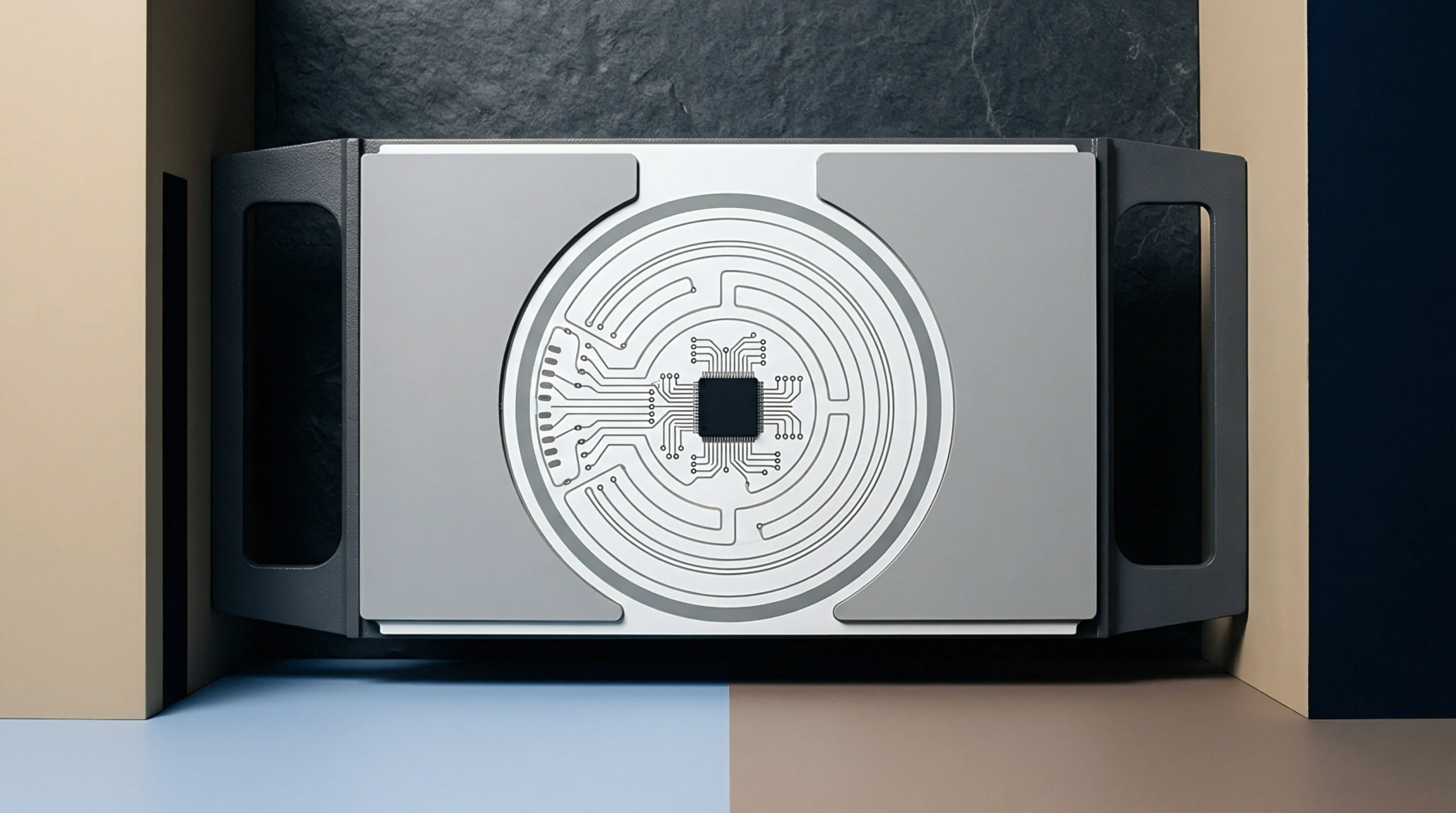
Acoustic Reflection Coefficient Analysis in Mold Compound Interfaces
Acoustic reflection coefficient analysis identifies sub-micron mold compound delaminations by detecting 180-degree phase inversions in ultrasonic signals.
Acoustic micro imaging serves as a non destructive evaluation method that locates internal anomalies inside packaged semiconductor devices and bonded substrates. High frequency ultrasonic waves pass through the assembly and reflect off internal interfaces with differing acoustic impedances. Echo signals return to a transducer and map hidden defects such as delamination, void formation, and die attach cracking.
Transducers operating between ten megahertz and three hundred megahertz provide the spatial resolution required for microelectronic packages. Sound velocity differentials highlight air gaps and material separations that optical inspection cannot detect from the exterior surface. This technique evaluates high reliability printed circuit board assemblies and integrated circuit packages during failure analysis or process verification.
Acceptance standards govern maximum allowable void percentages beneath thermal pads and power semiconductor packages. Water couples the ultrasonic energy into the component because air reflects almost all high frequency sound waves before entry. Acoustic impedance mismatches create phase inversions in the reflected waveform, which signal processing algorithms translate into grayscale imaging pixels.
Acoustic impedance represents the product of material density and acoustic propagation velocity within a specific medium. Boundary reflections occur whenever ultrasonic energy encounters a transition between two materials with disparate acoustic impedance values. Epoxy molding compounds, silicon dice, copper leadframes, and solder alloys each exhibit distinct impedance characteristics that dictate echo amplitude.
Delamination creates an air gap interface where acoustic impedance drops toward zero, causing total reflection of the incident wave. Strong positive or negative reflection amplitudes identify interfacial separation during acoustic micro imaging scans of ball grid array packages. Epoxy resin voids trapped beneath a component package produce distinct acoustic signatures compared to solid metal interfaces.
Attenuation coefficients determine the maximum penetration depth for a given ultrasonic frequency within multi layer substrate materials. High frequency transducers yield superior resolution in thin layers but suffer excessive signal attenuation through thick organic laminate structures.
Transducer focal length and pulse bandwidth dictate the minimum resolvable defect dimension during acoustic micro imaging examinations. Focused acoustic beams concentrate ultrasonic energy to a narrow waist, improving lateral resolution for small subsurface voids. Near surface resolution depends on pulse ring down duration, which determines the blind zone directly beneath the package surface.
Signal processing software filters background noise and separates echoes originating from closely spaced internal interfaces within flip chip assemblies. Acoustic impedance data maps directly to multi color palettes that highlight critical delamination thresholds established by manufacturing specifications. Automated analysis routines calculate total void area fractions automatically and compare results against predefined acceptance criteria for high reliability electronics production.
Acoustic micro imaging detects buried flaws without altering the mechanical or electrical integrity of the inspected printed circuit board assembly.
Acoustic reflection coefficient analysis identifies sub-micron mold compound delaminations by detecting 180-degree phase inversions in ultrasonic signals.
Expertise is a utility, not a secret. sentiention™ publishes its working knowledge as open reference: intelligence layer covering the materials it sources, the markets it enters, and the reference that serves both.