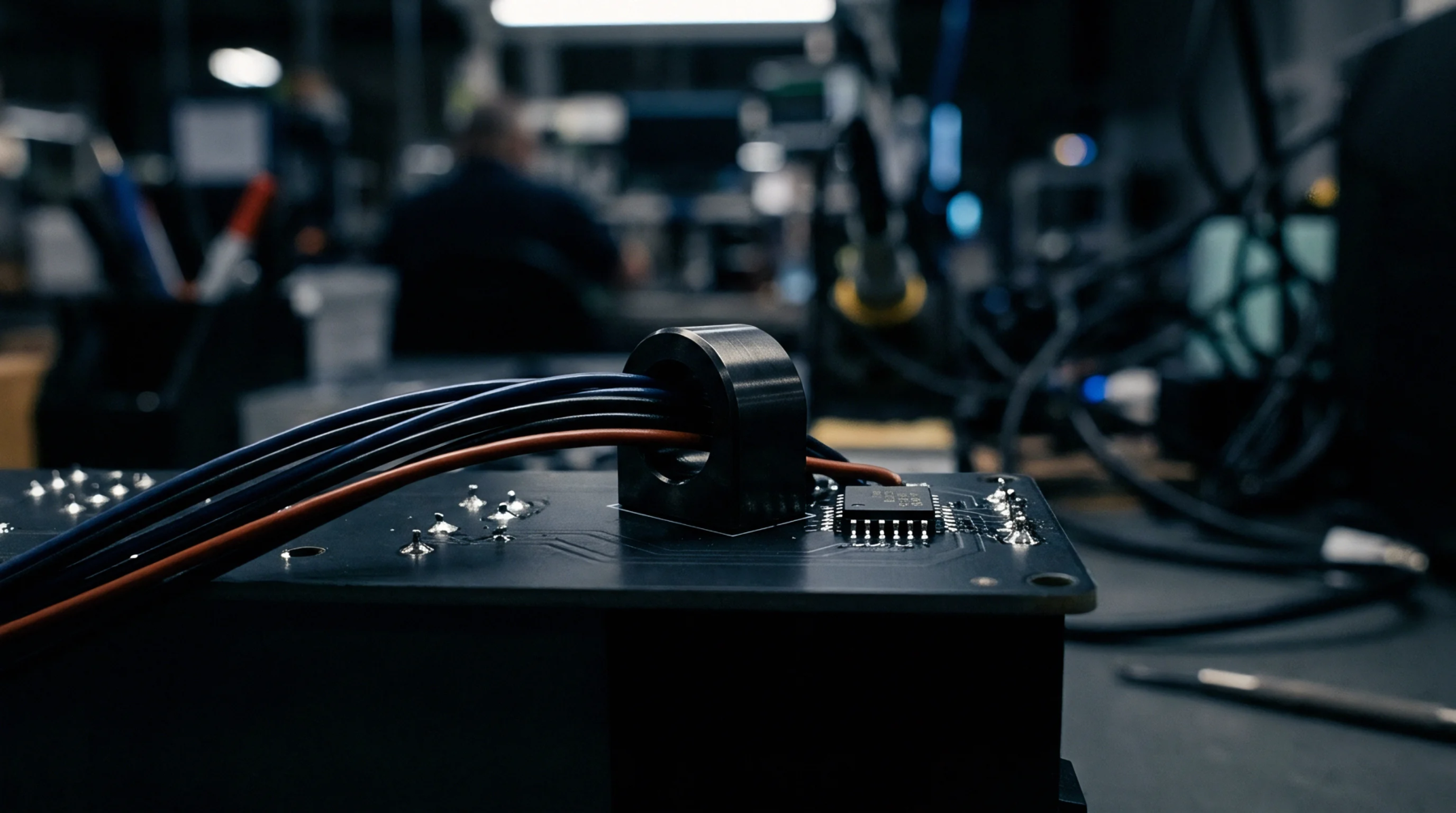
Tooling Deformation Assessment
Verification of mechanical stresses imposed on circuit boards by test beds and assembly equipment prevents component package cracking during manufacturing. Through fixture strain characterization, engineers apply multi-axis strain gauges across sensitive circuit locations to quantify board flexing generated by pneumatic clamps, push-pins and test probes. The measurement sits within assembly line validation, governing fixture design acceptances and halting where board materials return to static equilibrium.
IPC/JEDEC-9704 establishes standard strain boundaries that prevent board warping from shattering ceramic capacitors or solder joints.
Strain Measurement Protocol
Triaxial rosette gauges bond adjacent to corner pads of large ball grid arrays or miniature surface-mount passives to capture full-field surface strain. When an in-circuit test fixture pulls the printed circuit board against bed-of-nails probe fields via vacuum or mechanical actuation, localized bending creates tension and compression. Data acquisition systems record microstrain values and compute principal strain rates throughout the physical contact cycle.
Rapid actuation profiles often generate high strain rates that damage silicon component terminations before static limits are exceeded. Adjusting mechanical support pins, smoothing actuator descent speeds and relocating hold-down points lower recorded peak strain values. Fixture maintenance logs track gauge outputs across regular operational cycles to catch bent locating pins or worn mechanical linkages before assembly yields degrade.
Component Protection Boundary
Surface-mount multilayer ceramic chip capacitors and delicate low-k dielectric integrated circuits fail catastrophically under small fixture-induced deflections. Brittle solder joints under ball grid arrays shear easily when localized fixture forces create board inflection points. Test engineers establish absolute microstrain limits below five hundred microstrain for sensitive components, rejecting fixtures that breach these engineering allowances.
Passing this characterization qualifies the tooling for volume manufacturing use.