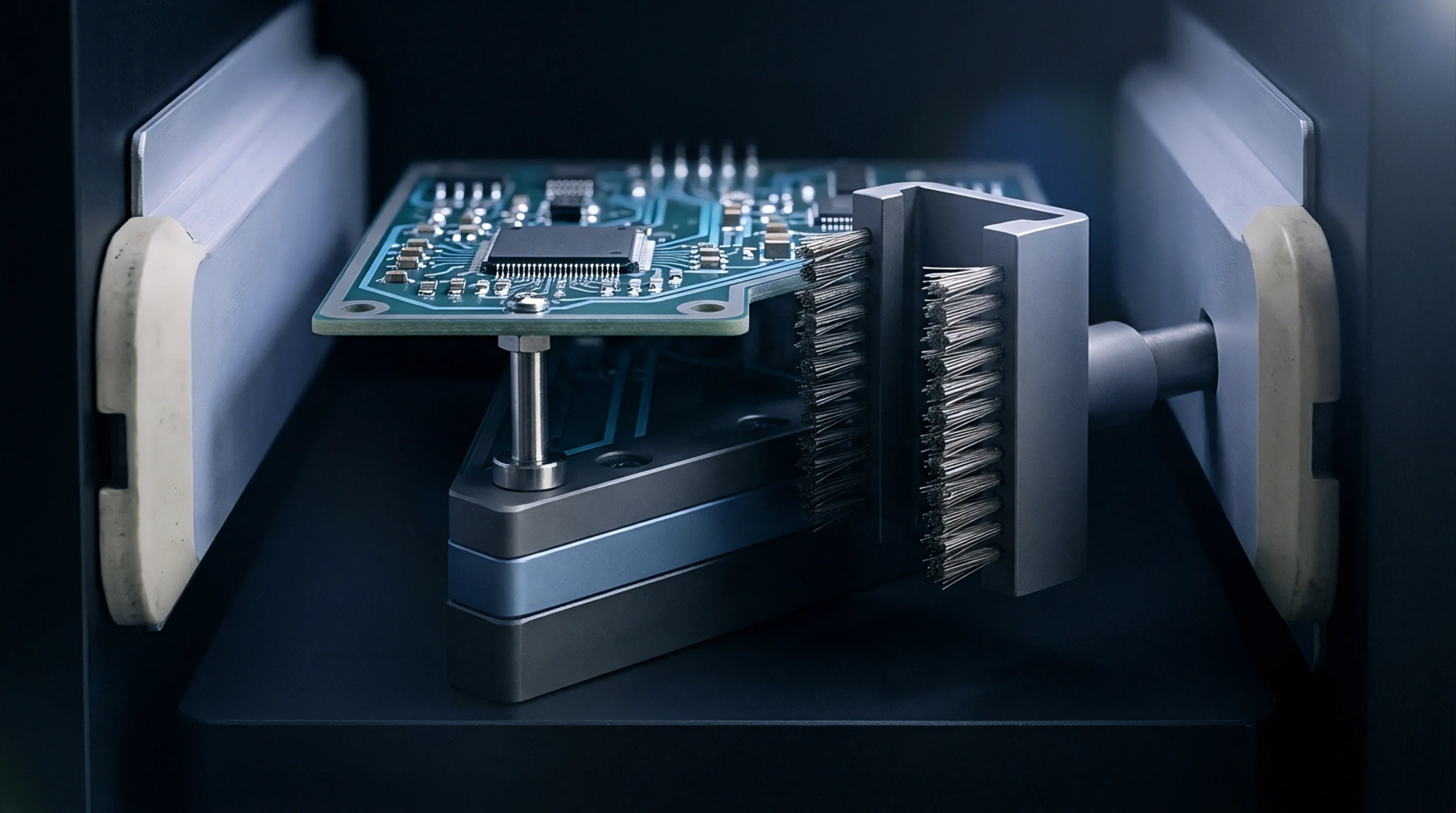
Analytical Protocol
Analytical instrumentation combines gas chromatography with mass spectrometry to identify and quantify trace-level organic contaminants on printed circuit boards. In electronics manufacturing, gc ms provides a high-sensitivity method for detecting plasticizers, flux residues, and outgassing compounds from laminates. The combined system separates complex chemical mixtures before ionizing and sorting them by their mass-to-charge ratios.
Solvent Extraction
Extraction protocols require washing the board surface with high-purity solvents like isopropyl alcohol to dissolve potential residues. The collected solvent is concentrated and injected into the chromatograph for separation. Because different compounds migrate through the capillary column at different rates, they enter the detector at distinct times.
This separation ensures that even closely related polymer residues do not interfere with each other during detection.
Board Cleanliness
Contamination limits defined by industry standards like IPC-WP-019 dictate acceptable residue levels to prevent electrochemical migration. Using gc ms, quality assurance teams scan finished boards for residual glycols and rosin-based activators that can cause dendritic growth under high humidity. Identifying these substances helps process engineers pinpoint failures in the wash stations of the assembly line.
Modifying wash parameters allows them to optimize temperature or rinse times to guarantee that the final assemblies do not fail prematurely in the field. Assemblies that undergo this testing demonstrate higher reliability in aerospace and automotive applications where moisture exposure is a constant risk.