Stress Acceleration
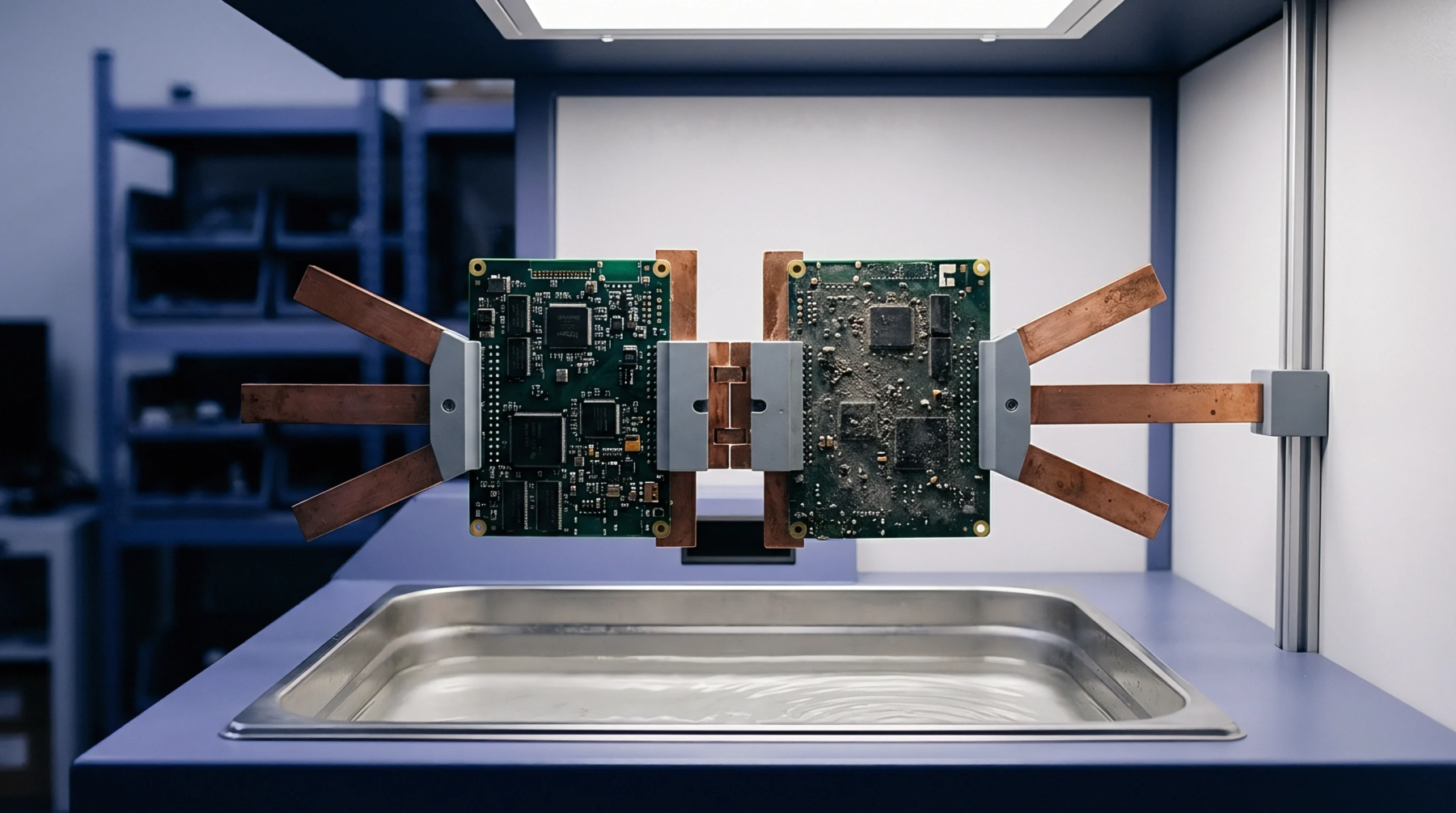
Pressurized hydrothermal conditioning stresses electronic assemblies through combined increases in ambient humidity, high vapor pressure, thermal load, and electrical bias. Operating within a sealed pressure vessel at temperatures typically between one hundred ten and one hundred thirty degrees Celsius at eighty-five percent relative humidity, hast testing compresses thousand-hour steady-state moisture assessments into continuous ninety-six-hour runs. The method forces moisture ingress across conformal coatings, solder mask interfaces, and epoxy packages without inducing artificial thermal degradation mechanisms that do not occur under normal operating conditions.
Defect Precipitation
Applied bias voltage drives electrolytic migration across closely spaced copper traces and exposed surface mount component terminations. Moisture saturation dissolves ionic contamination residues beneath quad-flat no-lead packages, accelerating electrochemical migration, dendritic growth, and leakage current spikes.
Qualification Protocol
Acceptance testing evaluates printed circuit board base laminates, surface finishes, and flux residues against stringent insulation resistance limits during arm’s length procurement verification. When assemblies enter the pressure chamber for hast testing, periodic in-situ resistance logging detects transient insulation loss before complete dielectric breakdown occurs. Bare board manufacturers utilize unbiased variants to verify laminate resistance to conductive anodic filament formation along internal glass-epoxy interfaces.
Assembled boards fail the qualification trial if insulation resistance drops below one hundred megohms or if post-exposure visual inspection reveals blistering, delamination, or corrosion products along component solder joints. Automotive and aerospace contracts mandate these accelerated pressure protocols to qualify new laminate formulations, clean flux chemistries, and automated conformal coating processes.