
Quantifying Laminate Resin Anisotropy Dispersion and Phase Skew Limits in Gigabit Interconnects
Managing anisotropic permittivity and glass weave dispersion prevents timing jitter and intra-pair phase skew in gigabit differential interconnects.
Managing anisotropic permittivity and glass weave dispersion prevents timing jitter and intra-pair phase skew in gigabit differential interconnects.

Lamination thermal gradients alter local resin conversion and density, shifting high-frequency spatial dielectric permittivity and inducing channel skew.

Standardizing microstrip impedance on anisotropic substrates demands tensor permittivity inputs or Schneider equivalence transformations in field solvers.
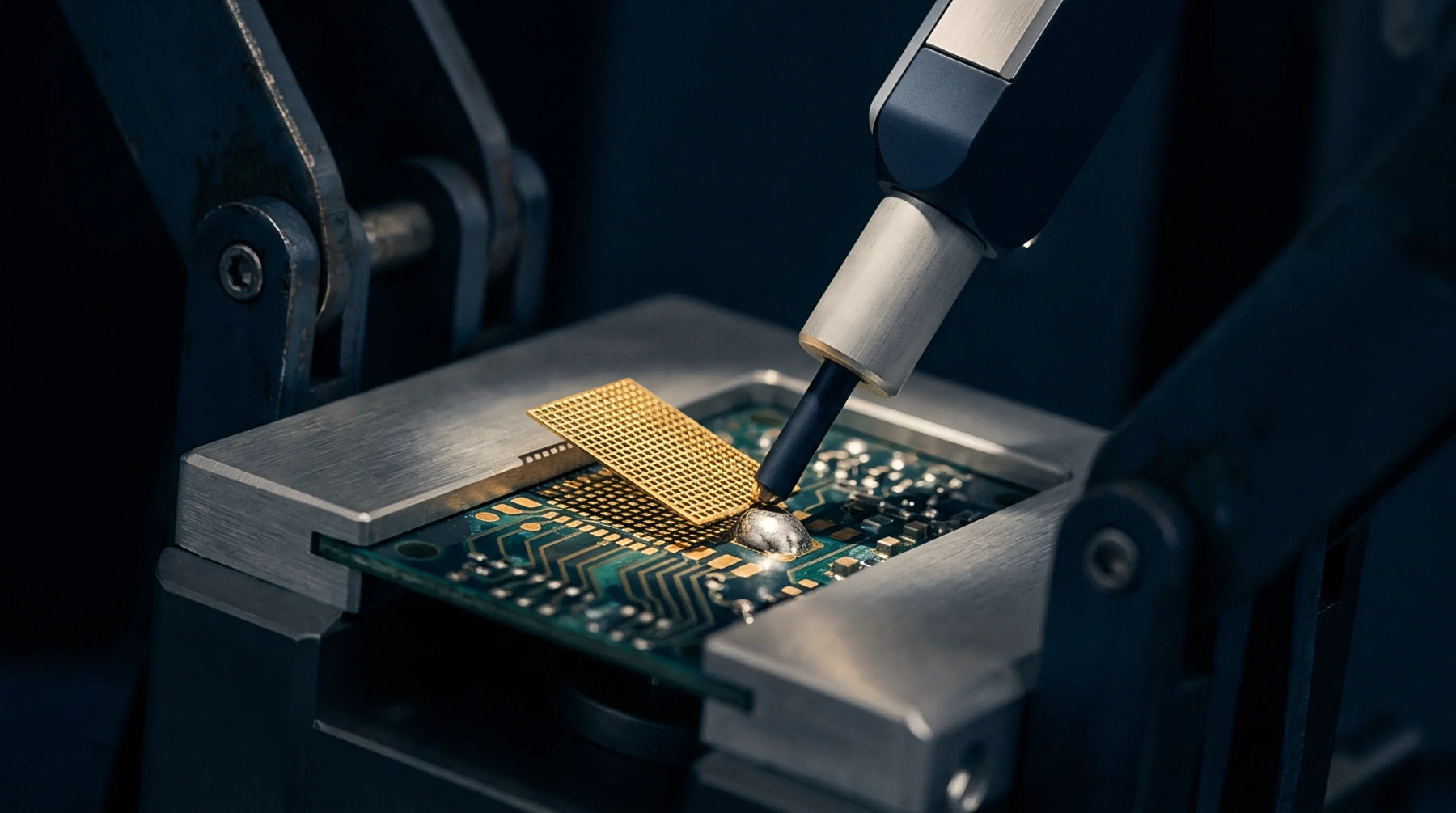
Non-isothermal lamination gradients drive spatial resin displacement across uneven copper patterns, distorting local dielectric thickness and shifting high-frequency relaxation spectra.

Sub-THz tensor discrepancies stem from copper profile reactance and anisotropy differences between localized coupon fields and unclad quasi-optical bulk beams.

Accurate millimeter-wave substrate modeling demands 3D tensorial permittivity and causal frequency dispersion to prevent impedance and differential skew errors.
Mitigate PCB cavity damping by replacing lossy nickel finishes with immersion silver and controlling surface roughness below single skin depth.

Thermal expansion alters resin density, driving dynamic anisotropy shifts that detune millimeter-wave phase stability and coupling tolerances across temperature.

Frequency-domain tensor extraction decouples directional permittivity and loss tangent variations on glass core build-up panels, fixing impedance tolerances across sub-THz interconnects.
Managing anisotropic permittivity in sequential substrates requires spread glass prepregs, optimized press kinetics, and directional fixture qualification.
Extracting out-of-plane permittivity requires guarded parallel-plate or re-entrant cavity tests to isolate vertical flux fields from in-plane glass weave effects.
Expertise is a utility, not a secret. sentiention™ publishes its working knowledge as open reference: intelligence layer covering the materials it sources, the markets it enters, and the reference that serves both.