Thermal Cycle Procedure
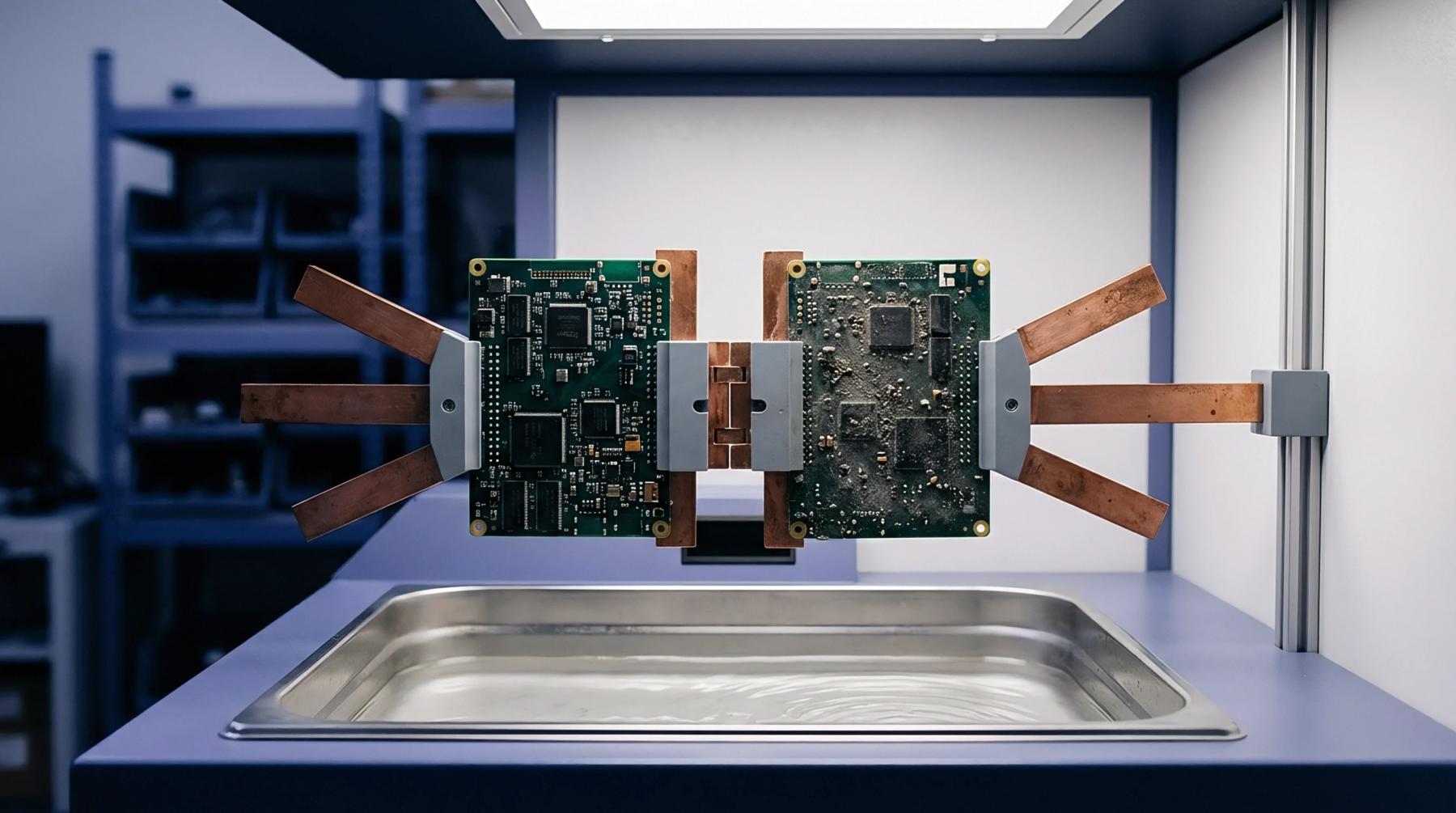
An environmental stress conditioning process exposes electronic assemblies to rapid temperature fluctuations to force latent manufacturing defects into premature failure. Thermal shock screening subjects internal components to extreme differentials between hot and cold reservoirs, which triggers mechanical stress at mismatched coefficient of expansion interfaces. The technique relies on the differing rates of contraction and expansion in solder joints, lead frames, and substrate materials to identify poorly formed bonds or cracked components before the product leaves the factory floor.
Cycle Mechanism
Convection currents within the dual chamber equipment drive these abrupt transitions to ensure the assembly core attains the set temperature limits during every programmed interval. Chambers typically move the carrier rack between vertical stations to reduce dwell time and heighten the severity of the temperature gradient. Technicians configure the number of cycles based on the known reliability history of the components and the specific fatigue profiles of the base laminate materials.
A high volume of oscillations clarifies whether the assembly maintains electrical continuity under harsh physical strain. The duration of the cold soak period determines if trapped moisture or microscopic voids in the conformal coating react to thermal contraction. Engineers verify the efficacy of the regime by monitoring the resistance of critical nets for intermittent discontinuities during the active transition phases.
Improper cooling rates negate the objective of the testing by allowing internal components to reach equilibrium before the target gradient occurs. Reliability of the hardware remains linked to the success of this aggressive fatigue induction rather than simple functional power checks.
Failure Analysis
Surface mount defects often appear as open circuits or shifted components following these accelerated stress exposures. Inspecting the hardware after the final transition confirms if the metallurgical interfaces survive the repeated expansion cycles without suffering catastrophic mechanical separation. Each board receives a full electrical test to isolate anomalies induced by the mechanical strain of the extreme environment.
The final performance data proves the assembly withstands the intended field service conditions.