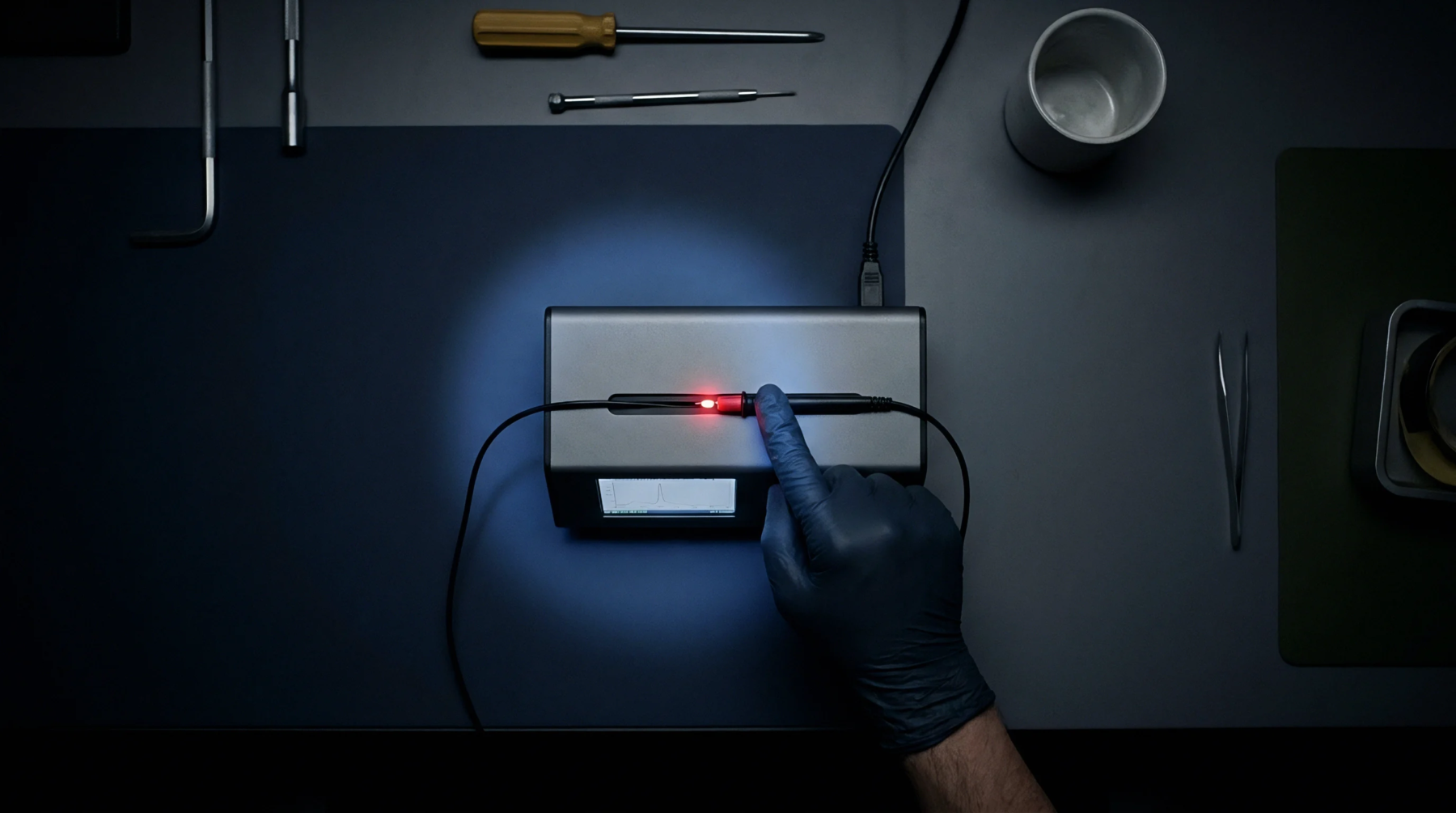
Capture Method
Continuous analog signal digitization transforms transient electrical waveforms into discrete numeric arrays by sampling at rates exceeding one hundred million samples per second for transient analysis. High speed data acquisition captures the precise state of high frequency oscillations within sub-nanosecond intervals to allow for temporal resolution of logic state transitions. Engineers utilize dedicated analog to digital converters that map fluctuating voltages against precise internal clock references to form quantized representations.
These raw files reside in volatile memory buffers prior to local processing for waveform characterization. Signal integrity remains the boundary for accuracy since impedance mismatches at probe interfaces introduce noise that corrupts the sample stream.
Sampling Fidelity
Effective conversion requires hardware synchronization across multiple channels to maintain phase alignment during capture of high speed data acquisition streams. Disparate sensor outputs necessitate simultaneous latching because sequential polling introduces skew that invalidates cross-channel correlation. Clock jitter represents the primary noise source that degrades signal fidelity during periodic sampling.
Minimizing aperture uncertainty allows for the reconstruction of high frequency components without spectral aliasing. Stable reference voltage sources prevent drift in the quantized values during long measurement sequences. Proper grounding topologies isolate sensitive analog front ends from the digital noise generated by high frequency bus activity.
Production Verification
Manufacturing environments employ these measurement assemblies during final parametric testing to validate the integrity of high speed data acquisition ports on complex populated circuit boards. Defect detection identifies timing violations or signal reflections originating from degraded trace impedance or poor solder joint wetting. Automated test equipment utilizes these high throughput digitizers to check waveform eye patterns against defined compliance masks.
Out of specification results trigger immediate failure codes when rising edge transition times exceed established protocol limits. Performance criteria rely on the exact mapping of captured signal bursts to known architectural constraints of the controller or processor interface. Measurement stability hinges on the calibration of the signal path from the probe tip through the entire internal processing chain.
Verified waveform metrics correlate directly to the physical robustness of the assembly.