Lamination Stackup
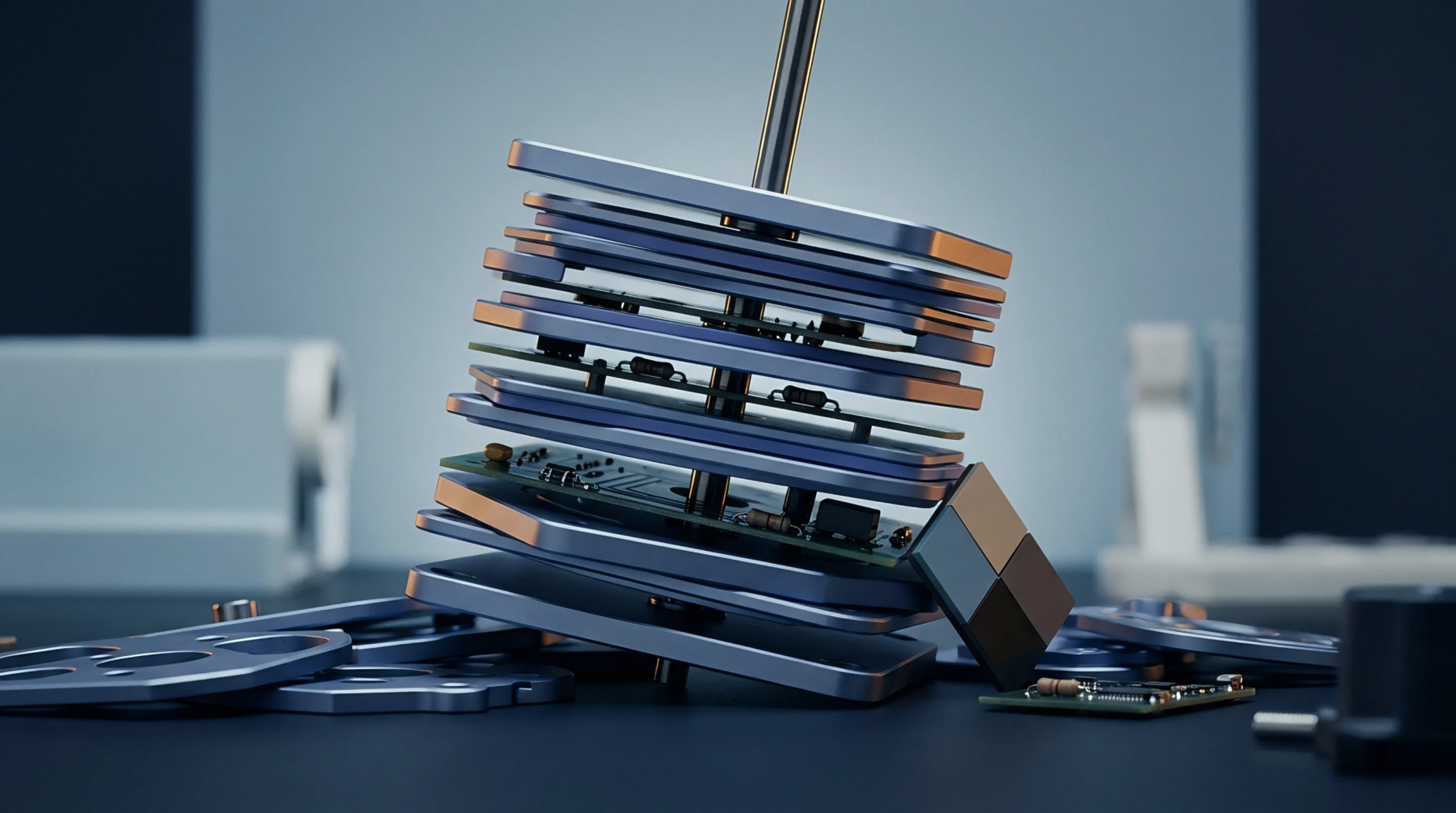
Prepreg sheets alternate with single and double sided innerlayer cores during press consolidation to form a hybrid multilayer structure. High density interconnect subassemblies are pressed together with conventional thick dielectric cores under heat and hydraulic pressure. Signal layers require precise resin flow control during the lamination cycle to eliminate voids near copper feature edges.
Board fabricators measure dielectric thickness using cross section microsectioning after the press cycle finishes.
Z Axis Expansion
Resin systems undergo severe thermal stress when printed circuit boards pass through molten solder reflow temperatures. Z axis expansion generates high mechanical tensile loads on plated through holes and internal copper foil interconnects. Thermal mechanical analysis determines the glass transition temperature and coefficient of thermal expansion for the cured laminate matrix.
Low expansion materials prevent barrel cracking during multiple lead free assembly thermal excursions.
Resin Fill
Flow properties dictate how well liquid polymer fills empty spaces between heavy copper planes during press consolidation. Vacuum assisted hydraulic presses apply uniform pressure to drive softened prepreg resin into deep recesses surrounding etched circuit patterns. Automated optical inspection verifies that entrapped air pockets remain absent from internal dielectric layers.
Complete resin encapsulation guarantees long term dielectric reliability under harsh operating conditions.