Compaction Force
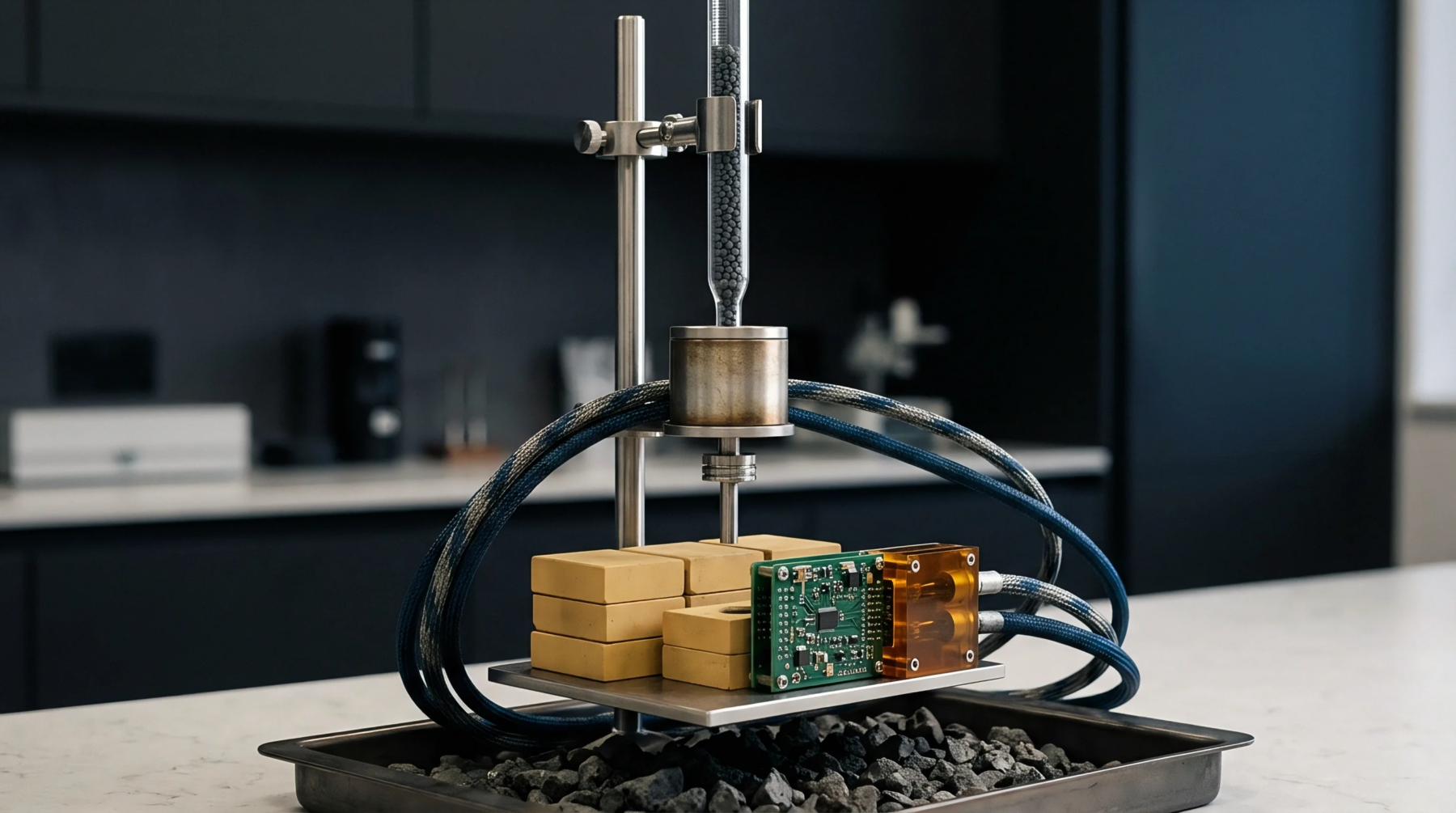
Multilayer printed circuit board fabrication presses semi-cured glass epoxy prepreg sheets and copper foils into rigid composite structures under heat and hydraulic force. Heated press plates transfer thermal energy and mechanical load to material stacks inside vacuum lamination chambers. Platen pressure forces resin to flow between copper trace features while consolidating individual laminate layers into a unified board structure.
Precise force application eliminates air pockets and internal voids between copper layers. Lamination cycles utilize controlled pressure ramps to match resin viscosity changes during heat-up phases.
Viscous Flow
Thermosetting epoxy resin undergoes rapid viscosity reduction as temperature increases inside the vacuum lamination press. Hydraulic systems modulate applied force to manage resin flow velocity across copper pattern topologies. Platen pressure maintains laminate layer alignment, preventing copper trace distortion and dielectric thickness variations.
Excessive pressure forces too much resin out of the board stack, causing thin dielectric layers and potential electrical short circuits. Insufficient force leaves uncompacted resin pockets, resulting in delamination defects during subsequent high-temperature assembly processes.
Thickness Control
Finished board thickness compliance depends directly on applied hydraulic pressure stability. Platen pressure controls final dielectric spacing between internal signal layers to maintain target characteristic impedance values. Microsection analysis verifies resin distribution and layer thickness accuracy across multi-layer panel builds.