Dielectric Boundary
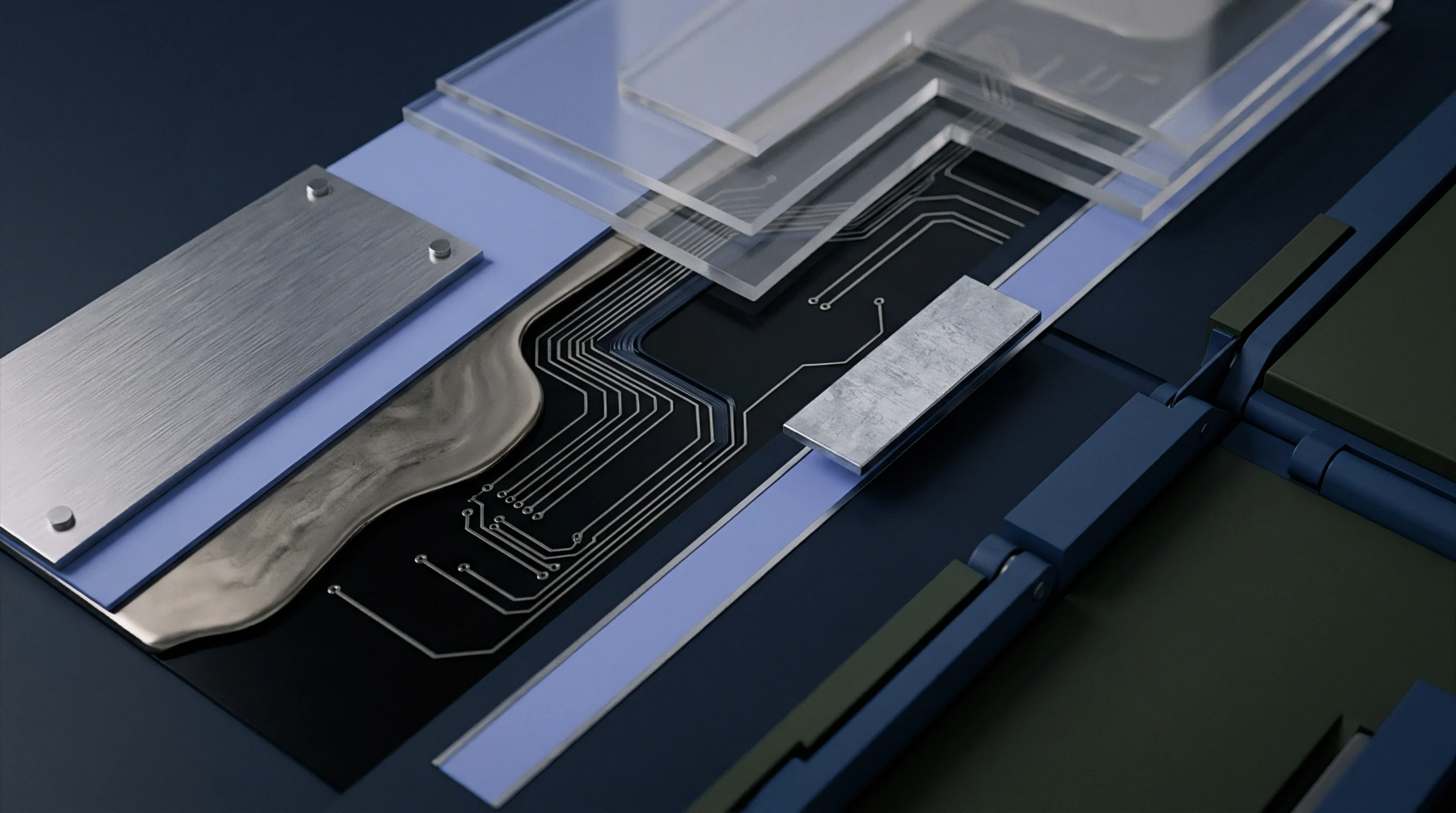
Dielectric barrier performance represents the opposition offered by solid and polymer materials to direct current leakage across printed circuit board substrates. Insulation resistance quantifies the leakage current flowing through base laminates, solder mask layers, and inter-conductor spacings when a specific direct voltage potential applies between adjacent traces. Board fabricators measure this parameter using specialized megohmmeters or high resistance meters to verify that chemical residues from etching and cleaning processes do not compromise electrical separation.
Surface contamination, moisture absorption, and thermal degradation reduce the ohmic value across these paths, which leads to crosstalk or catastrophic dielectric breakdown during high voltage operation. Production facilities perform these evaluations at elevated temperature and humidity conditions to accelerate ionic migration failure mechanisms before assembly dispatch.
Substrate Integrity
Base laminate construction determines the baseline current restriction capability of printed wiring boards prior to component population. Glass cloth reinforcement and epoxy resin matrix formulations dictate how effectively a circuit board resists conductive anodic filament formation under sustained bias. Laminate press cycles must achieve complete resin cure to prevent microscopic voids where moisture accumulates and degrades local dielectric properties.
Mechanical drilling and routing operations introduce microcracks along barrel walls, which lower the measured resistance if burrs bridge internal power and ground planes.
Assembly Contamination
Chemical residues remaining on populated circuit boards severely diminish electrical isolation between fine pitch component leads. Rosin flux activators and ionic salts left behind by wave soldering or reflow operations provide pathways for surface leakage when exposed to ambient humidity. Aqueous wash processes remove these contaminants to restore the surface resistance of the assembly before conformal coating application.
Post-soldering thermal profiles also polymerize flux residues into non-conductive states, which stabilizes leakage currents over the operational lifespan of the finished hardware.