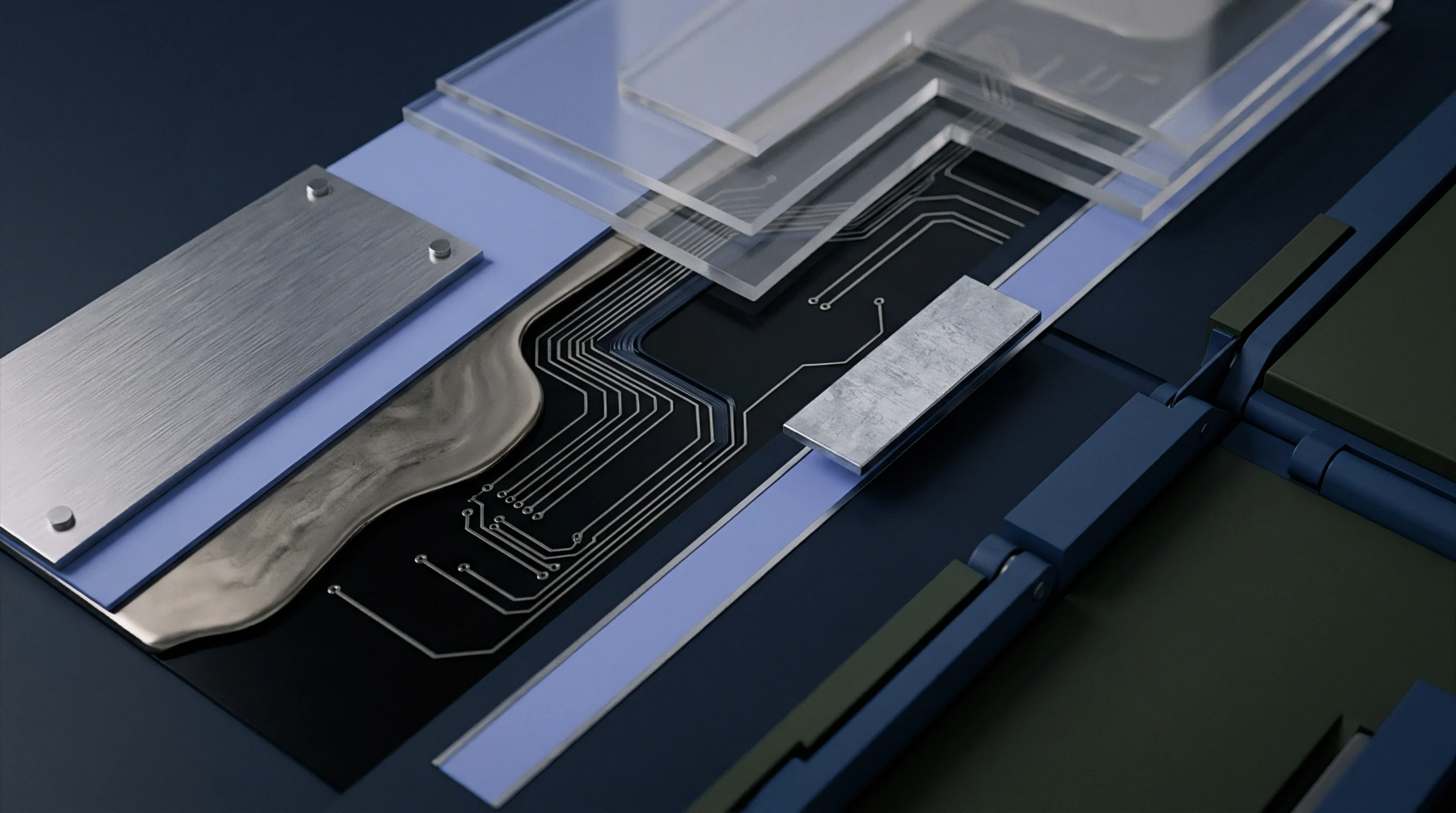
Signal Dispersion
Electromagnetic pulse dispersion and reflections along board transmission lines cause energy from preceding data bits to spill into adjacent time intervals. The signal distortion phenomenon known as inter symbol interference degrades receiver voltage margins and timing accuracy by distorting signal transitions. Frequency-dependent dielectric attenuation and conductor skin effect cause signal pulses to broaden as they travel down a trace.
Distorted bit pulses overlap with subsequent pulses, altering threshold voltage crossing points at the receiver decision circuit.
Pulse Overlap
Channel bandwidth constraints attenuate high-frequency pulse components, slowing edge transition times and causing signal tails to linger into succeeding bit periods. Long transmission lines on circuit boards exacerbate signal spreading by absorbing high-frequency harmonics needed to maintain crisp square-wave transitions. Multiple reflection points, such as connectors and via stubs, superimpose secondary energy pulses onto the primary signal path.
When previous bit states influence current logic determination, the receiver experiences increased bit error rates due to reduced noise margins. Designers mitigate signal spreading by applying transmitter pre-emphasis, which boosts high-frequency edge transitions to compensate for line losses. Continuous time linear equalizers and decision feedback equalizers in receiver integrated circuits unroll overlapping pulse tails to recover transmitted bit streams.
Material selection using low dissipation factor laminates reduces high-frequency loss, preserving pulse shapes over extended trace lengths.
Intersymbol Distortion
Physical channel verification uses eye diagrams and pulse response metrics to measure the magnitude of pulse tail contamination. Routing traces with uniform characteristic impedance minimizes reflection sources that feed late-arriving energy into the signal path. Uncontrolled inter symbol interference forces channel operating speeds down to maintain acceptable error rates.
Proper channel termination and equalized signal paths enable multi-gigabit data rate performance across dense backplane architectures.