Copper Ductility
Evaluation determines the ability of electrodeposited copper foil to withstand elongation and bending before fracture occurs. This ipc-tm-650 method 2.4.35 procedure identifies the elongation percentage of a specimen by stretching a foil sample until a break happens under a controlled tensile load. Production environments utilize this metric to verify that raw foil exhibits sufficient flexibility to survive thermal cycling or mechanical stress during circuit operation.
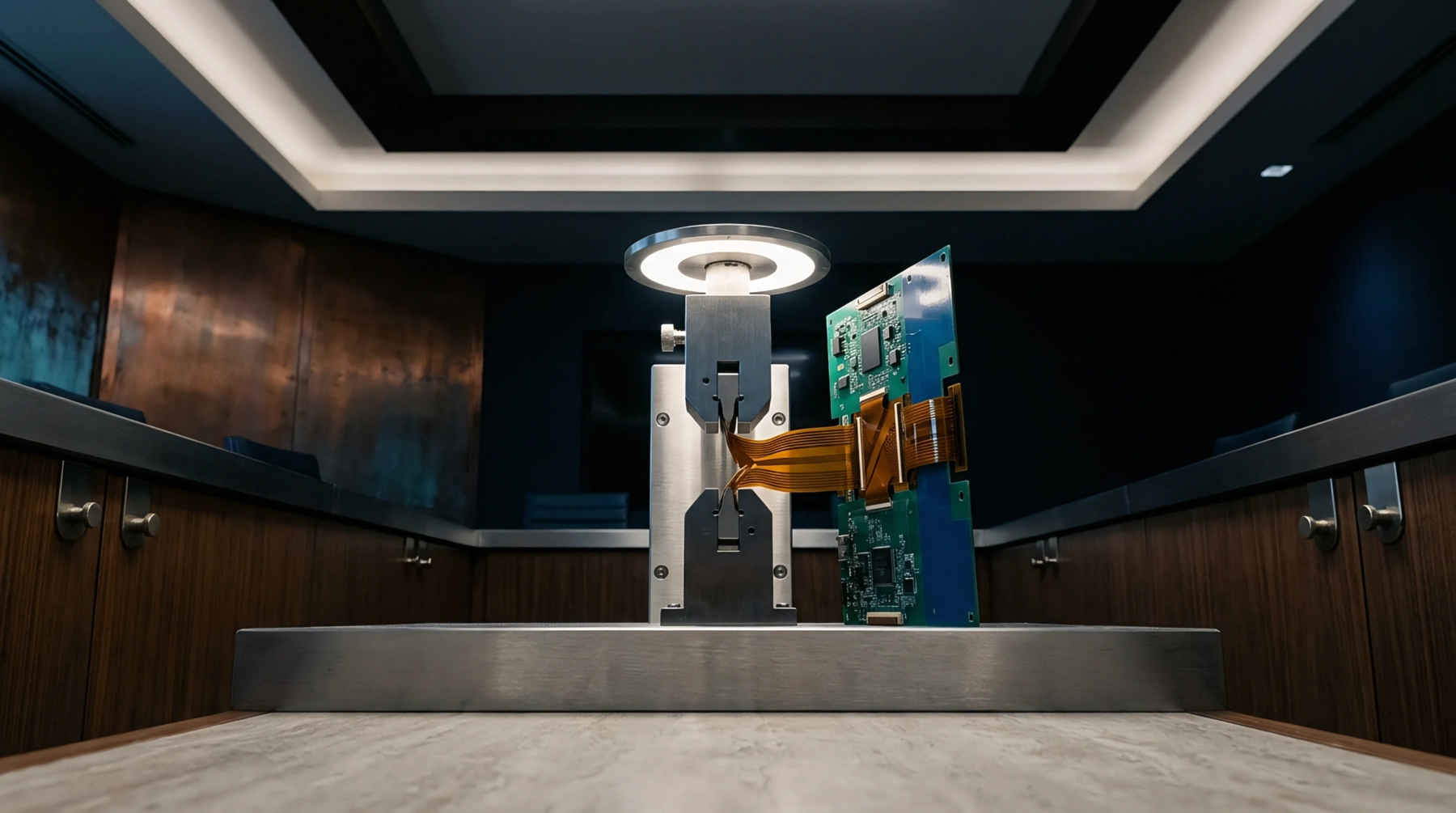
Testing proceeds by securing a foil strip into a specialized tension machine that pulls at a constant rate until failure. The elongation measurement relies on the difference between the initial gauge length and the final separated length after fracture.
Testing Parameters
Copper foil samples require specific dimensions to ensure data consistency across multiple batches. Technicians prepare rectangular strips with a fixed width to provide a uniform cross section during the pull sequence. The machine calibration demands accurate grip pressure to prevent slippage or premature failure near the mounting points.
Environmental control remains necessary throughout the process because humidity and ambient temperature influence the mechanical properties of thin copper layers. Data acquisition software records the force versus distance graph to detect the exact point of material yielding. A successful specimen demonstrates ductility meeting the minimum requirements defined by the relevant material specification.
Mechanical Implications
Fractures occurring inside the gauge length provide the valid elongation value required for certification. If a break happens outside the central region near the grips, that specific test repetition lacks validity and requires immediate replacement. High ductility indicates that the metal lattice structure possesses enough grain boundary mobility to absorb stress without immediate cracking.
Brittle copper foils fail this assessment when the material shows minimal stretch before snapping. Circuit designs subjected to vibration or heavy thermal expansion depend on this baseline material performance for long term field reliability.