Stress Analysis
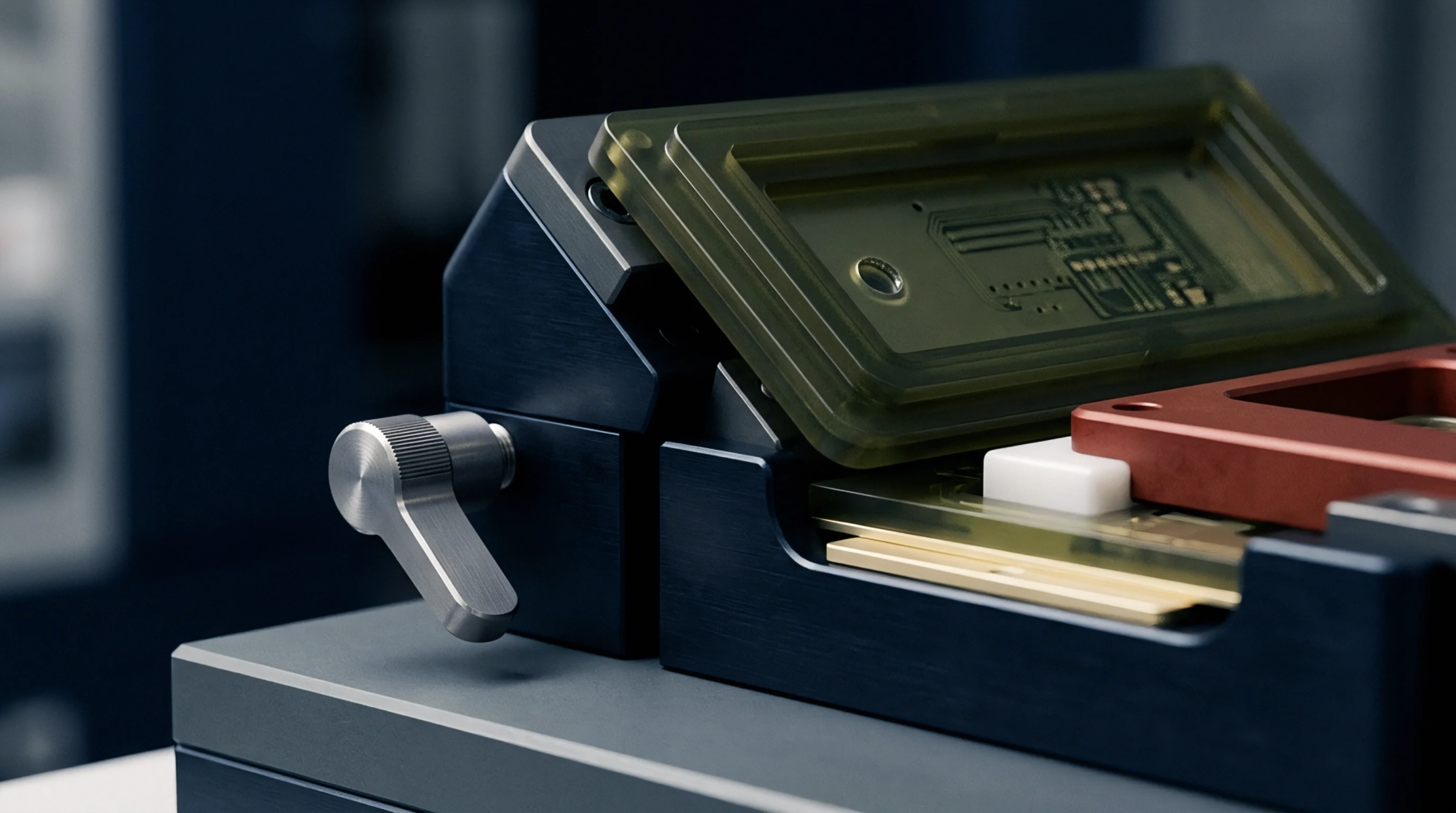
Acoustic emission monitoring provides a systematic approach for identifying internal structural discontinuities within a solder joint or a ceramic substrate during thermal cycling. Micro-fracture detection identifies the initiation of these sub-surface failures by sensing high-frequency elastic waves produced when material bonds break. Sensors positioned on the periphery of the circuit board translate these mechanical impulses into electrical signals for interpretation by signal processing hardware.
Analyzing the arrival times of these signals permits the isolation of specific failure coordinates within the assembly. This method separates structural damage from environmental interference by filtering background noise through dedicated hardware channels. Monitoring the progression of these signals permits a determination of the rate at which crack propagation occurs within a component.
The technology relies on the assumption that energy released during bond breakage travels through the PCB material without significant attenuation.
Failure Isolation
Evaluation of brittle failure within through-hole barrels requires a high degree of sensitivity to low-amplitude mechanical events. Micro-fracture detection facilitates the identification of these discrete acoustic events which often precede electrical intermittent connections. Instruments capture raw data streams while the board resides inside a temperature chamber to replicate operational stress conditions.
Filtering algorithms isolate the transient signatures associated with ceramic cracks or metallic grain separation from ambient vibrations. Precise localization happens through triangulation based on the differences in time of arrival at distinct sensor locations on the fixture. Establishing a correlation between thermal load cycles and signal intensity allows an engineer to map the structural degradation of the solder.
This diagnostic procedure provides empirical data regarding the endurance limits of a device under specified mechanical loads.
Manufacturing Governance
Verification of assembly integrity requires standardized testing protocols to determine the structural life of a completed board. Micro-fracture detection serves the requirement of identifying latent defects that do not appear during standard electrical continuity checks. Production facilities integrate these monitoring tasks into the final validation phase to confirm the resilience of solder joints.
Reliable data collection depends on the contact quality between the piezoelectric transducers and the substrate surface. Consistent mounting pressure ensures accurate capture of elastic waves throughout the duration of the thermal test. Data sets derived from these sessions determine whether a specific batch conforms to durability specifications for high-reliability environments.
Each detected signal acts as a quantitative measurement of material compromise rather than an estimate of potential longevity.