
Electromagnetic Field Suppression in Multilayer Printed Circuit Power Plane Stackups
Thin dielectric power plane pairs suppress high frequency cavity modes and radiated emissions by lowering target impedance and shifting resonant frequencies.
Thin dielectric power plane pairs suppress high frequency cavity modes and radiated emissions by lowering target impedance and shifting resonant frequencies.

Mapping high-speed power rail transfer impedance limits directly to radiated emissions limits prevents costly EMC chamber re-tests and batch rejections.

Power distribution plane cavity resonances create high impedance peaks that drive edge fringing fields, forcing radiated emissions beyond CISPR 32 limits.

Active silicon substitutions alter transient edge rates, parasitic resonances, and material composition, legally invalidating technical construction files.

Quantifying component change masking in multi-tier assemblies requires sensitivity matrix formulation, thermal transient screening, and interface nodal access audits.

Market surveillance sampling targets high-risk import batches; importers defend compliance through accredited test dossiers and formal uncertainty guard bands.

Perimeter via pitch selection requires matching ground via spacing to less than one-twentieth of target frequency wavelength while verifying barrel plating thickness.

Correlating power distribution plane transfer impedance to radiated emissions limits defines target impedance curves that prevent edge radiation compliance failures.
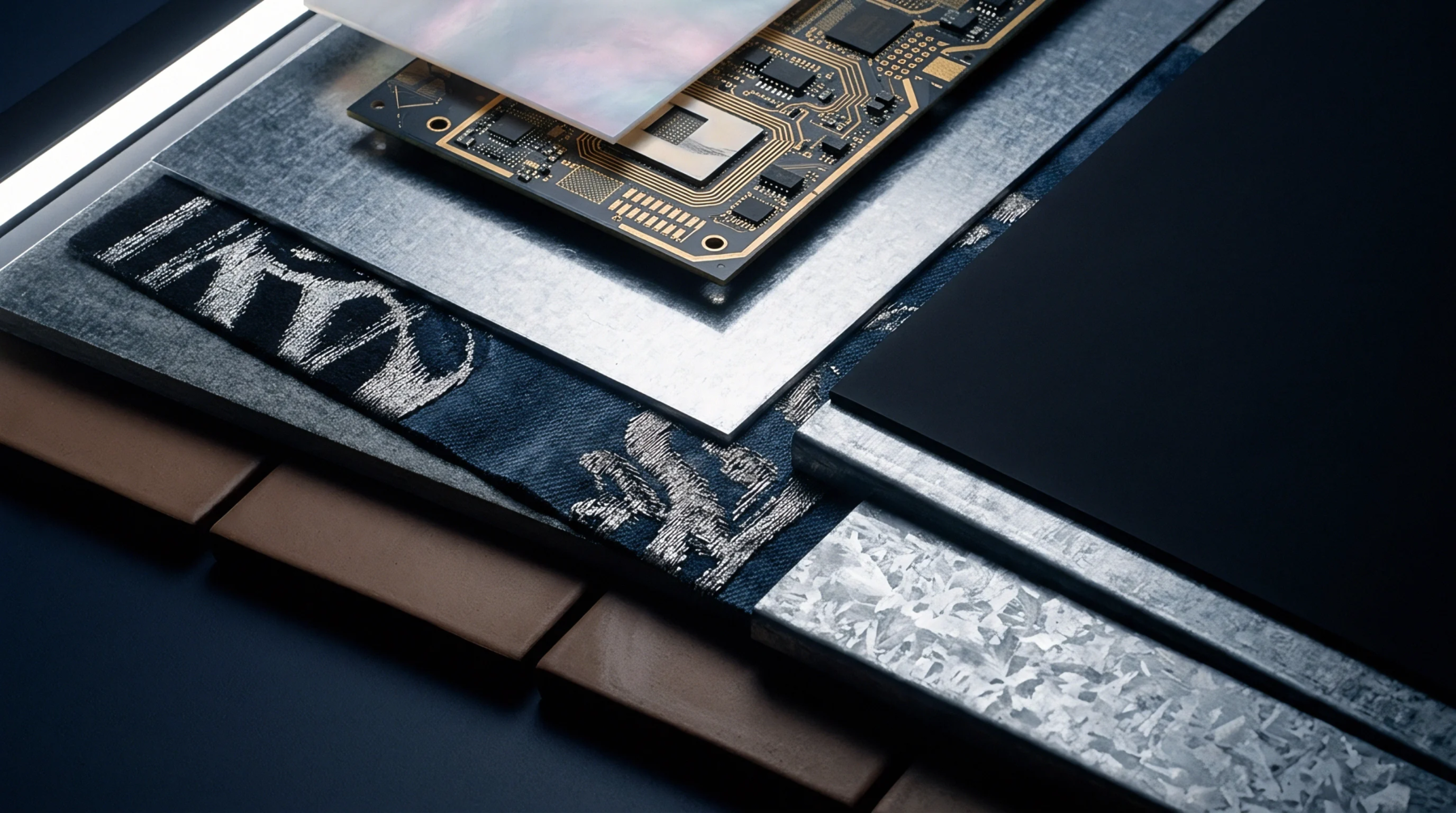
Benchtop near-field scanning maps surface magnetic leaks to locate reference plane splits and edge escapes before formal compliance testing.

Multilayer power distribution field escape risk requires bench near-field scanning and transfer impedance limits to prevent far-field compliance chamber failures.

Standard electrical tests verify bare substrate isolation, component pin continuity, thermal stress survival, and electromagnetic conformity before batch signoff.
Expertise is a utility, not a secret. sentiention™ publishes its working knowledge as open reference: intelligence layer covering the materials it sources, the markets it enters, and the reference that serves both.