Quantifying Electromagnetic Enforcement Exposure from Unapproved Capacitor Dielectric Shift
Unapproved MLCC dielectric substitution erodes filter insertion loss under DC bias, triggering CISPR 32 emissions breaches, customs seizures, and recall fines.

Attenuation
Filter networks engineered for switch-mode power supplies experience severe impedance degradation when high-permittivity ceramic components replace specified temperature-stable devices. Barium titanate crystalline structures yield substantial capacitance drops as operating direct-current bias rises, directly compromising the insertion loss profile established during initial electromagnetic compatibility qualification. When a low-dropout regulator or buck converter circuit loses high-frequency shunt capability, conducted emissions climb across the switching fundamental and its harmonics, converting compliant designs into non-compliant hardware without triggering functional alerts on the production line.
Class one dielectrics maintain near-flat permittivity curves across applied voltages, whereas class two formulations collapse under electrical and thermal stress. Procuring an unverified MLCC reel bearing nominal ratings matching the schematic capacitance frequently conceals a substitute formulation whose real-world capacitance plummets by seventy percent under operational voltage. Insertion loss drops eighteen decibels.
The resulting RF leakage enters wiring harnesses and test equipment, breaching conducted emission limits before radiated energy even enters the calculation.
Filter Suppression Degradation under Bias
Direct-current voltage applied across multilayer ceramic structures forces ferroelectric domain saturation, diminishing effective capacitance to a fraction of the nominal face value. A design specifying a ten-microfarad capacitor rated at twenty-five volts in an 0805 package may yield less than two microfarads when operated on a twelve-volt rail if an unapproved supplier delivers a thinner dielectric layer to cut ceramic powder consumption. This nonlinear capacitance collapse alters the cutoff frequency of passive low-pass filters, shifting pole locations upward by more than an octave.
A thirty percent DC bias voltage on 0402 X5R ceramic chips drops effective insertion attenuation by fourteen decibels at one hundred megahertz.
Switching converters operating between two hundred kilohertz and two megahertz generate sharp di/dt transients through input decoupling loops. Attenuation curves that previously suppressed these switching spikes flatten out, allowing broadband spectral noise to conduct through power input terminals directly toward artificial mains networks used during regulatory verification.
- Capacitance depletion shifts low-pass filter corner frequencies upward into the switching ripple spectrum, compromising conducted attenuation.
- Equivalent series resistance elevation raises high-frequency impedance at the intended notch frequency, dissipating less harmonic energy across the shunt path.
- Parasitic loop expansion occurs when board traces interact with altered internal component terminations, introducing unintended series inductances into critical bypass branches.
Bypass Network Anti Resonance Peak Generation
Parallel decoupling groups relying on staggered capacitance values suffer impedance shifts when class two dielectrics lose fifty to eighty percent of their zero-bias rating. Circuit designers frequently place a one-hundred-nanofarad capacitor in parallel with a ten-microfarad bulk component to create a wideband low-impedance plane across the printed circuit board. When the larger capacitor suffers dielectric saturation while the smaller component maintains its nominal value, the targeted anti-resonance null shifts into harmonic frequencies generated by digital processors or switching power stages.
Current loops that should resolve locally instead propagate across power planes. Parallel capacitors form anti resonance peaks. The board planes transform into unintended patch antennas, radiating high-frequency electric fields across chassis boundaries and external cabling.
| Dielectric Formulation | Nominal Value | Package Size | Effective Capacitance | Attenuation at 30 MHz | Attenuation at 100 MHz |
|---|---|---|---|---|---|
| C0G (Class I) | 100 nF | 1206 | 99.2 nF | -34.2 dB | -28.5 dB |
| X7R (Approved Class II) | 100 nF | 0603 | 78.4 nF | -29.1 dB | -22.3 dB |
| X5R (Substituted Class II) | 100 nF | 0402 | 31.6 nF | -16.4 dB | -11.2 dB |
| Y5V (Unapproved Class III) | 100 nF | 0402 | 9.8 nF | -5.8 dB | -2.1 dB |
Dielectric thickness determines voltage stability, while footprint area governs inductive bypass effectiveness.

Stack
Multilayer ceramic capacitor manufacturing controls permittivity by altering grain boundaries within titanate crystalline lattices. Cost reduction drives suppliers to decrease dielectric layer thicknesses down to single-digit micrometers, multiplying the internal electric field intensity across each layer for any given terminal voltage. A capacitor operating at five volts across a three-micrometer dielectric layer experiences field stresses exceeding 1.6 megavolts per meter, plunging the material deep into ferroelectric saturation.
Procurement teams facing component shortages often accept alternative reel markings without verifying ceramic formulation microstructures. Substituted components may share physical dimensions and nominal zero-bias capacitance ratings with approved parts, yet their internal grain compositions exhibit radical differences. Barium titanate exhibits strong ferroelectric hysteresis.
Thinner layers increase microcrack susceptibility under thermal soldering stresses, compounding electromagnetic vulnerabilities with catastrophic mechanical failure modes over operating lifespans.
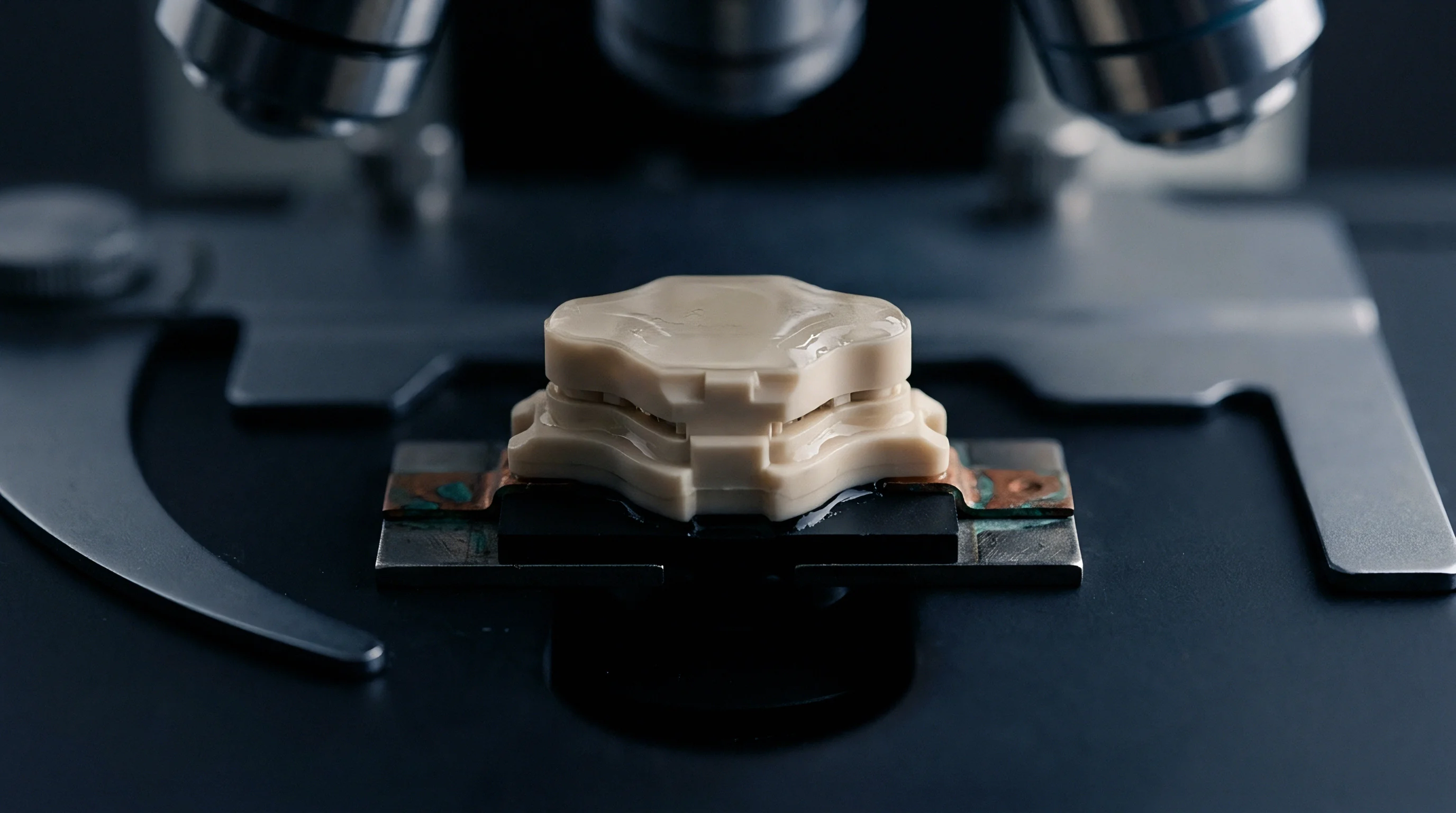
Dielectric Ceramic Grain Morphology and Barium Titanate Poling
Class two formulations rely on doped barium titanate particles whose crystal lattices distort below the Curie point. As ceramic grains experience strong external electric fields, spontaneous polarization domains align with the field vectors, exhausting further dipole alignment capacity. Permittivity drops precipitously, dragging operational capacitance down alongside it.
Higher dielectric constants yield steeper voltage coefficient penalties under working bias.
Higher dielectric constants yield steeper voltage coefficient penalties under working bias.
Dopants such as rare-earth oxides determine temperature stability curves and grain size distributions during kiln firing. Substituted reels sourced from unverified secondary mills frequently feature coarse, uneven grain matrices that degrade voltage coefficient behavior. Elevated operating temperatures accelerate this decline, creating severe impedance variations across standard industrial thermal windows.

Can Unapproved Ceramic Formulations Escape Routine Inspection?
Production line in-circuit electrical testers verify board assemblies by routing five-hundred-millivolt AC excitation signals through unpowered nodes. Test fixtures record thirty picofarads. The unpowered test condition leaves ferroelectric domains unperturbed, reporting passing capacitance values within five percent of nominal schematic figures even when unapproved Y5V or downgraded X5R dielectrics occupy the board.
Automated optical inspection systems examine solder fillet geometry and component exterior markings, yet surface mount ceramic chips carry no visible dielectric designations on their fired ceramic bodies.
- Receiving inspection measures passive reel samples on low-frequency LCR meters without applying rated operational direct-current bias voltages.
- In-circuit automated testing probes circuit nodes using low-voltage alternating signals, confirming basic presence and gross solder continuity while missing voltage coefficient collapse.
- End-of-line functional screening checks basic board operational states within benign laboratory environments where ambient temperatures mask thermal dissipation extremes.
- Batch packing approval signs off shipping manifests based entirely on unverified certificate-of-conformance paperwork supplied by component intermediaries.
High voltage collapses barium titanate permittivity. The factory automated test setup fails to simulate working electrical stress, allowing compliant-looking assemblies to clear quality checkpoints while harboring severe electromagnetic vulnerabilities. The overseas vendor maintains that catalog capacitance ratings represent nominal room-temperature bench values rather than working-voltage circuit behavior.

Harmonic
Switching power converters produce intense radio-frequency spectral spikes across their fundamental frequencies and associated odd multiples. Input filters designed with proper damping attenuation absorb these pulses before they exit equipment enclosures. When dielectric substitution reduces effective bypass capacitance, ripple currents escape through power cords and chassis seams, generating sharp peaks that exceed statutory emissions limits.
Engineers analyzing failing test reports observe unexpected broadband noise elevations between thirty megahertz and three hundred megahertz. Stray inductance dominates past self resonance. Unapproved capacitors shift self-resonant frequencies upward into regions where copper circuit traces behave as radiating dipoles, destroying the safety margins validated during initial laboratory certifications.

Conducted Margin Depletion along Power Rails
Standard line impedance stabilization networks capture high-frequency current ripples between one hundred fifty kilohertz and thirty megahertz. A compliant consumer power module generally maintains six decibels of margin below the CISPR 32 Class B quasi-peak ceiling. Substituting input filter MLCC components with unstable formulations erodes this headroom rapidly.
Swapping a twenty-five-volt rated X7R component for an identically sized X5R substitute on a twelve-volt input rail typically introduces eight to fourteen decibels of additional conducted noise at switching harmonics. The quasi-peak detector registers immediate threshold violations across lower frequencies, invalidating original laboratory test certificates. Field replacements using untested ceramic formulations produce immediate regulatory exposure.
| Frequency Band | Measurement Type | Baseline Margin (Approved X7R) | Measured Margin (Shifted X5R) | Measured Margin (Shifted Y5V) | Compliance Status |
|---|---|---|---|---|---|
| 150 kHz to 500 kHz | Conducted (Quasi-Peak) | +8.4 dB | +1.2 dB | -6.8 dB | Non-Compliant (Y5V) |
| 500 kHz to 5 MHz | Conducted (Average) | +7.1 dB | -0.5 dB | -9.4 dB | Non-Compliant (Both) |
| 5 MHz to 30 MHz | Conducted (Average) | +6.2 dB | +0.8 dB | -4.1 dB | Non-Compliant (Y5V) |
| 30 MHz to 230 MHz | Radiated (10m Quasi-Peak) | +5.8 dB | -2.4 dB | -11.2 dB | Non-Compliant (Both) |
| 230 MHz to 1000 MHz | Radiated (10m Quasi-Peak) | +4.3 dB | -1.1 dB | -7.9 dB | Non-Compliant (Both) |
| Data gathered under controlled twelve-volt DC bus bias, forty-five degrees Celsius chamber ambient, sixty-watt active load. | |||||
Radiated Field Growth from Uncontained Board Ringing
Parasitic inductance on circuit traces combines with depleted shunt capacitance, driving high-amplitude ringing across fast MOSFET transitions. Rise times measuring under ten nanoseconds excite parasitic tank circuits, dumping energy into adjacent structural cabling. The radiated electromagnetic field spreads outward into semi-anechoic test environments, breaching CISPR 32 radiated thresholds between sixty and one hundred eighty megahertz.
Bypass networks lose high frequency effectiveness. Secondary radiation from power wiring turns the entire harness into an efficient aerial, driving field intensity ten to fifteen decibels above certified baselines. Uncorrected spectral regrowth above thirty megahertz prompts port-of-entry impoundment and product line reassessment.
Surveillance
Market inspection bodies across the European Union, the United Kingdom, and North America execute randomized procurement campaigns to identify non-compliant consumer and industrial hardware. Regulatory agencies purchase commercial inventory directly from retail distribution networks, submitting sealed production units to accredited test laboratories for comparative electromagnetic assessment against published Declarations of Conformity. A hardware revision incorporating unapproved component changes forfeits the presumption of conformity granted by historical test certificates.
When an agency laboratory identifies emissions exceeding legal ceilings, the discovery initiates cross-border alerts through centralized notification databases like the European Safety Gate system. The declaration loses legal force. Border customs impound uncertified hardware.
Enforcement officers demand full technical construction files, including original test reports, comprehensive bills of materials, and engineering change orders explaining any discrepancies between approved design files and procured hardware.
Where Does Enforcement Authority Trigger Border Interception?
Customs authorities hold arriving freight containers when commercial shipping documentation conflicts with technical declaration databases. When market surveillance authorities confirm a persistent non-compliance in a specific stock-keeping unit, customs officials flag the manufacturer registration code and target incoming consignments for mandatory documentary review or physical sampling. Border agents seize shipments lacking verified documentation, refusing warehouse clearance until accredited testing concludes.
Non-compliance with CISPR 32 Class B limits voids the EU Declaration of Conformity and triggers automatic market withdrawal under Regulation 2019/1020.
Market surveillance authorities demand traceable evidence verifying that mass-production hardware matches the physical construction tested during formal certification. An unexplained dielectric shift voids factory conformity declarations, placing the legal and commercial burden directly on the importer of record.
- Component bill of materials enumerates exact manufacturer part numbers, dielectric classifications, voltage ratings, and package specifications for every passive component.
- Engineering change documentation tracks authorized component substitution approvals signed by designated design engineering and quality assurance authorities.
- Accredited laboratory test dossiers substantiate baseline electromagnetic compatibility compliance across harmonised European and international standards.
- Supplier material verification records establish chemical and physical verification audits through incoming receiving inspections.

Accredited Chamber Retesting and Margin Measurement
National regulators send procured production samples to independent test houses operating three-meter and ten-meter semi-anechoic chambers. Technicians configure the unit under test using published harmonised standards such as EN 55032 and CISPR 32, scanning radiated emissions from thirty megahertz up to six gigahertz. The agency revokes market entry.
Discrepancies exceeding two decibels above harmonised thresholds prompt formal regulatory enforcement notifications to importers.
Article 40 of EU Regulation 2019/1020 compels immediate importer notification of technical non-compliance, stripping market authorization until formal re-testing concludes.
Sanction
Regulatory interventions inflict immediate financial liabilities extending far beyond the component cost variance that motivated an unauthorized bill-of-materials change. A manufacturer saving pennies per board by tolerating unapproved MLCC substitutions exposes their commercial operation to catastrophic stop-sale orders, public recall declarations, customs quarantines, and administrative fines levied by market surveillance bodies across international territories.
Inventory stranded in bonded warehouses incurs daily demurrage, storage charges, and inspection costs while technical files undergo administrative scrutiny. Commercial distribution agreements trigger punitive delivery failure clauses, empowering retailers to cancel purchasing commitments and charge back lost shelf-space revenues against the manufacturer. Class two ceramics age logarithmically.
Product recalls force field service teams to replace distributed hardware or rework assemblies under emergency timelines, generating immense logistics expenses.

Direct Financial Liabilities of Regulatory Interventions
Administrative enforcement starts with formal stop-sale notices that immediately freeze distributor inventory across participating territories. Fines levied by national telecommunications and trade agencies scale according to shipment volumes, non-compliance severity, and prior regulatory history. Repeat violations or failure to cooperate with market surveillance directives escalate corporate penalties into six-figure administrative sanctions.
Product withdrawals from commercial retail channels impose immediate reverse-logistics freight costs alongside restocking and destruction expenses. Independent testing houses charge premium emergency rates to re-evaluate modified hardware in accredited anechoic chambers, compounding engineering overheads during redesign execution.
Factory automated test equipment measures component capacitance at zero volts bias where dielectric collapse remains completely undetectable.
| Enforcement Mechanism | Direct Operational Cost | Logistics and Supply Chain Impact | Timeline to Resolution | Commercial Exposure Level |
|---|---|---|---|---|
| Customs Border Hold | €5,000 to €25,000 demurrage | Immediate shipment impoundment | 2 to 8 weeks | Severe localized launch delay |
| Formal Market Stop-Sale | €20,000 to €150,000 fine | Complete distributor inventory freeze | 1 to 6 months | Total regional revenue cessation |
| Mandatory Product Recall | €15 to €45 per field unit | Reverse logistics, product destruction | 3 to 12 months | Catastrophic brand and financial loss |
| Technical File Revocation | €12,000 to €40,000 re-testing | Invalidation of EU CE and UKCA marks | 2 to 4 months | Legal barrier to continental commerce |
Corrective Field Action and Technical Documentation Rectification
Remediating an unapproved component substitution demands executing full EMC chamber qualifications on revised hardware assemblies. Engineering departments must re-spin printed circuit boards or mandate strictly controlled rework operations replacing compromised MLCCs with verified class one or premium class two components carrying full supplier traceability. Technical documentation updates require formal engineering change notifications, updated bills of materials, and revised Declarations of Conformity signed by authorized legal representatives.
The unresolved problem remains whether national surveillance authorities will harmonize laboratory pre-screening methods before secondary customs brokers absorb liability for non-compliant batch declarations.