Void Containment
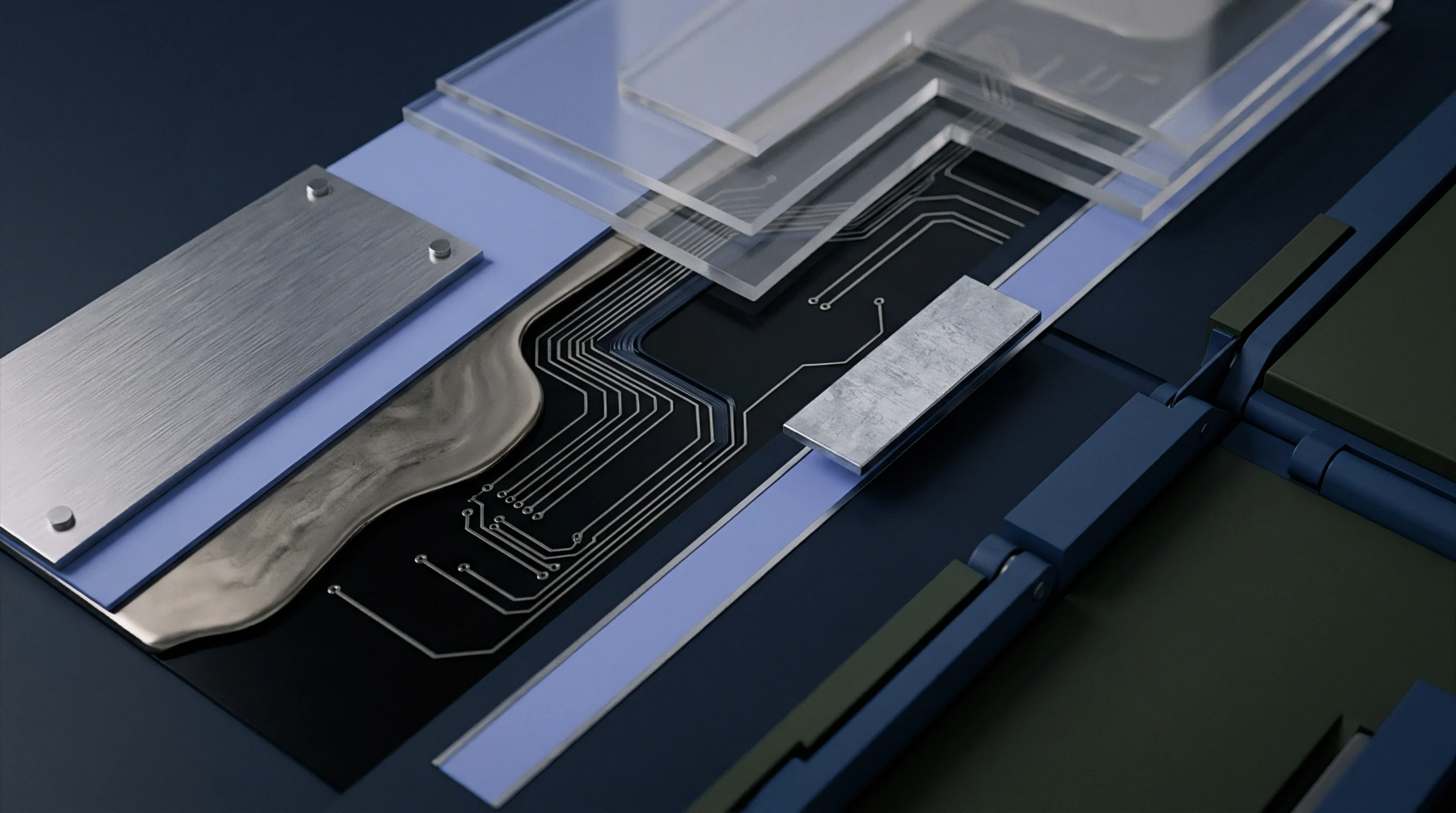
Protective shielding applied around micro-vias prevents solder wicking and thermal fatigue during printed circuit board assembly. This localized dielectric barrier blocks capillary migration inside laser-drilled interconnect structures during infrared reflow. High-density interconnect fabrication requires this specific reinforcement to stop outgassing from inner layer resins from fracturing plated copper barrels.
Standard optical inspection and automated X-ray inspection verify the continuity of the barrier prior to final functional testing.
Process Mechanics
Laser ablation creates microscopic cavities within dielectric layers that require specialized paste deposition to fill interior spaces reliably. Fluid dynamics dictate that low viscosity polymers flow into blind vias under controlled pneumatic pressure before ultraviolet curing sets the polymer matrix. Surface tension forces hold the liquid formulation against the copper sidewalls without bridging adjacent pads on fine pitch area array packages.
Thermal management benefits directly because entrapped air pockets inside the substrate transfer heat poorly compared to filled resin compounds.
Reliability Limits
Temperature cycling tests reveal that improper polymer crosslinking accelerates barrel cracking under extreme thermal shock conditions. High glass transition temperature materials resist degradation up to the limits specified in IPC standards for aerospace electronics hardware. Extended dwell times at peak reflow temperatures degrade the bond strength between the polymer plug and the adjacent metallization layer.
Circuit designers calculate maximum allowable current densities based on the reduced cross-sectional area remaining after hole filling operations are complete.