Dielectric Dimension
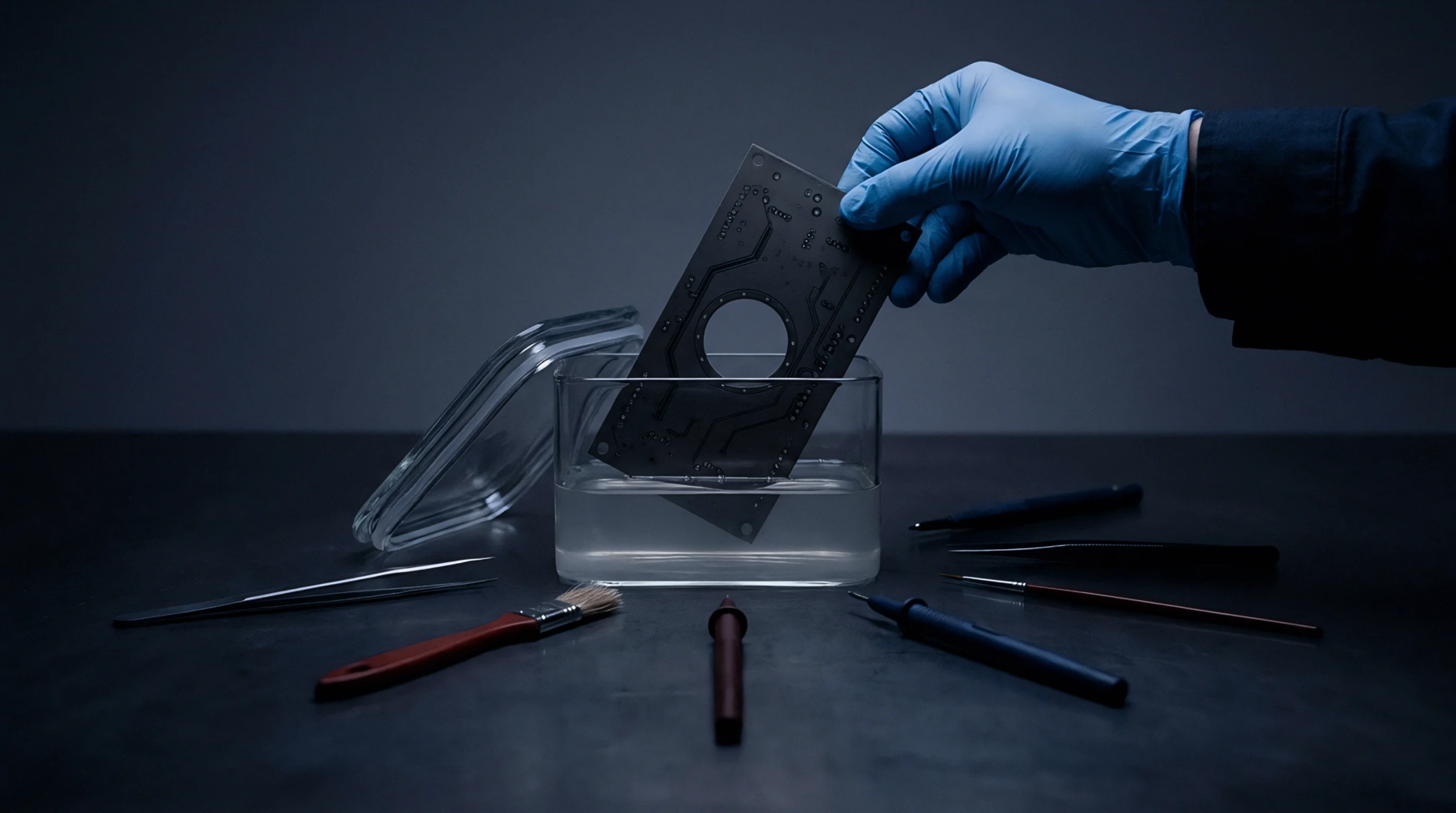
Etching processes on high frequency substrates determine conductor geometry variations that alter signal propagation speeds across printed circuit boards. Microstrip height variance describes physical thickness deviations in copper traces relative to the underlying dielectric layer across manufactured panels. Etchant concentration gradients and plating bath turbulence generate localized cross sectional profiles diverging from design targets.
Impedance calculators rely on uniform conductor geometry parameters to predict transmission line behavior accurately. Signal integrity degradation occurs when electromagnetic fields encounter unplanned physical boundary shifts along the propagation path.
Impedance Matching
Automated optical inspection equipment measures trace cross sections during inner layer fabrication to detect geometric anomalies before lamination cycles proceed. Differential signaling schemes depend on symmetrical trace dimensions to cancel common mode noise effectively. Phase distortion arises when high frequency components travel through asymmetrical transmission lines exhibiting dimensional discrepancies.
Test benches evaluate return loss parameters using vector network analyzers to quantify signal reflections caused by dimensional irregularities. Frequency dependent losses intensify when conductor sidewall angles deviate from vertical design specifications during chemical removal stages.
Assembly Variance
Surface mount technology placement processes introduce additional mechanical tolerances that interact with underlying trace dimensions during reflow soldering operations. Solder paste volume deposition must compensate for localized copper thickness changes to prevent joint starvation defects on fine pitch components. Fixture design parameters require strict tolerance allocations for board warpage resulting from asymmetric copper distribution across opposing panel faces.
Final product reliability depends on controlling dimensional stability throughout chemical and thermal processing stages without relying on post fabrication tuning.