Corrosive Chemistry
Chemical activity occurs during reflow when flux activators chemically reduce metal oxides on board surfaces and component terminations to promote solder wetting. This organic acid flux reaction generates ionic residues that remain on the surface after the thermal cycle completes. These residues often contain carboxyl groups and unreacted activators which attract atmospheric moisture.
Moisture presence creates a conductive path between fine pitch features that leads to electrochemical migration. High temperatures accelerate this ionic activity and increase the speed at which the acid attacks bare copper or solder masks.
Activity Measurement
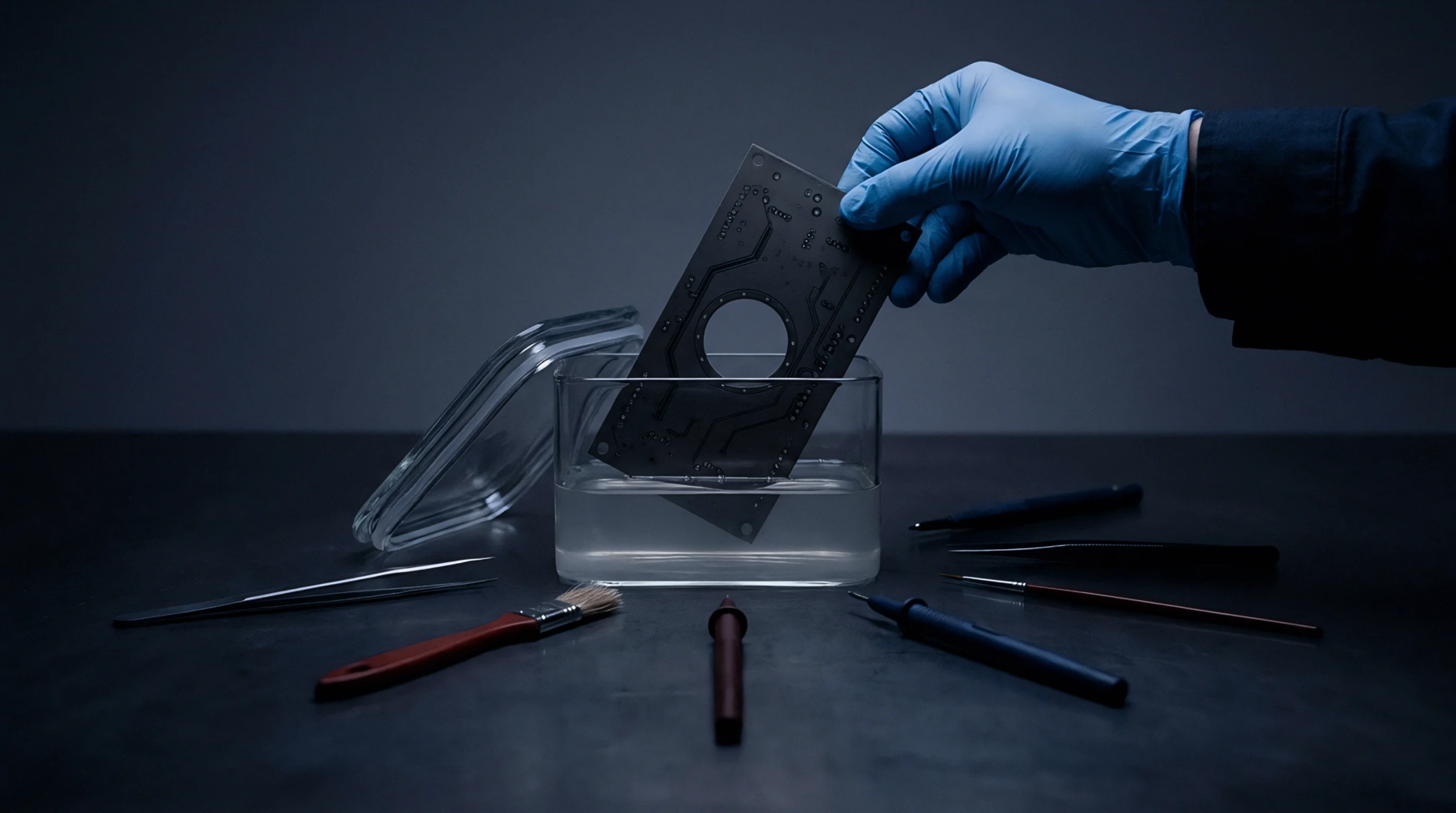
Ion chromatography quantifies the amount of halide and weak organic acid species remaining on the assembly post reflow. Testing involves extraction of these species in a solvent bath to determine the total concentration of ionic contaminants. Surface insulation resistance testing confirms whether these residues reach a threshold where leakage currents develop under bias.
Low conductivity values indicate that the cleaning process or the no clean chemistry performed effectively. Residual acid concentration directly correlates to the failure rate of the device in humid environments.
Systemic Mitigation
Manufacturers manage the severity of these reactions by selecting flux formulations that possess high thermal stability and low activity at ambient temperatures. Encapsulation techniques or strictly controlled wash cycles remove the reactive byproduct before final electrical test. Conformal coating acts as a physical barrier to prevent moisture from hydrating any trapped ionic species.
Boards designed with wider spacing between traces reduce the probability of dendritic growth when these residues exist. Proper management of the thermal profile prevents the overcooking of flux which can make residues more difficult to remove. Total elimination of acidic residues maintains the long term integrity of electronic insulation.