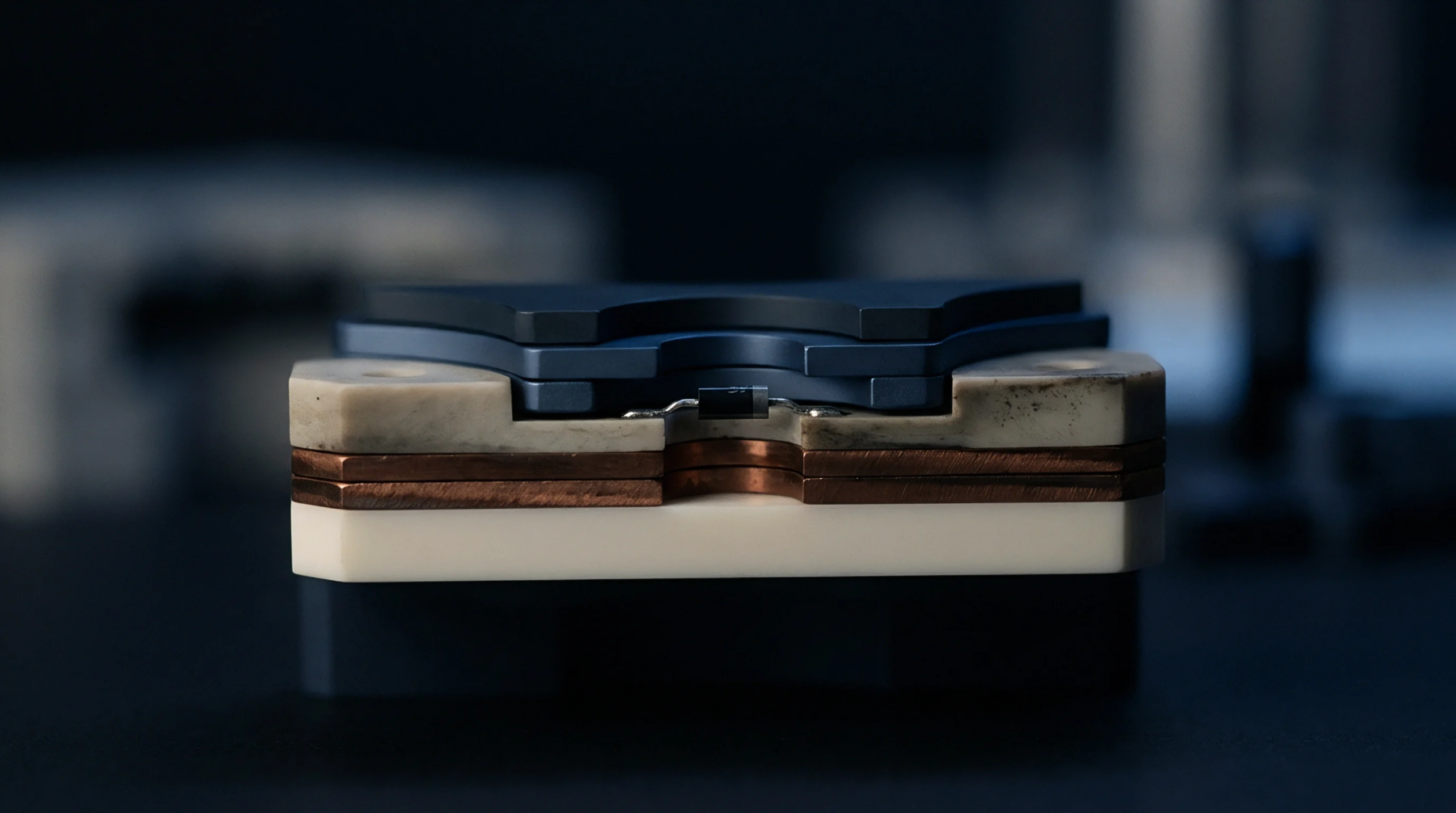
Thermoelectric Voltage
Junctions between dissimilar metals generate unwanted voltage differences when a temperature gradient exists across the electrical connection. This parasitic Seebeck effect creates small offset voltages that distort the readings of low-level analog circuits. It occurs most frequently where copper board traces meet tin-based solder or component termination alloys.
Signal Distortion
Precision amplifiers and analog-to-digital converters suffer from offset drift when local heat sources such as power transistors or processors generate asymmetric thermal waves. This thermal imbalance means that the parasitic Seebeck effect changes dynamically as the board operates, which makes static offset calibration ineffective. The resulting signal fluctuation mimics low-frequency noise and degrades the resolution of sensor measurements.
Mitigation Technique
Symmetric component layouts balance the temperature of critical junctions by placing them on identical thermal contours. Transceiver and resistor pairs are placed close together and aligned perpendicular to the heat flow to ensure that both solder joints experience the same temperature. Using thick copper planes and thermal isolation slots helps distribute heat evenly across the printed board.
This layout strategy reduces the thermal delta between the junctions to less than a fraction of a degree, which holds the generated thermocouple error below the noise floor of the amplifier.