Material Evaluation
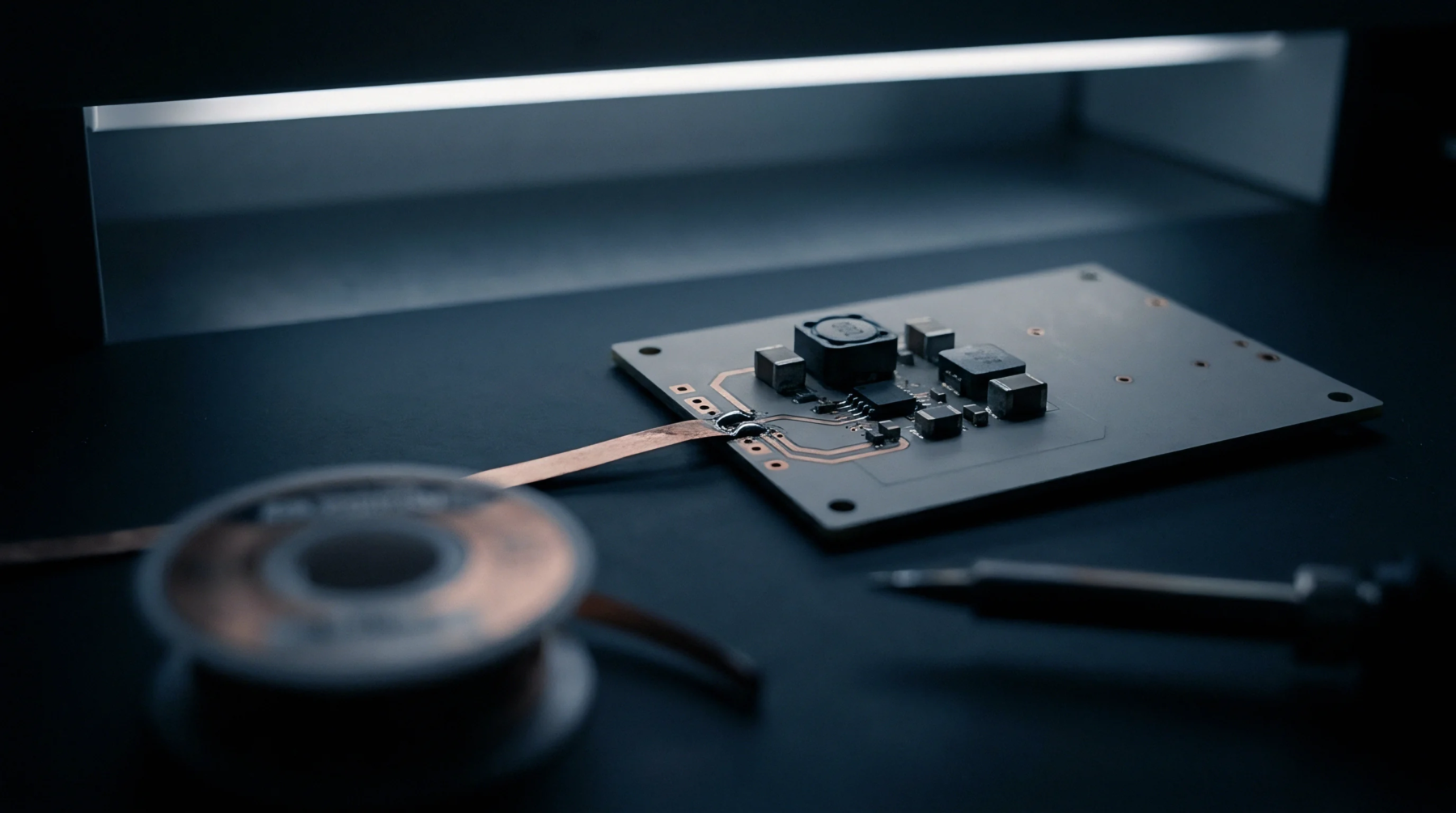
The quantitative assessment of the bond between a conductive metal foil and a dielectric substrate measures the resistance of the laminate to mechanical delamination. Through peel strength adhesion testing, engineers determine the force required to separate a strip of copper foil from the underlying fiberglass or polyimide core. This metric is a primary indicator of laminate quality, helping to predict whether the copper pads will lift during soldering operations.
It applies to both raw laminates and finished circuit boards subjected to thermal stress.
Testing Procedure
Executing this measurement involves stripping a narrow band of copper of a defined width from the laminate and pulling it at a right angle to the substrate. The testing machine, equipped with a sensitive load cell, pulls the copper strip at a constant speed of two inches per minute while recording the force. This force is typically expressed in pounds per inch of strip width.
For example, a standard FR-4 laminate might exhibit a peel strength of eight pounds per inch, while a high-frequency PTFE laminate might show a lower value of four pounds per inch. This data allows fabricators to verify that the foil-substrate interface can withstand the mechanical and thermal loads of assembly.
Quality Acceptance
Establishing acceptance thresholds for peel strength is necessary to prevent field failures caused by lifted pads or delamination. This testing is often performed after thermal shock or solder float exposure to simulate the temperatures of reflow and wave soldering. If the peel strength drops below a specified limit after thermal exposure, the batch of laminates is rejected.
This protocol ensures that the copper tracks remain bonded to the board throughout the service life of the electronic device.