Dimensional Expansion
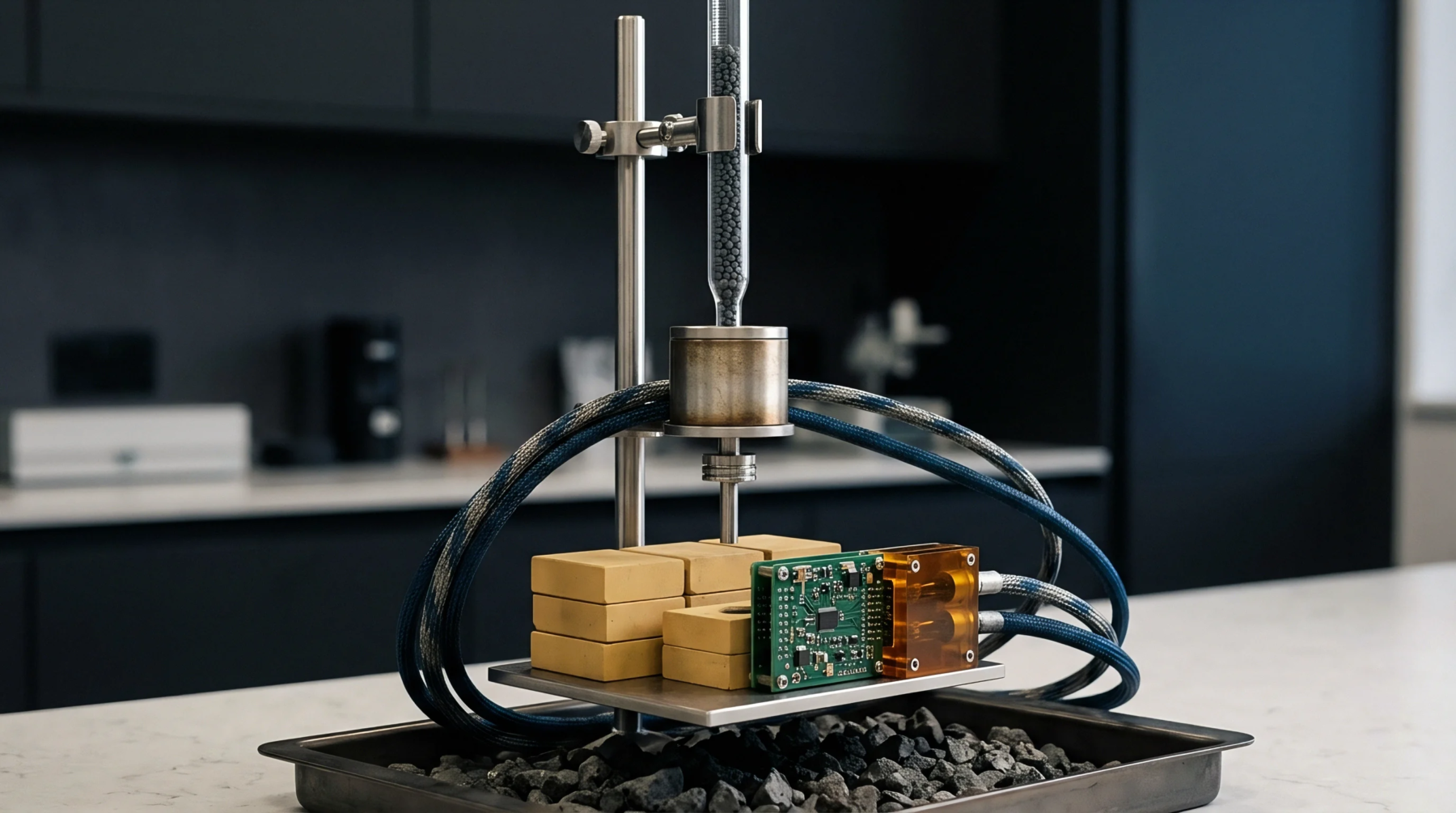
Liquid absorption by a base resin drives internal volume increase within dielectric materials during chemical exposure. This polymer swelling happens when solvent molecules penetrate the crosslinked network, forcing chains apart as the matrix reaches thermodynamic equilibrium with the surrounding fluid. Such enlargement changes the local mechanical properties of a circuit board and introduces physical strain on plated through holes or embedded components.
The process depends on the solvent diffusion rate and the degree of crosslinking inherent in the substrate formulation. High levels of moisture or processing chemicals induce internal stresses that eventually degrade the bond between the copper traces and the substrate.
Stress Interaction
Internal pressure builds as the material pushes against rigid constraints like copper cladding or structural stiffeners. Vias suffer from tensile forces during these volume increases which often lead to circumferential cracking in the barrel wall. Boards experience these effects primarily during immersion processes or under prolonged environmental exposure to solvents that possess high affinity for the resin.
Mechanical stability drops as the glass transition temperature of the plastic matrix shifts downward while saturated with fluid.
Reliability Boundary
Material degradation stops when the solvent evaporates or when the internal chemical bonds reach a stable saturation point that prevents further ingress. Engineers monitor the coefficient of thermal expansion to predict how much these volume shifts will exacerbate solder joint fatigue during operational cycles. Designers select resin systems with lower absorption rates to mitigate the potential for delamination or copper fracture.
Controlled exposure times during fabrication steps effectively minimize the risks associated with this unavoidable material transformation.