Dielectric Bonding
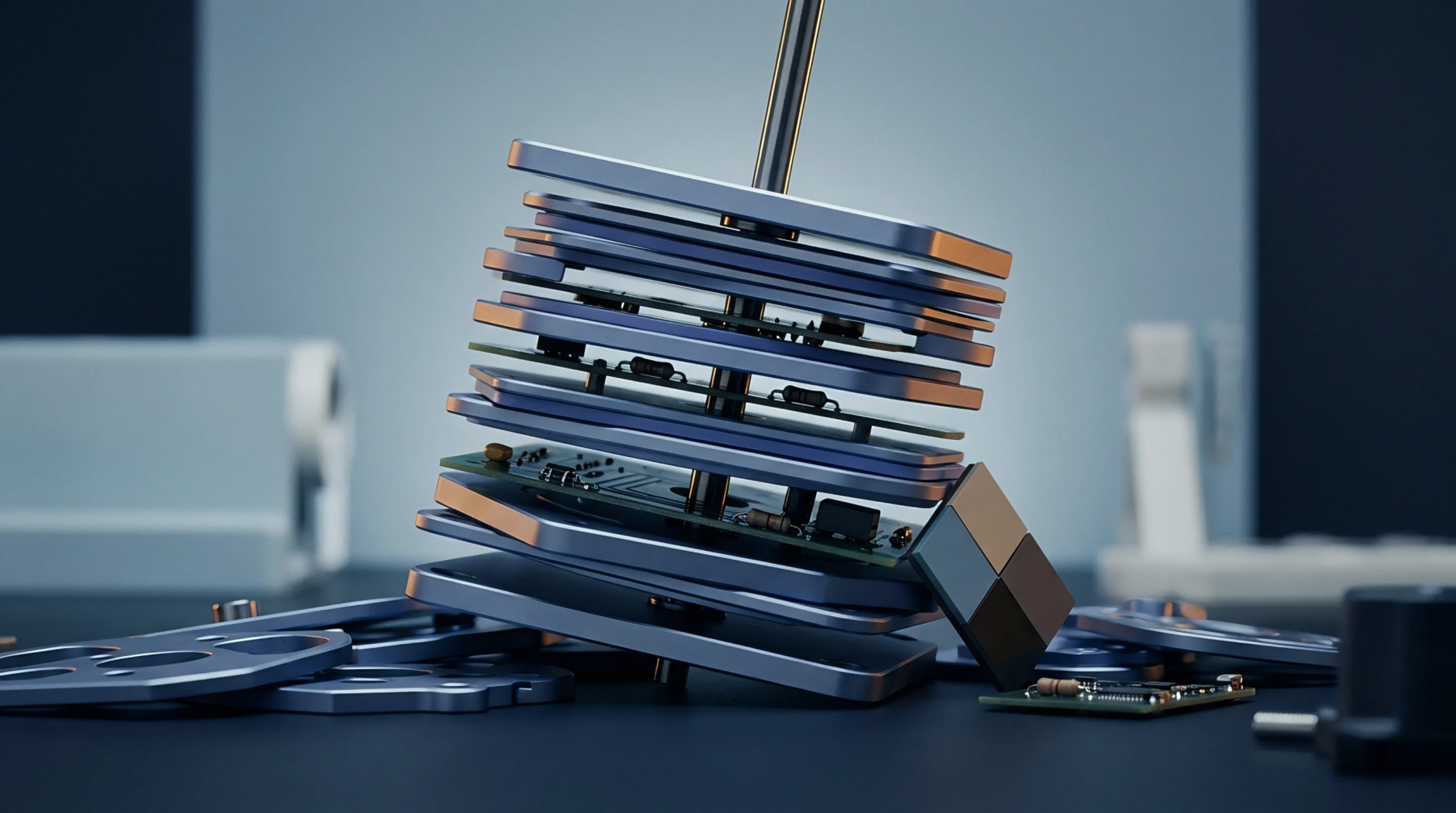
Fluoropolymer adhesive films engineered for microwave frequency multilayer laminates join high-frequency substrates without introducing signal degradation. Thermoplastic PTFE bondply layers provide low dielectric constants and minimal dissipation factors across microwave and millimeter-wave frequencies. Polymer matrices maintain uniform electrical performance across high-speed signal pathways.
Lamination Dynamics
Bonding polytetrafluoroethylene laminates requires higher temperatures and pressures than standard epoxy prepregs. During lamination, PTFE bondply melts and flows into copper treatment micro-structures, forming mechanical bonds between rigid core substrates. Lamination temperatures must reach three hundred degrees Celsius to achieve thermoplastic flow while maintaining strict pressure control to prevent resin squeeze-out.
Fluorinated ethylene propylene or perfluoroalkoxy formulations allow lower bonding temperatures while matching the electrical properties of the surrounding dielectric layers. Controlled cooling profiles prevent internal stress buildup and warp in thin microwave multilayer assemblies.
Thermal Boundary
Operational temperature limits for high-frequency circuit assemblies depend on the glass transition and melt points of internal bonding layers. Standard epoxy adhesives fail at high radio frequencies due to elevated dielectric losses, requiring pure fluoropolymer bonding systems. Mechanical bond strength remains stable across extreme temperature cycling, preventing substrate delamination in radar and satellite communication hardware.
Assembly specifications restrict secondary soldering temperatures to prevent softening of internal thermoplastic bonding layers during surface mount reflow.