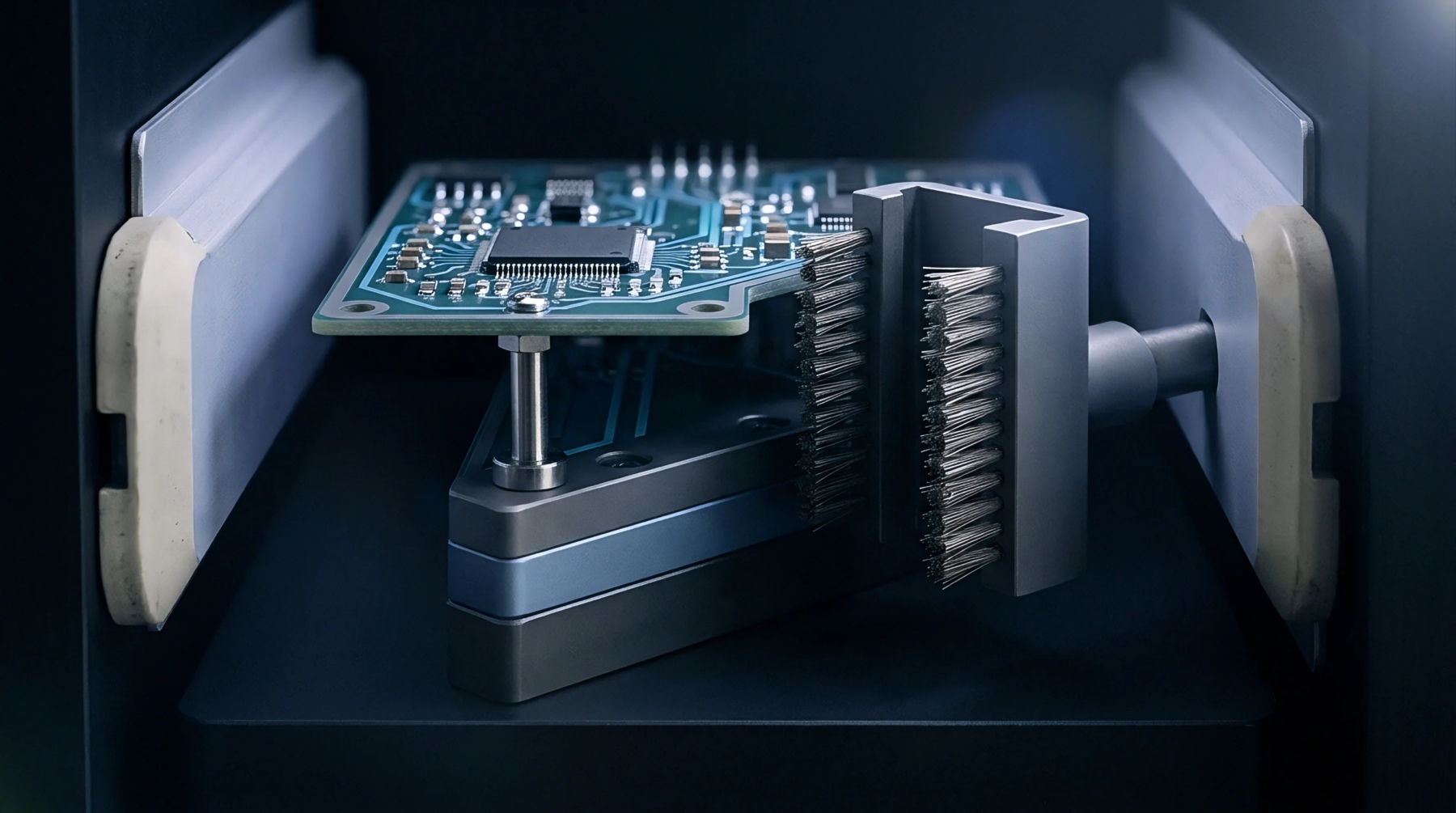
Assembly Precision
Mechanical positioning tolerance governs how accurately surface mount placement heads deposit components onto printed circuit boards. Skimmer alignment defines the spatial relationship between the solder wave leveling blade and the underside of the printed circuit board during wave soldering. Thermal expansion forces warp substrates while passing over molten solder channels, requiring precise vertical and horizontal placement of the skimming mechanism to remove excess bridging.
Deviation beyond set dimensional boundaries creates short circuits between adjacent fine pitch integrated circuit leads or leaves insufficient fillet volume on gull wing terminals.
Thermal Regulation
Molten solder temperature fluctuations alter fluid viscosity inside the wave pot, changing the hydrodynamic pressure exerted against the printed circuit board bottom face. Adjusting the leveling blade position compensates for alloy density variations caused by dross accumulation and localized heating elements cycling on and off. Operating parameters require operators to measure blade parallelism relative to the conveyor track using dial indicators before starting production shifts.
Incorrect gap heights generate excessive mechanical shear stress that displaces recently reflowed surface mount devices from adhesive pads during the brief window when solder remains partially liquid.
Defect Prevention
Process engineers monitor bridging frequency and solder ball generation to verify that the leveling mechanism functions within acceptable quality limits. Optical inspection systems flag inadequate clearance distances between adjacent traces when solder drainage fails to clear the pad architecture completely. Correct calibration prevents bridging defects on high density ball grid array packages by ensuring consistent fluid shear across the entire span of the substrate.
Proper mechanical positioning maintains solder joint integrity without exerting destructive pressure forces on delicate component bodies.