Vertical Loading
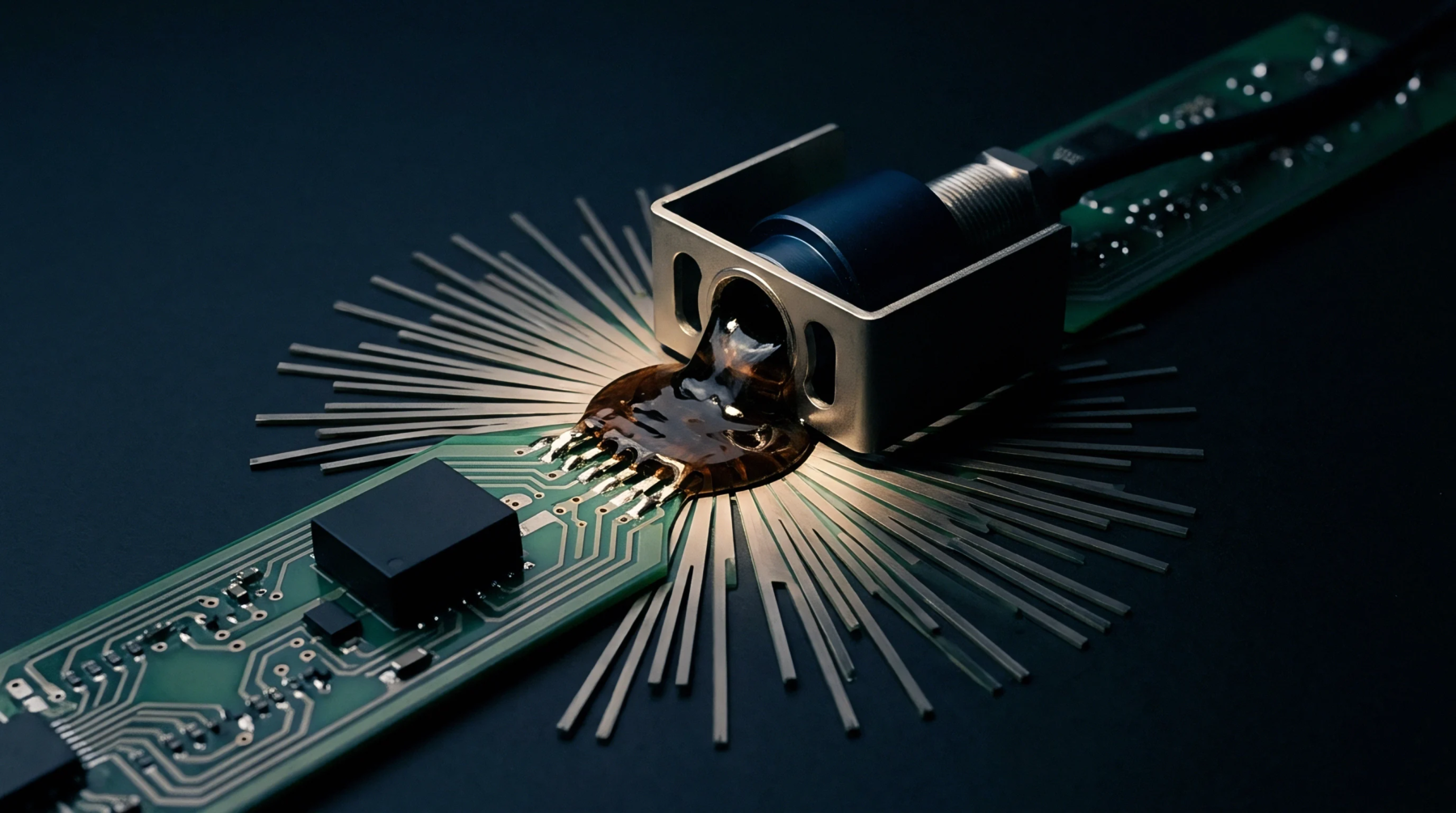
Perpendicular force acting on the copper-to-laminate interface attempts to separate the soldered land from its resin foundation. When solder pad tensile stress exceeds the adhesive strength of the laminate bond, the pad lifts and carries the component away from the board surface. This failure mode typically originates from prying forces caused by mechanical impact.
Stress Calculation
Surface area of the land directly determines the total force it can withstand before physical detachment starts. In board assemblies, solder pad tensile stress increases as the aspect ratio of the component increases or when thick packages catch on handling equipment. These stresses are most concentrated at the sharp corners of square pads where stress risers form in the adhesive layer.
High operating temperatures soften the epoxy resin, significantly lowering the maximum tensile stress the interface stays capable of supporting. Measurement involves using a standardized pull-tester to record the peak load in Newtons required to rip the pad from the dielectric substrate. This numerical value quantifies the reliability of the manufacturing process and the quality of the raw board stock.
Material Response
Brittle failures happen instantaneously when the bond snaps without substantial elongation of the resin. Ductile separations leave behind small craters and strands of fiberglass in the pull site.