Mechanical Limitation
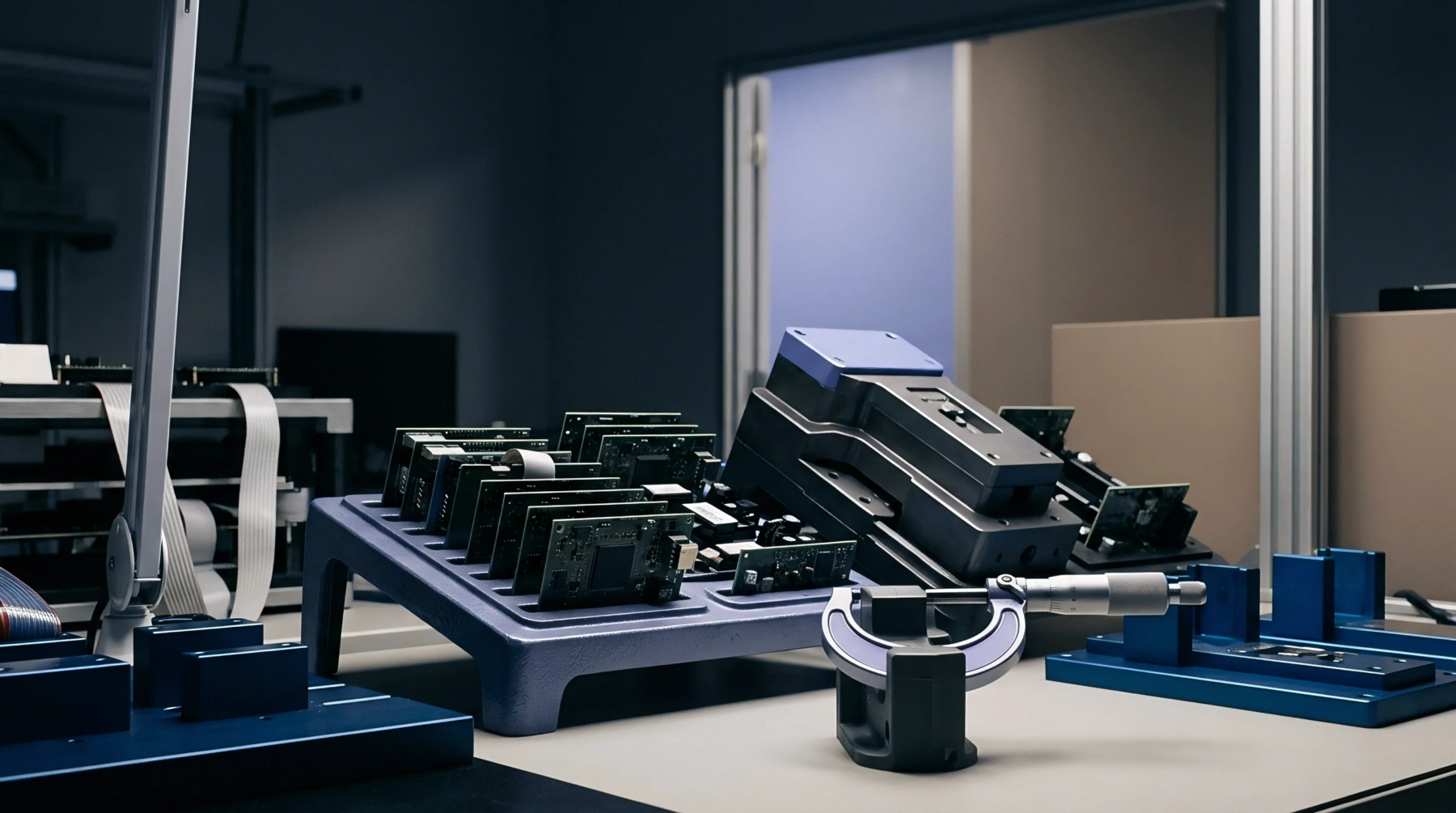
Mechanical height adjustment limits the travel distance of pressing plates during high-pressure substrate lamination. Performing stopper height calibration sets mechanical stop blocks to control exact cured panel thickness during multilayer printed circuit board fabrication. Lamination presses use hardened steel stop blocks placed between hydraulic press platens to restrict daylight closing distance under peak pressure.
Accurate block calibration prevents over-compression of liquid prepreg resin, maintaining target dielectric core thickness and dielectric spacing across the entire panel stack. Improper stopper height adjustment leads to resin starvation, incorrect dielectric constant values and out-of-spec controlled impedance traces. Machine operators use precision feeler gauges and laser micrometers to verify block dimensions before initiating production press cycles.
Consistent height setting ensures uniform pressure transmission across high-density interconnect panel arrays.
Thickness Control
Thermal cycling of press components causes mechanical stop blocks to expand and wear over extended lamination runs. Regular calibration checks compensate for thermal expansion and mechanical wear, maintaining tight board thickness tolerances. Process control records document stopper height adjustments to fulfill IPC-A-600 quality assurance guidelines.
Dimensional Tolerance
Substrate thickness variations affect down-line automated component assembly and enclosure fitting parameters. Controlling lamination height protects controlled-impedance trace geometries. Precise stopper height calibration establishes stable dielectric spacing across multilayer board press runs.