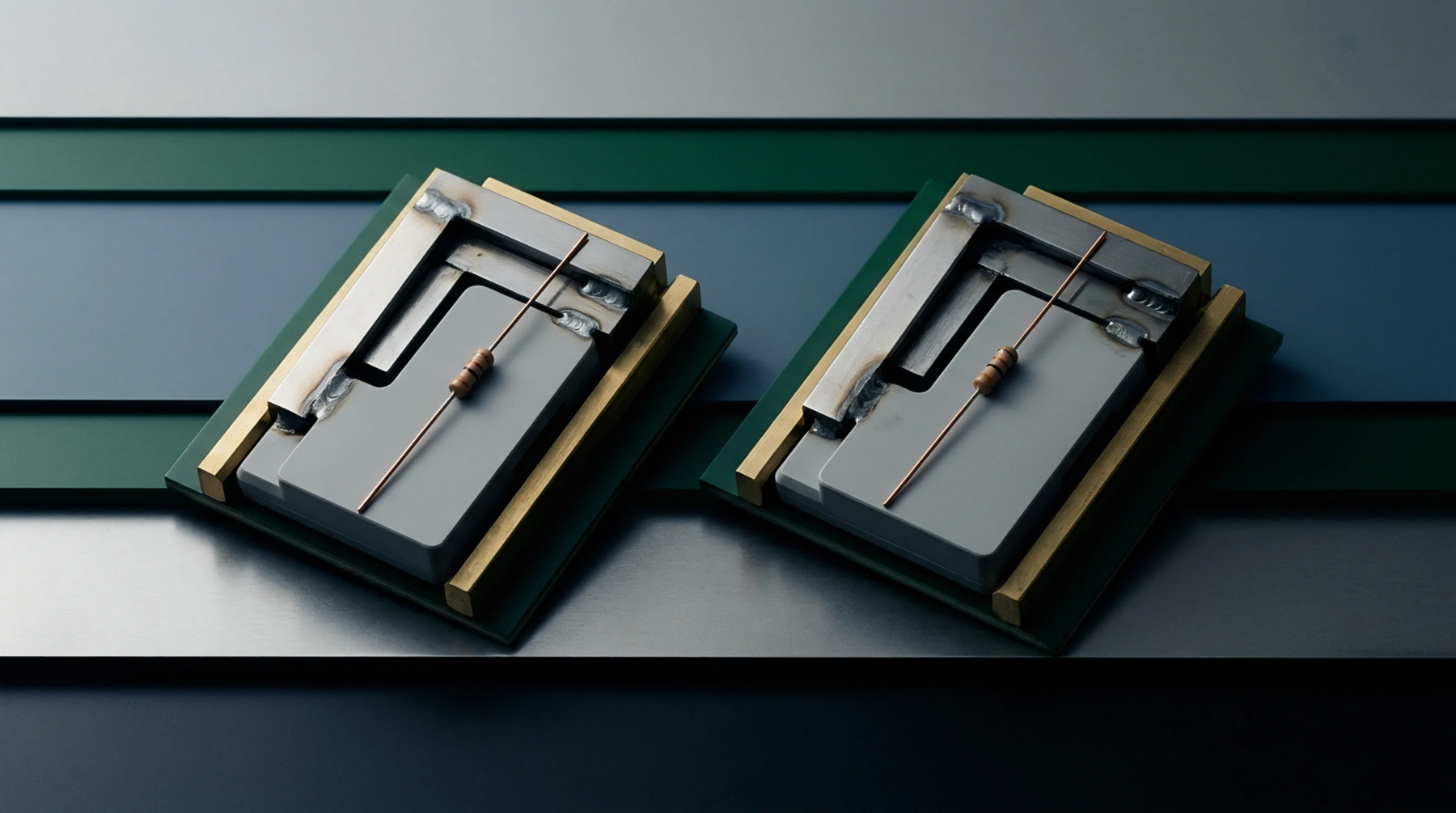
Calibration Vehicle
High-frequency characterization of printed circuit board transmission lines requires the removal of probe and fixture effects to measure the true performance of the traces. A TRL calibration coupon is a specialized test structure fabricated on the same panel as the production boards, consisting of thru, reflect, and line reference traces. This structure allows a vector network analyzer to calculate and remove the losses and phase shifts introduced by the cables and test probes.
It is necessary for accurate impedance and insertion loss measurements above five gigahertz.
Standard Geometry
The physical structure must match the dielectric thickness, copper weight, and trace width of the production board traces to ensure the calibration is valid. Using a TRL calibration coupon ensures that the measurement reference plane is moved directly to the start of the trace under test, bypassing the probe contact points. This method provides highly accurate S-parameter data, which is needed to verify the high-speed signaling performance of the board design.
The design and layout of these coupons are often standardized according to industrial testing protocols.
Measurement Verification
Executing the calibration procedure with the coupon establishes a clean electrical baseline for the test setup. This baseline measurement allows engineers to isolate the performance of the transmission line from the surrounding test hardware.