Pneumatic Clamping
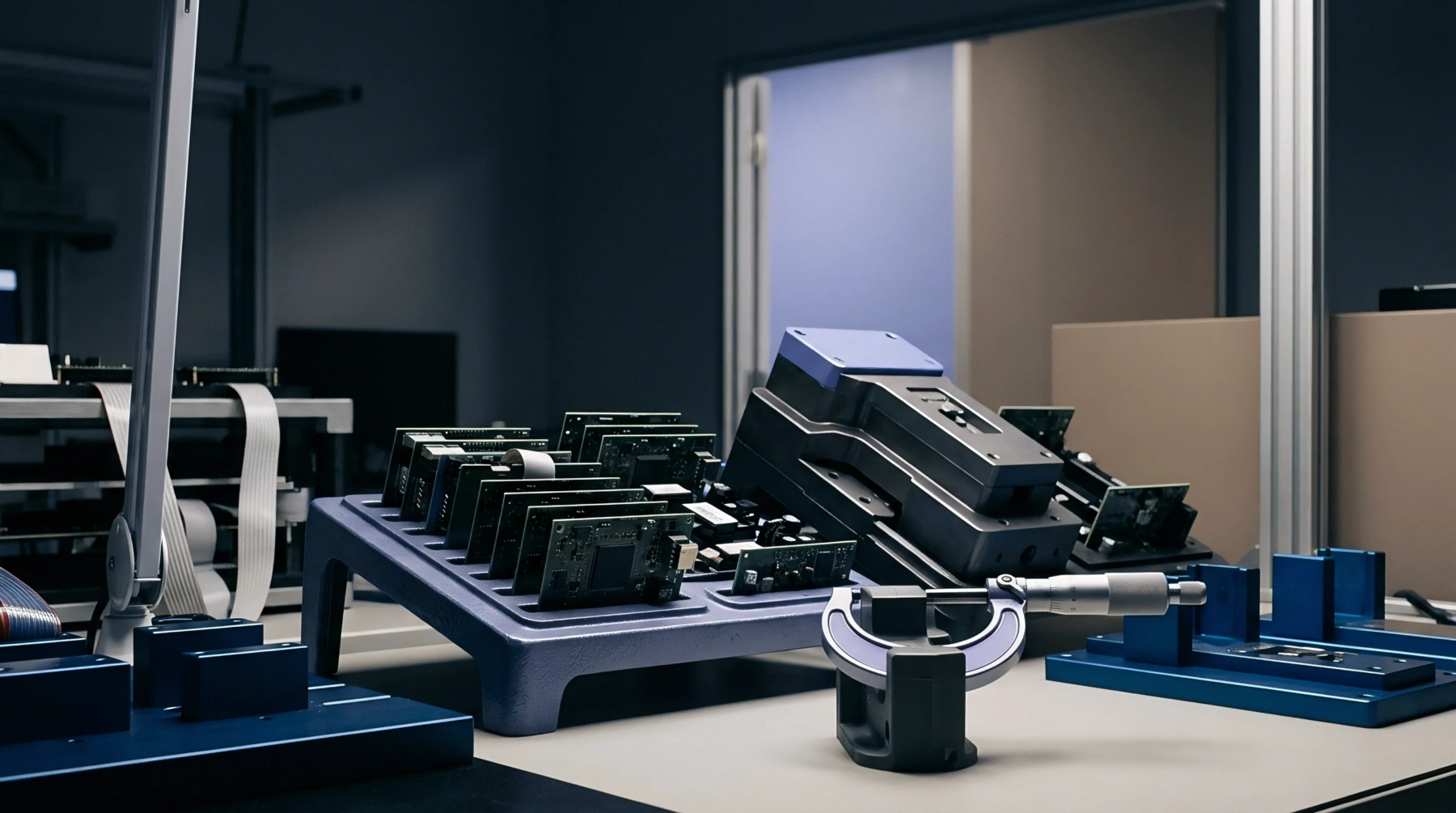
Pneumatic clamping force holds circuit substrate panels firmly against flat support beds during high-speed depanelization routing. Engaging vacuum bed actuation applies distributed negative air pressure across porous fixture plates to stabilize complex printed circuit board arrays without physical mechanical clamps. The suction pressure prevents panel vibration and localized flexure while high-speed spindle bits cut along tab-routing paths.
Uniform hold-down forces eliminate top-side mechanical interference, allowing routing bits and pick-and-place nozzles unrestricted access across the panel surface. Sensor switches monitor chamber differential pressure levels, halting routing operations automatically if vacuum drops below target operating thresholds. Process control systems integrate this pneumatic hold-down method into automated depanelization cells to maximize throughput and minimize mechanical stress on microelectronic components.
Board Stabilization
Contaminants like routing dust and edge debris can degrade seal integrity and lower suction efficiency during continuous production cycles. Automated purge cycles clean fixture vacuum ports between panel loading sequences to maintain consistent holding force. Proper seal maintenance prevents localized board lifting, which causes routing depth variation and component mechanical shock.
Routing Precision
Controlled vacuum holding meets stringent strain prevention requirements defined in automated depanelization guidelines. Substrate planarity remains protected throughout edge machining operations. Reliable vacuum bed actuation maintains panel flatness and prevents mechanical stress damage during high-speed board routing.