Aperture Architecture
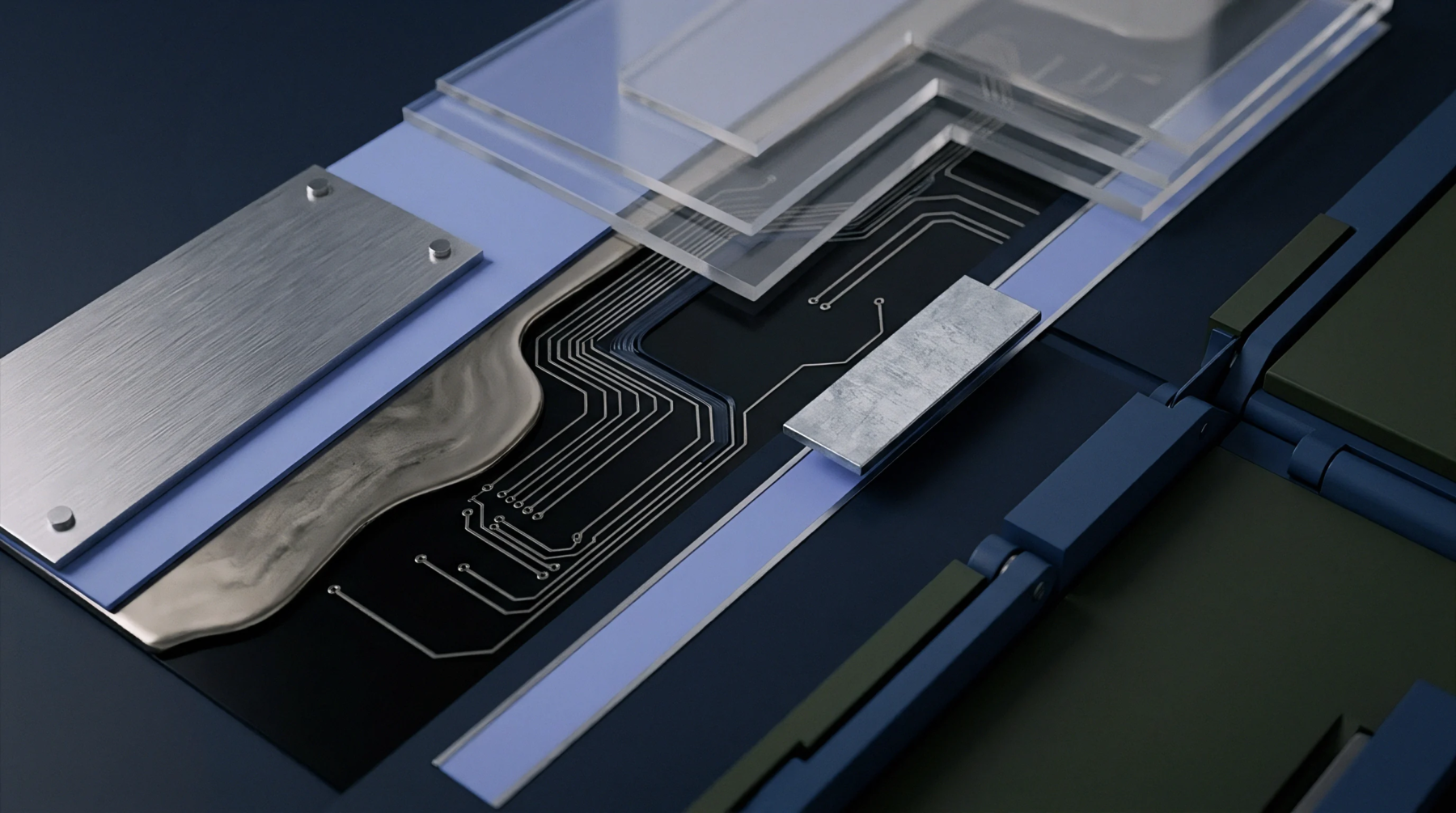
Segmented aperture configurations within surface-mount deposition stencils divide expansive paste deposits into organized grids of discrete openings. The window-pane array breaks up large continuous stencil openings used for ground slugs, thermal pads and power package terminations into balanced groupings of smaller rectangular apertures. Stencil manufacturing processes cut this pattern into metal foils using fine-beam laser cutting or electroforming methods, leaving thin web bridges to connect adjacent apertures.
Fabricators use the layout to regulate overall paste volume, support the squeegee blade and facilitate clean paste release from the stencil foil. The configuration stops functioning as intended when web bridge widths drop below foil thickness, causing stencil bridging walls to warp under squeegee pressure.
Wetting Dynamics
Surface tension forces and volatile outgassing govern the behavior of divided solder deposits during reflow heating. Solder paste deposited in a window-pane array melts and flows together across intervening bare copper spaces, coalescing into an even, continuous interface layer beneath the component heatsink. Web gaps provide clear pathways for vaporized flux solvents to escape before alloy liquidus temperatures are reached, suppressing the formation of trapped gas cavities.
This venting reduces the finished void area within the thermal interface, assisting compliance with IPC-7093 voiding thresholds on thermal lands.
Area Regulation
Design guidelines determine stencil opening adjustments based on required package standoff heights and thermal conductance targets. Converting a solid aperture to a window-pane array typically reduces the open foil area by thirty to fifty percent, eliminating solder balling along component edges and preventing vertical package tilting. Squeegee travel across unsegmented large apertures causes rubber or steel blades to scoop flux and powder from the opening center, yielding uneven deposits.
Structural metal crossbars prevent this scooping, maintaining uniform solder paste volume across the thermal footprint. Post-reflow X-ray inspection evaluates array coalescence, verifying proper bridging and minimal voiding across the bonded interface. The window-pane array remains a standard aperture design for surface-mount assemblies incorporating large heat-dissipation lands.