Contractual Counterfeit Component Indemnification Protocols and Liability Allocation in Contract Manufacturing
Turnkey procurement shifts component authenticity liability to contract manufacturers, while consigned sourcing leaves component risk entirely with the buyer.


Gate
Commercial contracts for surface-mount assembly establish liability boundaries based on component purchasing authority. Turnkey manufacturing agreements place component sourcing, reel inspection, and vendor qualification directly on the assembly contractor. When a contract manufacturer buys active devices, passives, and integrated circuits directly from factory-authorized channels, it guarantees the authenticity of the material entering the placement line.
If a non-conforming or fraudulent device bypasses incoming checks, the contractor remains financially responsible for line downtime, board scrap, and replacement assembly. Liability shifts upon final delivery.

Sourcing Classifications and Risk Transfer Mechanics
Consigned procurement models separate assembly labor from material provenance. Under these arrangements, the product owner purchases all active silicon, passive packaging, and electromechanical parts directly, shipping reels and trays to the assembly plant. The contract manufacturer assumes no legal duty regarding component authenticity.
If a gray-market microcontroller on a customer-supplied reel contains forged die markings or recycled silicon, liability rests entirely with the product owner. Contractors under consigned terms warrant only placement accuracy, solder joint integrity under IPC-A-610 standards, and thermal processing compliance.
Customer-directed purchasing is a hybrid model that frequently triggers commercial disputes. Here, the product owner selects specific distributors or non-authorized brokers and instructs the assembly partner to issue purchase orders to those designated sources. Legal risk hinges on whether the contract manufacturer retains genuine procurement authority or acts merely as a purchasing agent.
Master services agreements must clarify whether customer direction waives contractor liability for counterfeit detection. Without explicit contract language, assembly providers maintain that directed sourcing strips them of supply-chain control, effectively turning turnkey terms into consigned risk profiles.
Standard assembly agreements transfer component risk to the buyer whenever procurement follows a buyer-directed bill of materials without factory direct verification.
Under unverified directed procurement, line defect rates and resulting scrap frequently double.
| Procurement Model | Component Authenticity Owner | Incoming Gate Verification Burden | Financial Liability Threshold |
|---|---|---|---|
| Full Turnkey | Contract Manufacturer | Full reel audit and distributor chain verification | 100% replacement cost plus assembly labor rework |
| Customer-Directed Buy | Shared / Contract Dependent | Visual package check and label verification | Capped at placement value unless gross negligence occurs |
| Consigned Material | Product Owner | Quantity verification and feeder loading check | Zero component liability; labor warranty only |
Consigned Reel Integrity and Chain of Custody
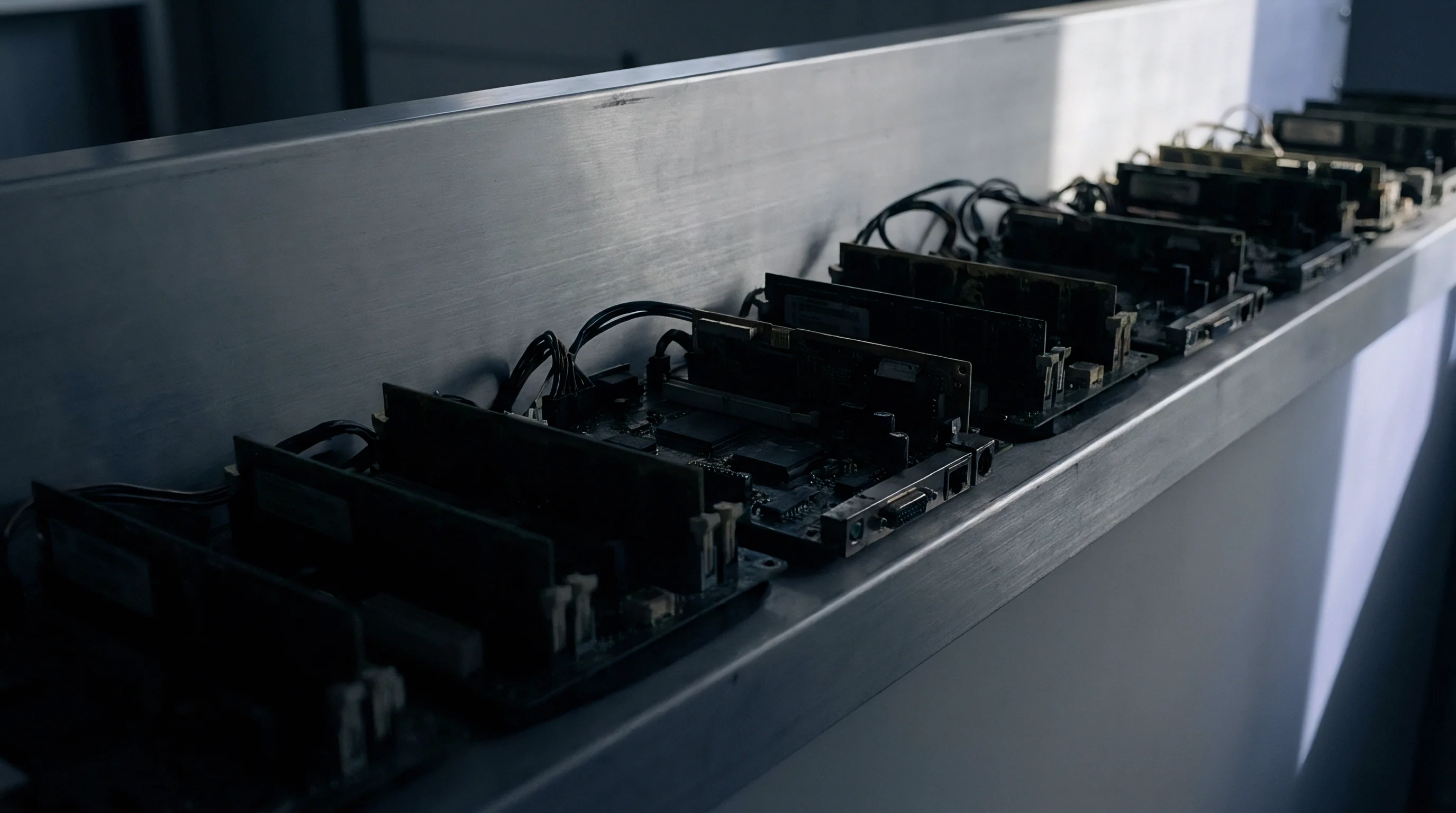
Receiving inspection at contract facilities operates under tight throughput constraints. When consigned components land at the dock, technicians check part numbers, package orientation, and pin counts against the bill of materials. Detailed forensic screening for counterfeit indicators is rarely performed unless explicitly requested and funded through secondary service agreements.
Standard receiving logs cover reel counts, moisture barrier bag condition, and humidity indicator card status, even when trays arrive unsealed.
Traceability protocols require reel-level barcoding at entry. When surface-mount technology lines process twenty thousand placements per hour, feeders cannot pause for individual die verification. If a consigned reel carries re-marked active silicon, automated optical inspection will catch misaligned package outlines or lead pitch variations, but it cannot flag internal die substitutions.
Contractors routinely note that if sealed reels arrive under factory certification, incoming inspection has no operational cause to run secondary authentication.


Probe
Screening suspicious electronic components requires structured physical and chemical evaluation. When non-authorized brokers supply critical microcontrollers or field-programmable gate arrays during supply chain disruptions, standard visual inspection rarely catches sophisticated packaging fraud. AS6081 protocols mandate a series of destructive and non-destructive evaluations before parts reach a surface-mount placement feeder.
Initial authentication checks compare reel tape packaging, carrier pocket dimensional tolerances, and pin orientation against original manufacturer datasheets, as even salvaged chips can visually appear brand new.

Testing Tiers and Non-Destructive Screening
Advanced non-destructive verification uses X-ray fluorescence spectroscopy to analyze lead-frame plating composition. This XRF screening determines whether lead-free component termination finishes comply with RoHS mandates or show evidence of illegal re-tinning operations. X-ray imaging exposes lead frame continuity, bond wire geometry, and internal die voids without breaking hermetic package seals.
When counterfeiters harvest discarded integrated circuits, they often sand down original markings, apply blacktop resurfacing coatings, and laser-etch fake date codes that require chemical testing to expose.
Acetone wash tests and resistance-to-solvents trials expose blacktop resurfacing quickly. Applying a solution of three parts mineral spirits and one part alcohol under three minutes of friction strips fake surface coatings, revealing original laser etch marks or sanded substrate textures underneath. Solderability testing under J-STD-002 verifies whether component leads exhibit proper wetting action during thermal reflow.
Pin oxidation from improper storage or chip harvesting prevents clean intermetallic compound formation, causing open joints or high-resistance electrical connections on assembled panels.
Scanning electron microscopy reveals copper-wire re-bonding on salvaged integrated circuits in over twelve percent of gray-market microcontrollers tested after grey-market broker acquisition.
Comprehensive testing protocols add substantial expense and time to procurement cycles.
- Visual packaging review under ten-times magnification to check carrier tape heat seals, pin-one alignment marks, and barcode formatting against factory specifications.
- External surface marking inspection using optical microscopy to detect laser burn depth variations, font inconsistencies, and chemical resurfacing borders.
- Solvent swipe testing using pure acetone and isopropyl alcohol mixtures to evaluate surface coating stability and identify blacktop masking agents.
- Radiographic X-ray inspection across entire lot samples to verify identical die size, lead-frame orientation, and internal bond wire counts.
- X-ray fluorescence elemental analysis on lead terminations to confirm solder plating chemistry and detect unauthorized re-tinning materials.
- Destructive chemical decapsulation using heated fuming nitric acid to expose internal silicon die layout, manufacturer logos, and wafer lot etchings.

Why Do Standard Limitation Clauses Exclude Fraudulent Reels?
Legal definitions of component fraud distinguish passive manufacturing non-conformance from deliberate material deception. Standard contract limitation clauses protect manufacturers against unpredictable yield drops, thermal reflow defects, or component parameter drift within published tolerances. Fraudulent components involve intentional counterfeiting, such as altered packaging, false date codes, and re-stamped pinouts designed to mimic original factory parts.
Courts often classify the knowing supply or processing of fraudulent reels as gross negligence or intentional misrepresentation, legally voiding contractual damage caps.
Contractual indemnification provisions rely on clear evidentiary chains when component fraud triggers board-level failures. If a contract manufacturer buys gray-market devices without performing agreed-upon AS6081 testing, it loses the protection of limited liability provisions. Product owners can enforce full cost recovery when forensic analysis proves that basic solvent testing or X-ray inspection would have identified bad material before line loading.
Skipping decapsulation on non-traceable active devices leaves undetected sub-tier silicon variations that ruin first-pass yields during environmental stress testing.


Pact
Master services agreements dictate the financial boundaries of commercial assembly operations. Contract manufacturers standardly seek to limit total legal liability to the value of the specific purchase order or the net assembly labor fee collected over a three-month window. Product owners, however, face severe financial exposure if an assembled lot of ten thousand circuit boards fails in the field due to internal component fraud.
Negotiating balanced risk terms requires explicit carve-outs that separate routine process defects from counterfeit component liability.

Indemnification Carve-Outs and Direct Damages
Direct damages resulting from counterfeit components extend far beyond the unit price of a replacement chip. When a $0.50 operational amplifier fails due to internal die substitution, the entire $200 assembled board becomes scrap. Product owners must structure indemnification clauses to cover full direct damages ~ including scrap board values, desoldering labor, replacement component procurement, and secondary line setup fees.
Because contract manufacturers resist uncapped indemnification, these terms require careful negotiation during contract drafting.
Carve-out language should define counterfeit components using established standards such as AS6081, CCAP-101, or IDEA-STD-1010. By tying the contract definition to specific standard tests, both parties establish clear operational criteria for what constitutes a covered counterfeit event. Agreements typically specify that liability caps do not apply if the contractor buys parts outside authorized distribution channels without written customer authorization, making explicit contract terms the primary mechanism for financial recovery.
Exclusions within manufacturing contracts leave product owners exposed to full board replacement costs during field failures.
When failures occur, financial losses accumulate long before legal remedies are finalized.
- Scope Definition establishes clear standards identifying counterfeit component characteristics, including altered die markings, blacktopping, lead re-tinning, and unauthorized packaging.
- Procurement Channel Rules mandate that contractors purchase exclusively from original component manufacturers or authorized distributors unless prior written authorization opens broker channels.
- Testing Escalation Triggers require mandatory AS6081 level-two testing whenever component procurement moves outside tier-one authorized distribution networks during shortage conditions.
- Direct Damage Allocation details contractor responsibility for raw board scrap, active silicon loss, rework labor, and freight costs resulting from verified counterfeit parts.
- Carve-Out Exemptions removes standard limitation of liability dollar caps in cases involving fraudulent material procurement or unapproved supply source substitution.
| Assembly Service Tier | Default Consequential Damage Exception | Counterfeit Liability Limit | Audit Trail Requirement |
|---|---|---|---|
| Tier-1 Global Contractor | Fully Excluded; no exceptions granted | Capped at 1x to 2x monthly contract value | Automated lot tracking to individual feeder reel |
| Tier-2 Regional Contractor | Excluded except for gross negligence | Capped at total value of affected purchase order | Manual receiving logs and batch lot documentation |
| Tier-3 Specialist Assembler | Negotiable based on project scale | Direct material scrap replacement costs covered | Basic packing slip retention and barcode logging |
| Data reflects standard commercial negotiations compiled across contract manufacturing master services agreements. | |||

Consequential Loss Exclusions in Master Agreements
Consequential damages clauses form the primary shield for contract manufacturers against catastrophic commercial claims. These clauses exclude recovery for lost corporate profits, product recall campaigns, brand damage, and downstream customer line stoppages. A product owner whose automotive assembly line stops due to a counterfeit power transistor can face penalties exceeding $50,000 per hour of downtime, yet standard manufacturing agreements explicitly bar recovery for these indirect losses.
Product owners attempt to bridge this financial exposure by negotiating product recall sub-limits within contract indemnification provisions. While contract manufacturers refuse open-ended consequential loss liabilities, higher-tier assembly partners often agree to specific recall expense reimbursements capped at fixed insurance policy limits. The contract specifies whether insurance payouts apply before or after internal contractor liabilities are exhausted.
Under Section 14.2 of standard assembly contracts, liability remains limited to the invoice value of the affected placement run unless the buyer explicitly incorporates a fraudulent component carve-out.


Tally
Calculating the true cost of a counterfeit component escape requires evaluating the complete lifecycle of an assembly build. Consider a production run of 50,000 industrial IoT gateway units. Each board contains a 32-bit microcontroller costing $0.40, purchased through a broker during a severe allocation period.
The assembly fee per board sits at $8.00, while the total bill of materials value equals $45.00 per unit. The line runs, automated optical inspection passes, and functional testing confirms initial power-up despite hidden defects like occasional bridged solder pads.
Financial Exposure in Batch Escalation
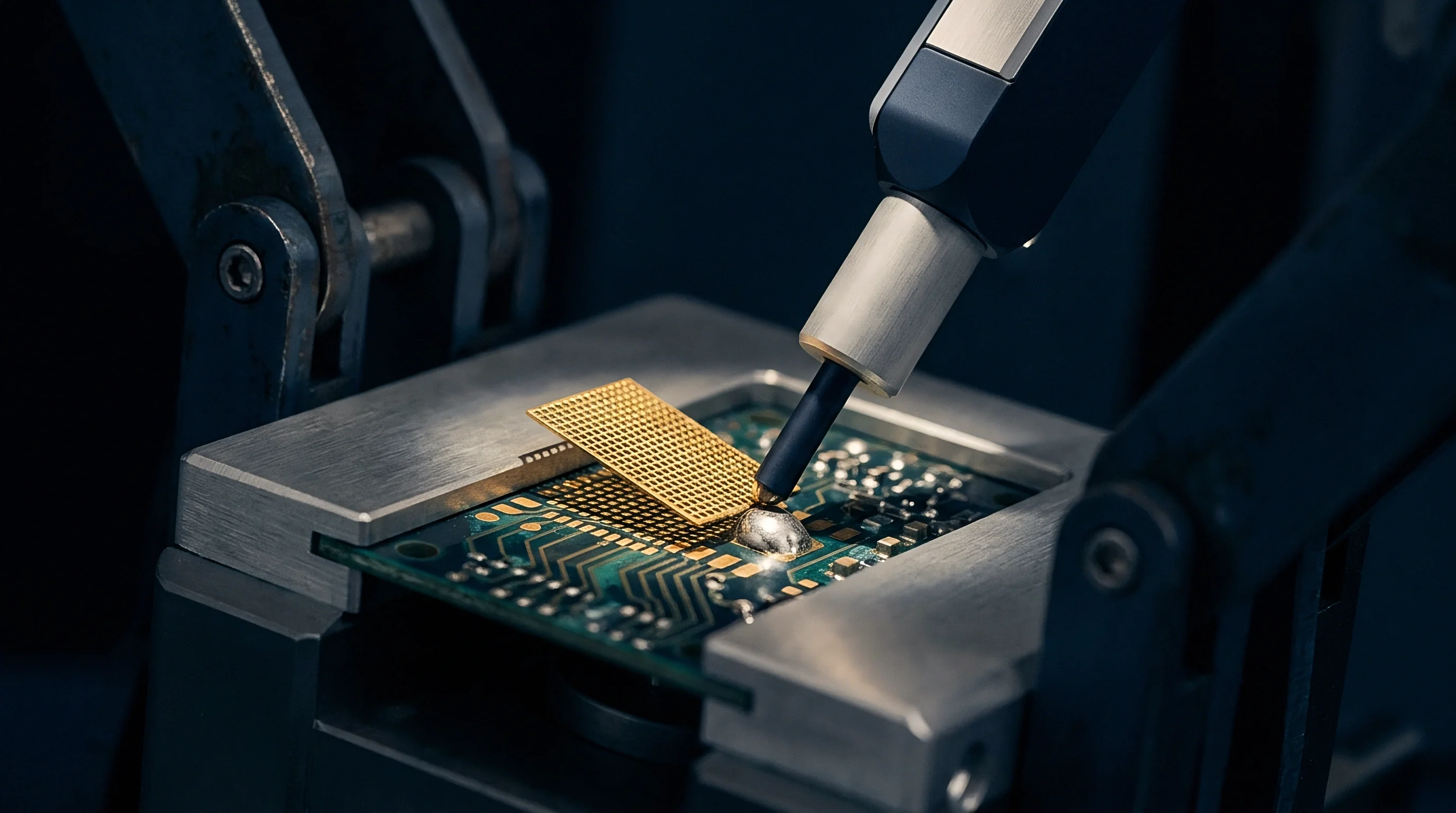
After ninety days of continuous field deployment, microcontrollers across thousands of installed gateways experience internal clock drift, latch-up failures, and thermal breakdown. Field failure rates spike to 18 percent. Decapsulation of returned devices reveals salvaged 8-bit cores with forged top markings designed to emulate the required 32-bit architecture, bringing further assembly and shipment to a halt.
Total financial exposure spreads across multiple manufacturing and operational categories. The initial production run generated $400,000 in assembly billing and $2,250,000 in material costs. Replacing 9,000 failed field units requires technician dispatch, unit removal, replacement shipping, and board disposal, bringing field service exposure to $1,350,000.
Scrapping the remaining 41,000 units in inventory destroys $1,845,000 in landed board value. Furthermore, reworking recovered boards via hot-air desoldering often damages adjacent printed circuit tracks, driving scrap rates on returned assemblies to 80 percent.
Field replacement expenses for assembled circuit boards routinely dwarf the initial surface-mount placement fee by a factor of twenty.
Without negotiated carve-outs, the buyer is forced to absorb these compounded financial losses.
- Unrecoverable Board Scrap occurs when high-density fine-pitch ball grid array desoldering tears surface pads, destroying multilayer circuit boards during component replacement.
- Field Service Expenses accumulates through travel costs, local contractor labor fees, site access permits, and manual unit swap-out time.
- Reverse Logistics Freight includes expedited international courier fees, customs duties, hazmat battery shipping handling, and secure return packaging expenses.
- Factory Re-Qualification Labor requires full thermal profiling, automated optical programming adjustments, and first-article mechanical testing prior to restarting production runs.
- Secondary Component Loss damages adjacent passives, connectors, and sensitive integrated circuits exposed to repeated reflow temperatures during component replacement.

Worked Breakdown of Defect Containment Costs
Assigning financial responsibility depends on the initial purchase order structure and sourcing documentation. If the contractor sourced the fake microcontroller through an unauthorized broker without performing contractually mandated AS6081 decapsulation testing, liability falls on the contractor. Standard contract caps, however, limit default contractor payout to the $400,000 assembly billing figure unless specific counterfeit carve-outs were incorporated into the agreement.
When counterfeit carve-outs exist, the contractor’s commercial general liability or supplier default insurance covers direct product losses. The product owner can claim the full $2,250,000 in destroyed bill of materials costs plus $350,000 in direct factory rework labor. Field service recall expenses, categorized as indirect consequential damages, remain uncollectible under standard terms, forcing the product owner to absorb $1,350,000 in field expenses.
Legal uncertainty often remains over whether courts will categorize pre-assembly screening costs as direct containment expenditures or unrecoverable incidental overhead.


Recourse
Recovering financial losses after a counterfeit component event requires establishing a clear evidentiary trail. Product owners must preserve failed circuit boards, unpopulated components from the same lot, and original receiving packaging. Forensic evaluation reports from accredited independent testing laboratories provide the technical baseline for legal negotiations, explicitly documenting the failure mechanism by comparing decapsulated die geometry, marking chemistry, and lead frame integrity against genuine reference samples.

Evidence Dossier Standards for Arbitration
An arbitration-ready evidence dossier combines physical test reports with digital supply chain tracking records. The complete documentation package should include original purchase orders, receiving inspection logs, reel barcode labels, automated optical inspection records, and environmental test traces. Proof of contractor negligence relies on demonstrating that receiving personnel failed to follow industry-standard inspection practices or violated agreed quality plans.
Commercial arbitration panels evaluate whether the contractor exercised reasonable technical care given the sourcing environment. If a contractor procured parts from gray-market channels without notifying the product owner, arbitrators consistently rule against the assembly provider. Conversely, if the product owner signed a risk waiver to avoid lead-time delays, arbitration panels uphold liability limits, leaving financial recovery restricted to refunds of the original component purchase price.

Insurance Policy Overlaps and Recovery Caps
Corporate insurance structures provide critical recovery pathways when contractors default or lack liquid assets to settle claims. Product recall insurance policies cover removal, transport, disposal, and replacement expenses resulting from safety-critical component failures, while errors and omissions coverage protects against professional manufacturing mistakes by covering direct rework expenses.
Insurance providers subrogate claims against contract manufacturers following policy payouts. If the contract manufacturer carries component liability endorsements, the insurer negotiates settlements directly with the contractor’s underwriting carrier. Product owners must align their master services agreements with their corporate insurance policy terms to avoid coverage gaps where insurers deny claims based on contractual liability waivers.
Documenting physical reel provenance before loading feeders creates far stronger legal standing than attempting forensic testing after boards fail in the field.