Establishing Fixture Ownership Clauses in Contract Electronics Manufacturing Purchasing Agreements
Define fixture hardware, wiring schematics, and test software as buyer-owned bailment assets with explicit title vesting triggers in purchasing contracts.

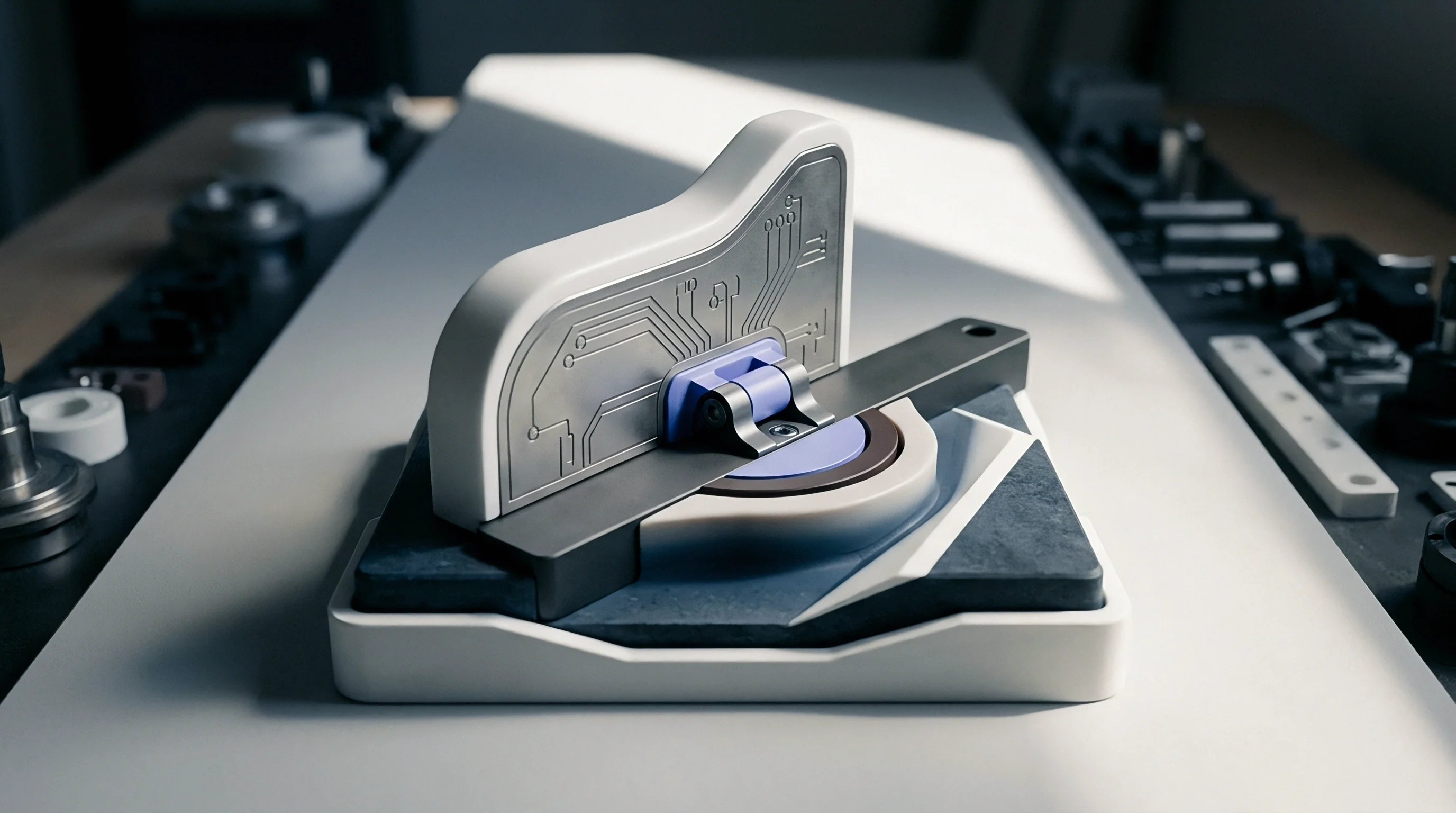
Plate
Custom bed-of-nails assemblies, personality cards, and wiring looms make up the physical interface between test equipment and a printed circuit board, allowing spring-loaded probes to contact copper pads on an unpopulated or assembled board. A complete fixture incorporates structural top and bottom plates, strain-relief backing, interface pins, wire-wrap connections, probe receptacles, pneumatic actuators, and electronic personality modules. Buyers typically collapse the entire assembly into a single Non-Recurring Engineering line item.
When purchasing contracts describe this hardware in generic terms, ownership of individual sub-components becomes ambiguous.
Tooling design files ~ containing drill locations, wire routing tables, and plate cutout schematics ~ are generated during fabrication from buyer-supplied Gerber data, board stackups, and CAD layouts. Factories rely on these files to program CNC drill machines and automated wire-wrapping equipment. If a contract fails to separate physical tooling from digital design assets, the manufacturer keeps exclusive possession of the drill files and wiring maps.
The buyer is then left with hardware that an outside test vendor cannot duplicate, modify, or repair.
Custom software controls fixture operation during production runs. Programs written for platforms like Keysight 3070, Teradyne Spectrum, or SPEA flying probe systems include pin-mapping files, circuit limit tables, signal routing instructions, and flash-programming binaries. Without this operational code, a fixture is just an inert mechanical frame.
Compiled test routines and debug scripts are routinely claimed as internal process knowledge, meaning that unless contract terms explicitly define source code, object code, and library dependencies as deliverable assets, the manufacturer retains control of the line interface.
| Asset Category | Physical or Digital Element | Direct Cost Allocation | Default Industry Assignment |
|---|---|---|---|
| Mechanical Assembly | Drill plates, probe receptacles, guide pins, press frames | Paid via upfront Non-Recurring Engineering fee | Buyer owns physical hardware upon full payment |
| Electrical Interface | Personality cards, transfer blocks, ribbon cables, ribbon headers | Itemized under tooling setup charges | Buyer owns physical components |
| Design Documentation | Drill maps, wire lists, schematic netlists, strain reports | Absorbed into engineering preparation costs | Manufacturer retains proprietary design files |
| Execution Software | Compiled test programs, limits files, flash algorithms | Billed as test development labor hours | Manufacturer retains executable source scripts |
| Calibration Standards | Golden boards, short/open verification blocks | Billed as fixture qualification tooling | Disputed asset without explicit contract naming |
Calibration artifacts and golden verification boards validate fixture accuracy before every shift, undergoing the same environmental wear as the primary fixture. Golden boards contain measured component values and intentional solder faults to confirm fault coverage across in-circuit test routines. Losing these artifacts halts line validation immediately, yet purchasing agreements regularly overlook secondary verification tools, leaving buyers exposed during facility transitions.
Omitting digital files and calibration tools from the primary asset definition leaves the buyer with uncopyable hardware during line transfers.

Title
Legal title to tooling dictates who has the right to move or reallocate production equipment. Capital equipment provisions determine when ownership transfers from vendor to buyer, but standard payment terms alone rarely guarantee clear conveyance without explicit title-vesting triggers. Manufacturers routinely insert retention-of-title clauses asserting ownership over all on-site tooling until every outstanding invoice is settled, including disputed yield penalties or scrap liabilities.
Milestone schedules structure payment during fixture fabrication. A typical structure splits costs into three payments: a deposit when the purchase order is issued, a milestone payment at design sign-off, and a final settlement after first-article inspection acceptance. Contracts that tie title conveyance exclusively to the final payment allow factories to withhold ownership during disputes over unrelated charges.
Structuring title transfer in proportion to incremental payments secures proportional ownership for the buyer as capital releases.
A contract provision explicitly designating custom fixture hardware as customer-owned bailment prevents the supplier from asserting statutory warehouse liens during billing disputes.
Non-Recurring Engineering invoices must itemize fixture hardware explicitly. Generic labels like test setup fee or tooling charge permit manufacturers to record payments as service fees rather than capital acquisitions, keeping the physical hardware on the factory’s balance sheet. Detailed line items specifying probe density, frame sizes, and serial numbers create a clear paper trail proving the buyer purchased discrete physical property.
- Amortized Cost Structures obscure asset ownership by blending fixture charges into individual printed circuit board unit prices across multi-year volume commitments.
- Unregistered Intellectual Property Rights permit contract factories to assert proprietary claims over fixture wiring algorithms and custom interface adapter cards.
- Statutory Warehouse Liens allow contract manufacturers to seize physical fixtures located on their premises to recover unpaid assembly or storage invoices.
- Co-Mingled Fixture Modifications complicate title clarity when a manufacturer spends its own capital to upgrade customer-owned fixture frames for line speed improvements.
Cross-border tax regulations also shape ownership structures. Importing custom tooling into offshore manufacturing regions triggers value-added tax and customs duties. When the buyer holds legal title during import, it acts as the importer of record and assumes direct tax liabilities.
If the factory holds title, tax obligations fall on the manufacturer, which usually passes those costs back through administrative surcharges. Clear agreements specify who holds title at each point in international transit to avoid unexpected assessments at customs.
A contract clause stating that full legal and beneficial title to all physical tooling, personality modules, software scripts, and netlist mapping files transfers automatically to the buyer upon receipt of payment for specified line-item invoices eliminates ambiguity regarding asset rights.
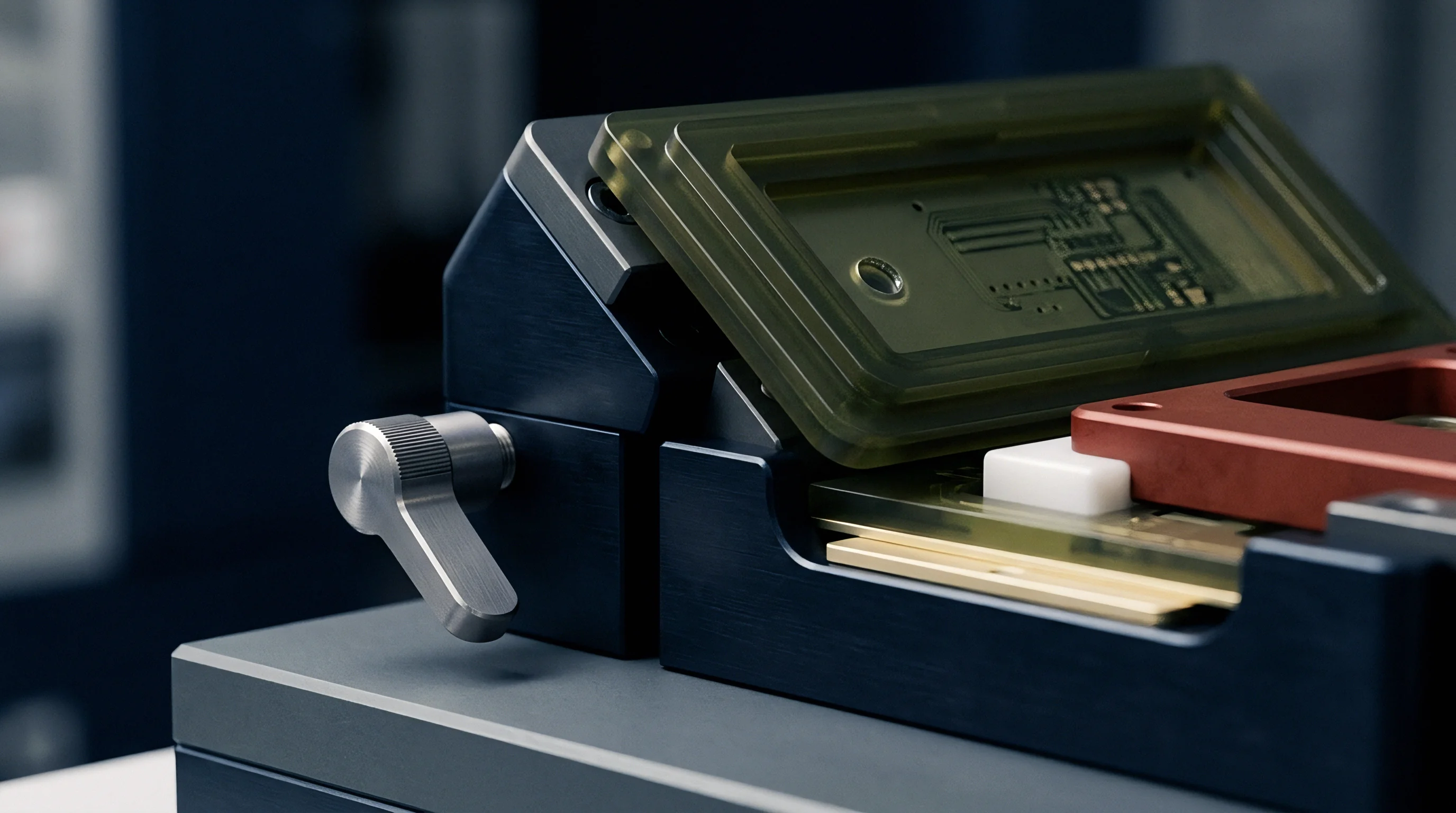

Custody
Routine care, maintenance, and calibration records determine how long test hardware maintains accurate nodal measurements. In high-volume assembly plants, fixtures undergo hundreds of thousands of actuations every year. Pneumatic cylinders leak pressure, alignment pins wear out of tolerance, and spring-loaded probes collect flux residue.
Without strict preventive maintenance schedules, contact resistance grows across test points, raising false-failure rates and driving unnecessary scrap and offline rework.
Strain testing prevents mechanical damage to circuit assemblies during actuation. IPC/JEDEC-9704 sets micro-strain limits for boards under load during functional and in-circuit testing, requiring push-fingers and support pins to keep deflection under 500 micro-strain. This prevents multilayer ceramic capacitor cracking and solder joint fractures.
Manufacturers are responsible for operating fixtures within these parameters, and any damage to buyer-owned hardware from improper pin setup or uncalibrated pneumatics must be repaired at the factory’s expense.
Spring-loaded test probes lose contact force after 100,000 mechanical compressions, increasing false-failure rates on low-voltage test nodes by three percent.
Storage conditions govern how quickly fixtures degrade while idle. Unheated, non-climate-controlled rooms expose probe receptacles and interface blocks to humidity, causing oxidation on gold-plated contacts. These oxide layers create insulating barriers that alter low-resistance measurements during setup.
Supply agreements should explicitly require climate-controlled storage, dust covers, and restricted access to protect test hardware between production runs.

Why Do Factories Retain Test Program Files?
Factories withhold uncompiled test programs, source libraries, and CAD netlists to protect assembly know-how and retain leverage. Writing test code requires translating circuit schematics into test vectors, establishing guard bands, and tuning signal levels to filter out board noise. Manufacturers regard these debug routines and thresholds as proprietary process knowledge.
Handing over raw source files enables a buyer to replicate the test environment at a competing facility in days, removing the factory’s lock-in.
- Review facility calibration logs quarterly to confirm test system signal generators match primary reference standards.
- Audit mechanical probe replacement logs to verify high-use contact pins remain within rated compression limits.
- Inspect physical storage areas to ensure idle fixture frames are kept in climate-controlled rooms under static-dissipative covers.
- Review strain-gauge measurement reports after any modification to fixture press-plates or support pins.
- Verify that spare parts inventories maintain designated minimum stock of replacement probes, wire modules, and pneumatic seals.
Insurance terms must assign clear liability while fixtures remain on the factory floor. Standard purchasing agreements shift risk of loss to the contract manufacturer once hardware crosses the loading dock. Fire, water damage, structural failures, or operator mistakes can ruin custom assemblies, and if contracts do not require full replacement value insurance from the supplier, the buyer is stuck paying for replacement tooling and waiting out lead times.
Transition audits often encounter delays over raw fixture debug scripts and CAD drill tables when manufacturing algorithms are claimed as trade secrets subject to separate engineering charges.

Transfer
Moving specialized test tooling between sites risks disrupting production. Factories losing an assembly program often delay fixture handovers by citing pending paperwork, unpaid scrap fees, or outstanding maintenance charges. Physical possession gives the factory significant leverage, which is why transfer provisions must establish rigid release timelines upon written notice regardless of open commercial disputes.
Consider a dual-well in-circuit test fixture housing 1,850 spring probes, custom personality modules, and specialized test code. Fabrication NRE costs $42,000, with an eight-week lead time for a third-party replacement. Production demands 5,000 board assemblies per week at a contribution margin of $110 per unit.
Delaying fixture transfer creates a weekly margin loss of $550,000. Shifting assemblies to a flying probe tester increases test time from 18 seconds to 180 seconds per board, cutting weekly throughput by 90 percent and creating an immediate bottleneck. Physical transit and line re-qualification require 12 days, resulting in $942,857 of lost margin contribution.
By comparison, building new tooling costs $42,000 in capital but incurs $4,400,000 in lost margin during the eight-week fabrication delay, making physical transfer necessary despite the operational friction.
| Migration Phase | Direct Expense Factor | Typical Cost Share | Primary Operational Failure Mode |
|---|---|---|---|
| Decommissioning | Line removal, packing, static shielding | 100 percent buyer responsibility | Physical damage during probe pin teardown |
| Export Compliance | Customs documentation, duty valuation | 100 percent buyer responsibility | Customs seizure due to misclassified HS codes |
| Freight Transit | Air freight, insurance coverage, tracking | 100 percent buyer responsibility | Shock damage or water exposure during transit |
| Line Re-Installation | Fixture wiring audit, receiver setup | Shared between buyer and new EMS | Pin misalignment on receiver interface frame |
| System Re-Validation | Golden board execution, strain audit | 100 percent buyer responsibility | False failure spikes from changed wiring limits |
Export laws regulate international fixture movements. Hardware with custom integrated circuits, encryption modules, or high-density interfaces requires proper Harmonized System classification codes for import and export. Customs authorities check incoming equipment against declared valuations, and under-declaring value to avoid duties risks border holds, financial penalties, and asset seizure.
Contracts must require manufacturers to maintain export documentation ~ including original invoices and origin certificates ~ to streamline customs clearance during program transfers.
Physical possession of a test fixture without the underlying uncompiled test script renders the hardware non-functional at a new manufacturing site.
Dual-sourcing strategies rely on duplicating fixtures rather than moving existing hardware, as building duplicate test tools is far less costly than halting active production lines. Supply contracts should grant buyers explicit rights to replicate fixture designs, wiring schematics, and test code without paying licensing fees or royalties to the incumbent manufacturer.
Uncompiled source code must reside in dual-key custody before line transfers begin.

Remedy
Standard breach-of-contract litigation moves too slowly to protect high-volume assembly programs if a supplier refuses to release tooling. Supply agreements need explicit equitable remedies, including pre-agreed injunctive relief and orders of replevin, giving buyers legal grounds to reclaim customer-owned hardware directly from factory premises.
Escrow provisions protect digital fixture assets against factory insolvency or non-cooperation. Depositing source code, Gerber drill maps, debug scripts, and wiring schematics with a neutral third-party agent guarantees ongoing technical access. Trigger conditions should cover bankruptcy filings, material breaches, missed delivery targets, or formal contract termination, preventing a struggling factory from holding digital files for leverage.
Factories routinely assert ownership over fixture design files by classifying conversion scripts as proprietary shop-floor intellectual property.
Withholding rights provide immediate financial leverage against asset detention. Contracts ought to permit buyers to pause payments across unrelated assembly lines if a manufacturer wrongfully holds onto tooling or calibration gear. Crossing line liabilities forces factory management to resolve ownership disputes without shutting down ongoing programs.
- Liquidated Damages for Retained Assets establish daily financial penalties levied against contract manufacturers for every day fixture release is delayed beyond the contractually mandated transfer window.
- Bailment Trust Confirmations specify that physical fixtures remain held in trust, protecting buyer assets from seizure by the factory’s secured creditors during corporate liquidation.
- Power-of-Attorney Provisions grant buyer representatives legal authority to execute customs export declarations on behalf of the factory if the manufacturer refuses to complete shipping paperwork.
- Pre-Negotiated Re-Location Release Fees eliminate last-minute surcharges by fixing the exact administrative costs owed to the factory during line teardown operations.
Transition clauses ensure the outgoing factory provides necessary engineering support during equipment handoffs. Contracts should require the supplier to help pack fixtures, provide historical maintenance and yield logs, and conduct joint alignment checks with the incoming engineering team. Tying these obligations to final payment milestones keeps transition support active through line migration.
What specific evidentiary standard separates proprietary factory process code from buyer-owned functional test routines when an escrow agent evaluates a disputed file release request?