Polyimide Insulation Electrical Breakdown under Solvent Exposure Regimes
Solvent exposure plasticizes polyimide insulation, lowering dielectric strength up to seventy percent and requiring post-wash baking and Weibull lot auditing.
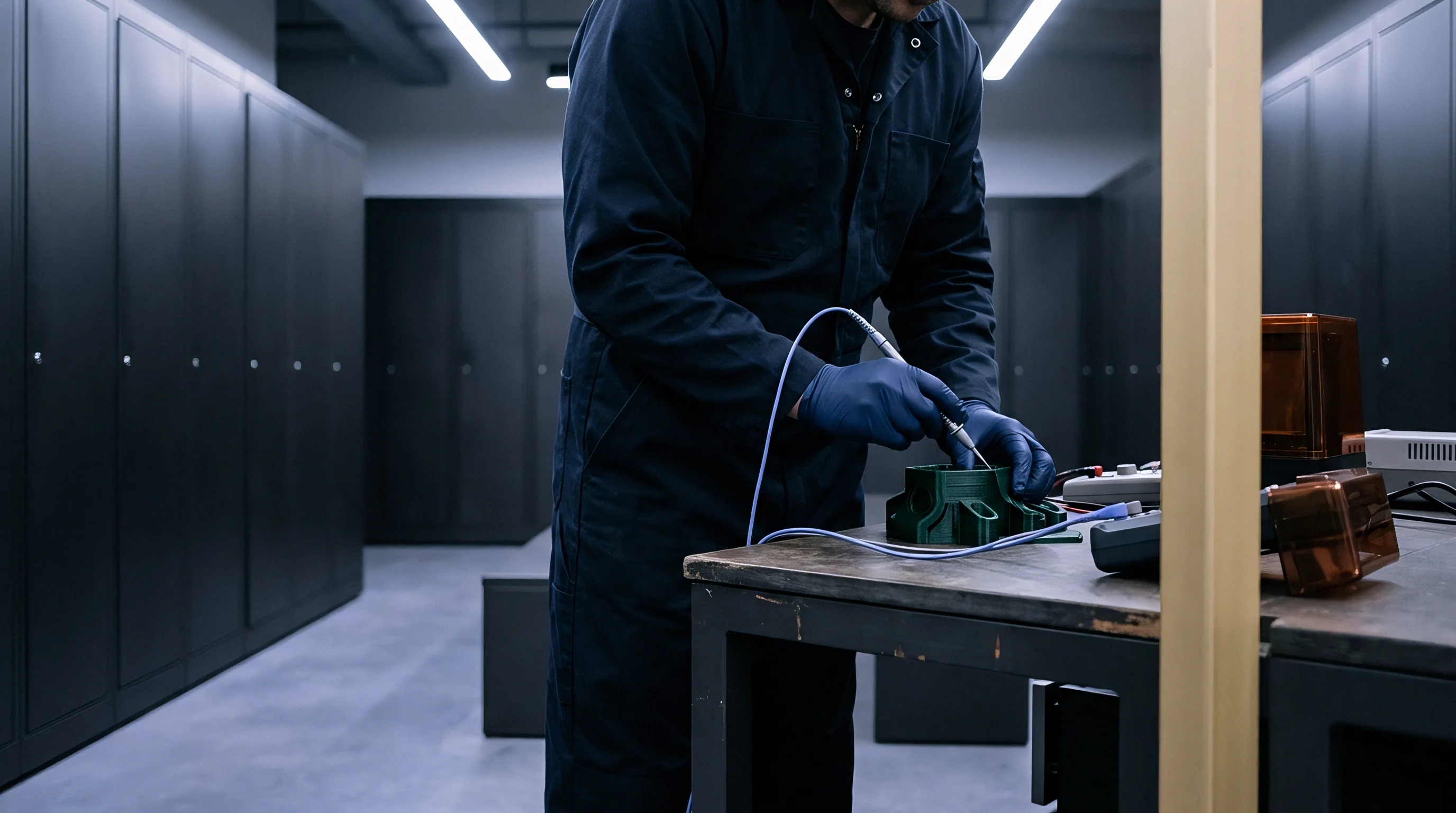
Swell
Polyimide films absorb organic solvents when brought into direct contact during assembly cleaning processes. Liquid defluxing agents, board wash solutions, and residual vapors penetrate the polymer matrix through capillary action and intermolecular dispersion. Film thickness expands as solvent molecules occupy interstitial locations between aromatic chains.
Sorption alters the polymer matrix. Free volume expands under chemical attack.
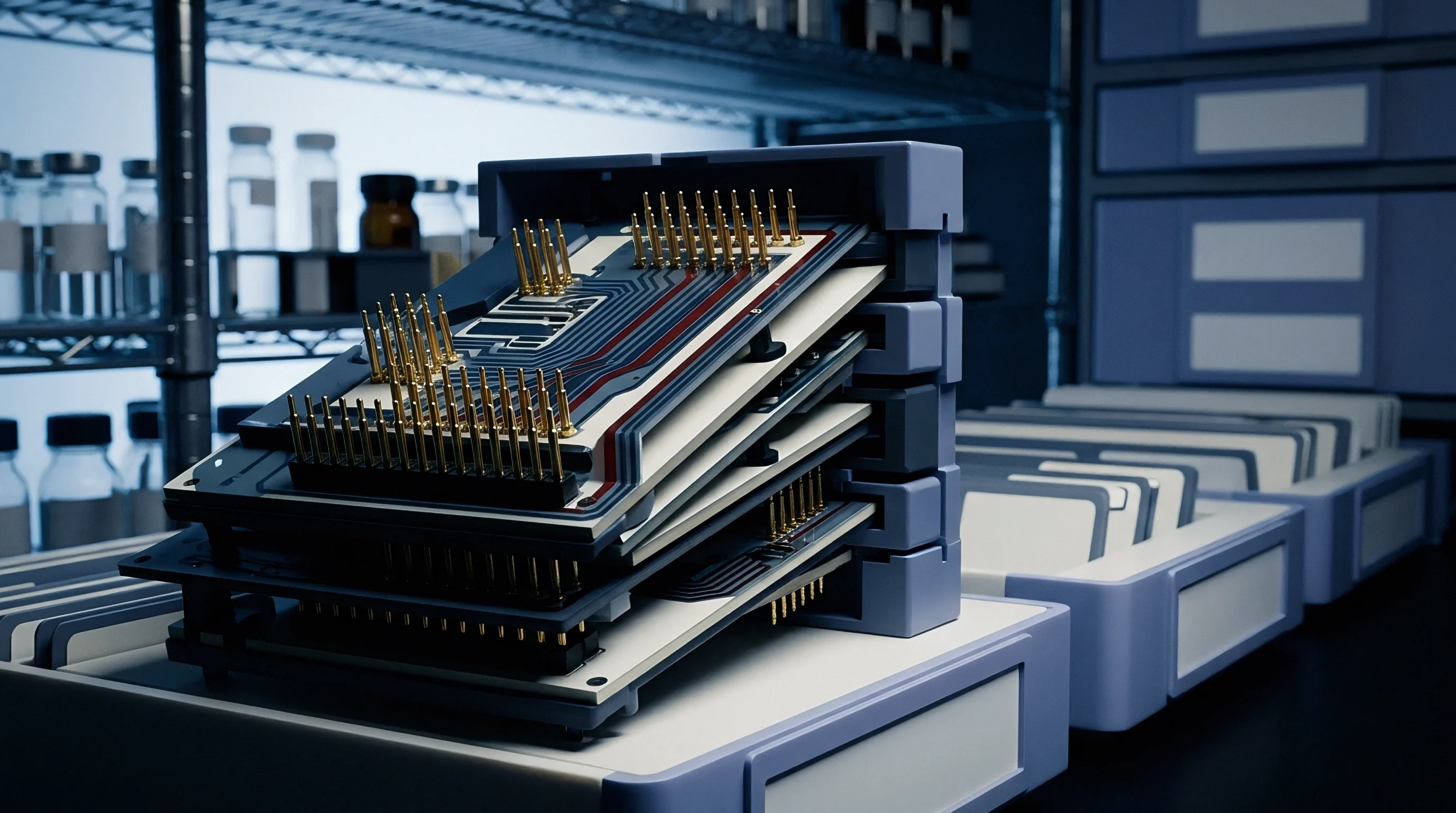
Solvent Uptake Dynamics in Aromatic Polyimides
Chemical absorption into high-performance dielectric substrates depends on the interaction between fluid molecules and polymer chains. Aromatic polyimides synthesized from pyromellitic dianhydride and oxydianiline exhibit strong interchain attractive forces due to hydrogen bonding and imide ring packing. Exposing these structures to polar aprotic solvents breaks non-covalent bond networks.
N-Methyl-2-pyrrolidone, dimethylformamide, and gamma-butyrolactone disrupt interchain cohesion rapidly. Small solvent molecules move into microvoids, pushing adjacent polyimide chains apart and driving volumetric expansion.
Transport behavior transitions between classical Fickian diffusion and anomalous Case II transport depending on ambient temperature and solvent activity. Below the glass transition temperature, solvent diffusion rates remain low until local solvent concentrations reach a threshold that mobilizes polymer segments. Film swelling generates internal mechanical strain profiles across the material cross-section.
Surface layers swell first while the interior core remains dry, establishing sharp concentration gradients and localized differential stresses.
Polymer Chain Plasticization and Free Volume Expansion
Infiltration of chemical fluids alters the structural matrix of dielectric films. Absorbed molecules act as plasticizers, increasing the physical mobility of polyimide backbones and suppressing the glass transition temperature by up to eighty degrees Celsius. Dynamic mechanical analysis shows significant storage modulus loss under solvent equilibrium.
Free volume expansion reduces the density of the film and increases atomic-scale void fractions.
Physical swelling alters the spatial geometry of internal trace gaps in flexible circuits. Polyimide coverlays and Kapton insulation layers experience dimensional drift that degrades trace clearance distances. Solvent ingress lowers breakdown threshold.
Microvoids created during swelling serve as preferential sites for charge carrier accumulation under high electrical field stresses.
Solvent absorption lowers dielectric strength long before visible physical distortion appears on the film surface.
Dry baking cycles remove absorbed solvent fractions, yet permanent chain relaxation leaves structural density lower than the unexposed baseline state. Imide ring hydrolytic degradation occurs if solvent exposure takes place alongside trace water contamination at elevated processing temperatures. Solvent molecules remain trapped in deep voids even after aggressive thermal drying profiles, acting as permanent localized structural defects.
Solvent uptake follows predictable thermodynamic equilibrium curves determined by solubility parameter matching between substrate and fluid chemistry.

Disruption
Electromechanical degradation occurs rapidly when absorbed molecules weaken molecular cohesion. The dielectric strength of polyimide drops significantly as solvent content rises. Applied electrical fields force charge carriers through solvent-filled free volumes, triggering early electron avalanche events well below nominal breakdown voltages.
Mechanisms of Dielectric Strength Reduction
Insulation breakdown under high electrical fields involves localized carrier acceleration. In a dry polyimide film, tightly packed polymer chains scatter accelerating electrons, preventing them from acquiring kinetic energies needed for impact ionization. Solvent absorption creates open transport channels within the free volume.
Electron mean free path lengths increase inside these low-density regions, accelerating field-driven charge carriers into high-energy impact events.
Polar solvents raise the bulk dielectric constant while simultaneously increasing dielectric loss factors. Dipolar relaxation of absorbed solvent molecules under alternating current fields generates localized Joule heating. Temperature spikes lower local breakdown strength, transforming uniform electric field lines into concentrated current filaments.
Dielectric strength drops rapidly during saturation. Polar solvents accelerate carrier drift.
| Solvent Environment | Equilibrium Mass Gain (%) | Volumetric Swelling (%) | Dielectric Strength (kV/mm) | Breakdown Retention (%) |
|---|---|---|---|---|
| Baseline (Dry Argon) | 0.0 | 0.0 | 230 | 100.0 |
| Isopropyl Alcohol | 0.8 | 0.4 | 212 | 92.2 |
| Methylene Chloride | 3.5 | 2.1 | 145 | 63.0 |
| Monoethanolamine Defluxer | 5.2 | 3.8 | 110 | 47.8 |
| N-Methyl-2-pyrrolidone | 8.6 | 6.4 | 68 | 29.6 |
Space Charge Accumulation and Partial Discharge
Internal field distributions change when chemical ingress alters local permittivity. Mobile ionic impurities present in cleaning solvents migrate along electric field gradients, accumulating at polyimide interface boundaries. Space charges concentrate near microvoids.
This space charge buildup distorts uniform voltage drops across insulation layers, increasing localized electric field strength at electrode edges.
Partial Discharge Inception Voltage drops significantly inside solvent-swollen polyimides. Gas-filled micro-cavities generated during phase separation of solvent-polymer mixtures discharge under low AC potentials. Microcracks lower the breakdown threshold.
Sustained partial discharge activity erodes polyimide wall structures, converting microscopic cavities into conductive carbonized trees that span the insulation layer.
Conduction transitions from ohmic hopping transport to Poole-Frenkel emission as solvent saturation advances. High field conduction curves show exponential current escalation prior to destructive shorting. Pinholes trigger localized breakdown.
Which physical recovery mechanism limits permanent dielectric loss after complete solvent desorption?
Exposure
Manufacturing operations subject dielectric substrates to varied cleaning fluids. Post-solder defluxing, ultrasonic washing, board rework, and conformal coating preparation introduce energetic solvent blends to flexible circuit assemblies. Exposure profiles range from brief room-temperature spray washes to prolonged high-temperature immersion cycles.
Industrial Solvent Regimes across Assembly Lines
Automated board cleaning uses varied wash chemistries to eliminate flux residues. Isopropyl alcohol exhibits minimal plasticization. Alcohol-based formulations present low aggressive swelling potential on polyimide covers, whereas halogenated solvents and aprotic defluxers break down film integrity quickly.
Inline defluxing systems using high-pressure spray nozzles force chemistry into narrow coverlay seams and dense flex-rigid transition regions.
Rework procedures involve manual solvent application using swabs or localized dispensers. Solvent pooling under surface-mount components creates extended liquid exposure windows. Elevated temperatures from soldering irons vaporize trapped solvents, driving high-pressure solvent-steam mixtures directly into softened polyimide substrate layers.
- Aprotic Solvent Immersion causes severe molecular chain relaxation, leading to structural softening and breakdown drops exceeding seventy percent.
- Fluorinated Solvent Vapor Flushing yields limited swelling response, preserving insulation resistance during brief cleaning intervals.
- Alcohol Mixture Spraying removes ionic residues without inducing major free volume expansion within fully cured polyimide films.
- Alkaline Aqueous Wash Cycles initiate surface saponification, eroding polyimide thickness and creating micro-grooves that concentrate fields.
What Threshold Governs Solvent-Induced Dielectric Weakening?
Critical concentration values determine when insulation failure rates increase sharply. Dielectric withstand capacity drops precipitously once solvent concentration surpasses the threshold required to initiate segmental polymer motion. Below this critical concentration, dielectric strength declines linearly with fluid uptake; above it, breakdown occurs through immediate catastrophic avalanche conduction.
Hansen solubility parameter distances predict the severity of polyimide degradation under diverse solvent chemistry regimes. Solvents displaying total solubility parameter values close to twenty-three MPa to the one-half power match polyimide structure closely. Aromatic solvents penetrate film boundaries.
Matching solubility parameters accelerates fluid intake rates, dropping breakdown field limits within minutes of wet contact.
A polyimide film saturated with N-methyl-2-pyrrolidone retains only thirty percent of its dry breakdown voltage under a five hundred volt per millisecond direct current ramp.
Suppliers frequently assert that standard solvent wash operations leave zero material residue after inline heat tunnel drying. That claim ignores internal fluid retention governed by non-Fickian desorption kinetics, where deeply trapped molecules remain in the substrate for weeks under ambient operational stress.
Bench
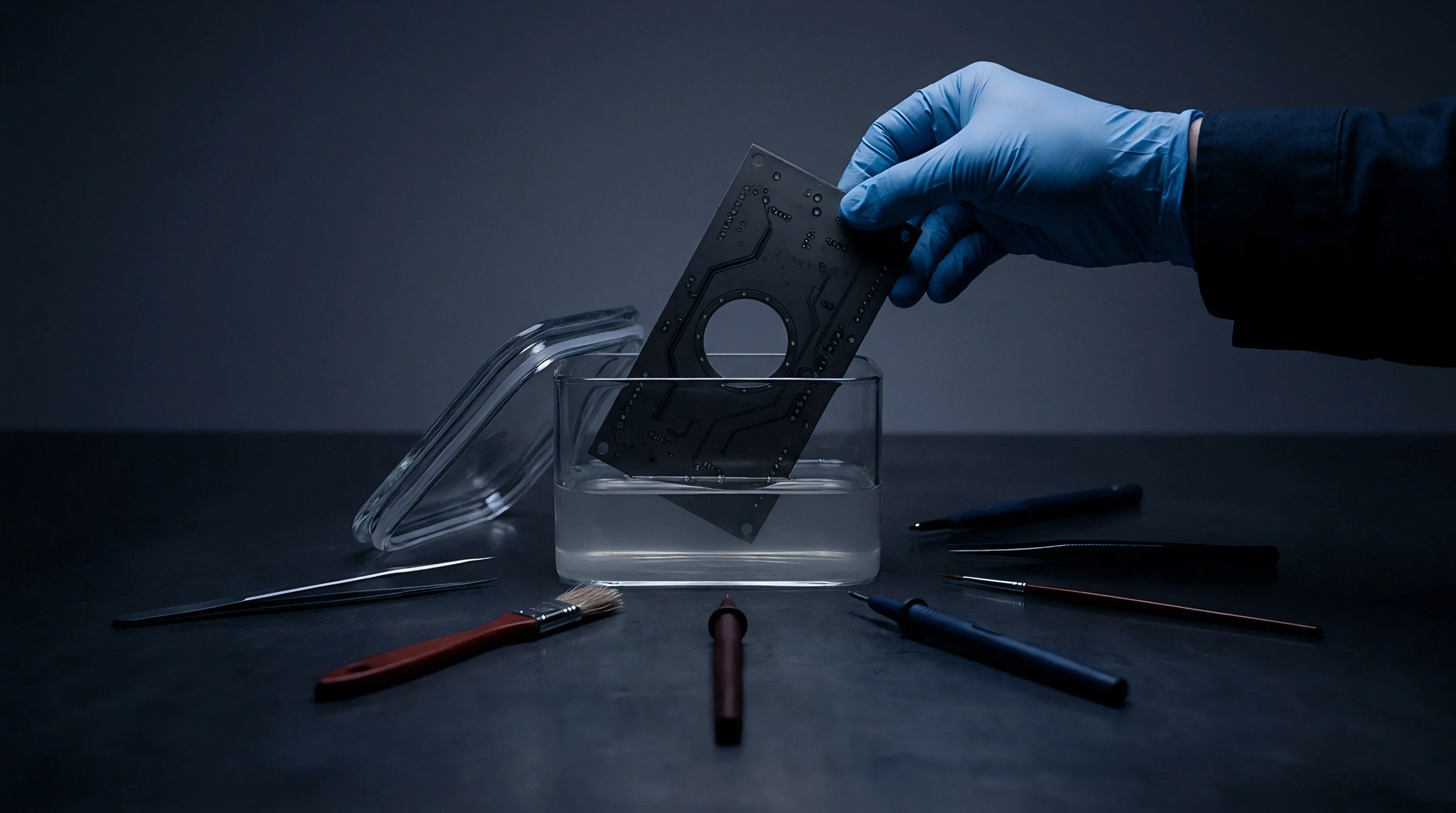
Standardized test fixtures measure breakdown limits under controlled environmental states. Electrical insulation verification requires strict monitoring of test sample preconditioning, ramp speeds, electrode geometries, and immersion parameters. Comparing dry reference measurements against post-exposure values establishes true batch reliability profiles.
Standard Dielectric Withstand Test Procedures
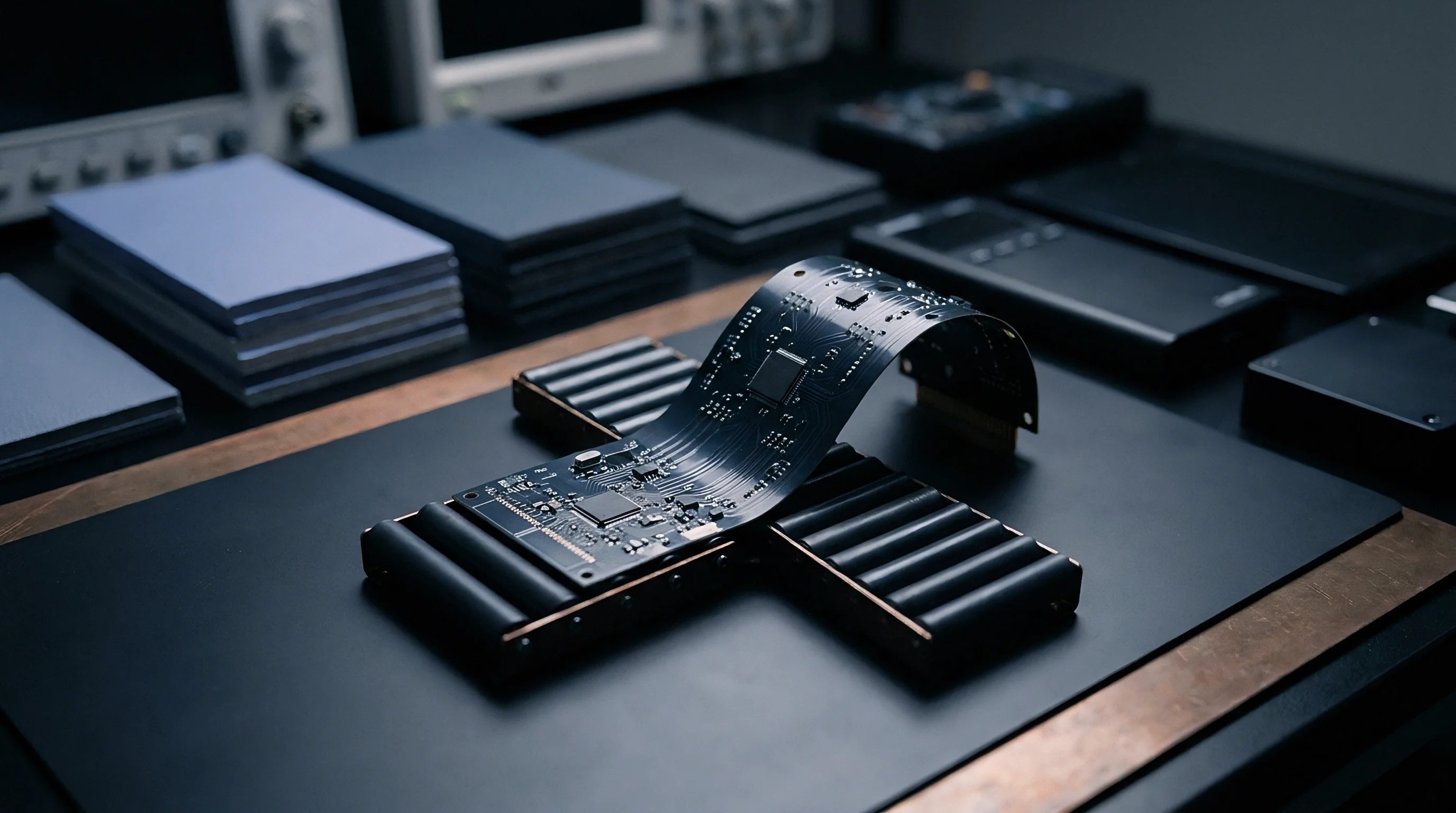
High-voltage testing evaluates insulating materials by applying controlled voltage ramps until current spikes break film integrity. Standard IEC 60243-1 procedures specify spherical or cylindrical brass electrodes pressed against opposite film faces. Test setups immerse specimens in non-conductive oil or place them in controlled environmental chambers to prevent edge flashover during high-potential testing.
IPC-TM-650 Method 2.5.7 defines dielectric withstanding voltage parameters for flexible printed wiring. Voltage ramp rates set at five hundred volts per second isolate rapid breakdown mechanisms from long-term thermal runaway. Direct current testing isolates ionic movement.
Alternating current breakdown measurements at fifty or sixty hertz expose dielectric loss heating effects under solvent influence. Dry bake restores basic permittivity. Moisture ingress compounds solvent degradation.
Worked Dielectric Clearance Calculation under Solvent Equilibrium
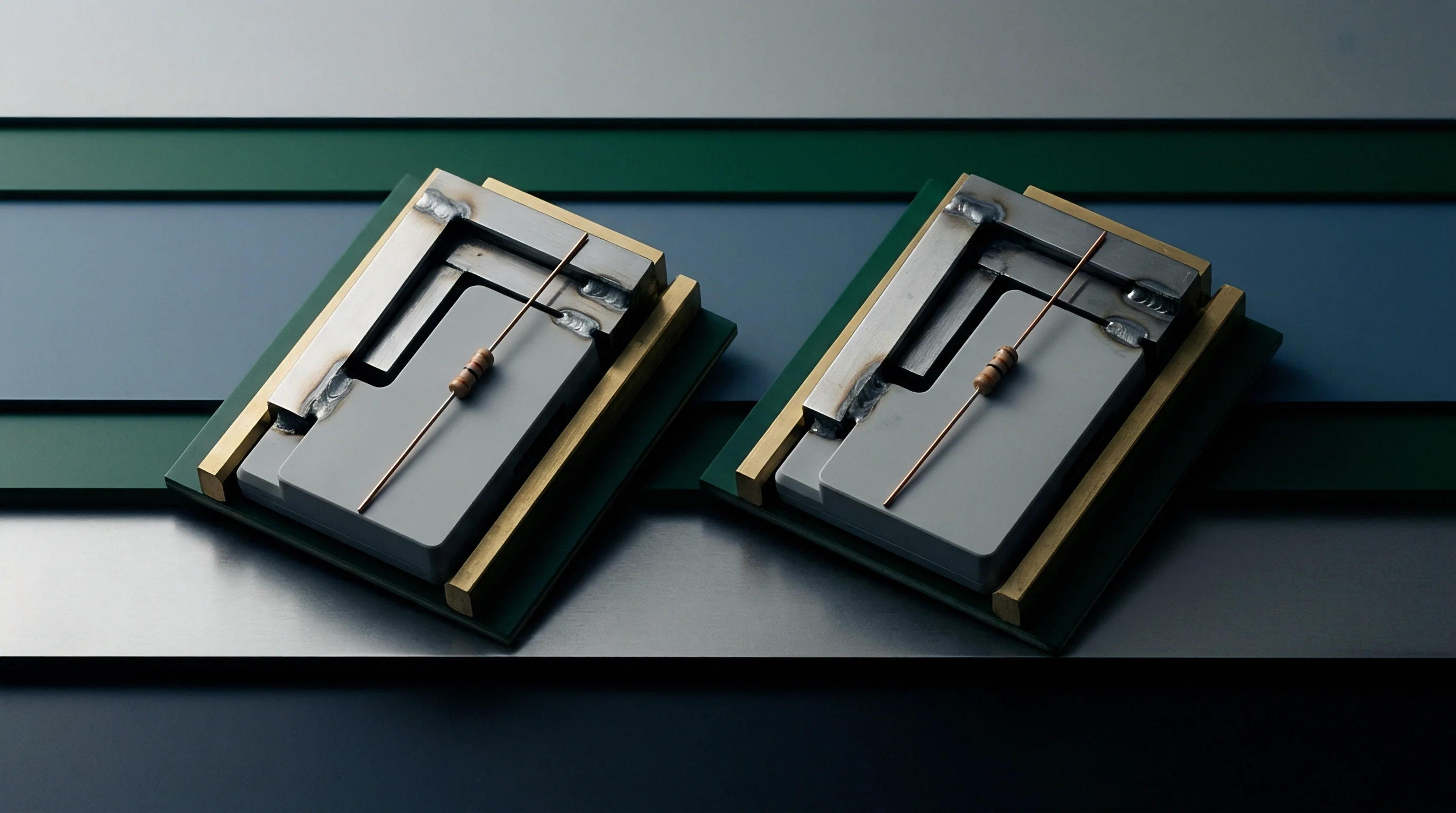
Evaluating insulation thickness demands explicit corrections for solvent-induced permittivity changes. A high-reliability flex circuit layout incorporates a 25.0 µm dry polyimide film separating adjacent high-voltage conductors. The unexposed film exhibits a dielectric strength of 200.0 kV/mm, providing a theoretical dry breakdown voltage calculated as:
Breakdown Voltage (Dry) = 25.0 µm (1 mm / 1000 µm) 200.0 kV/mm = 5.00 kV
Peak operating conditions impose a 1.00 kV working stress, establishing a dry safety factor of 5.00. Processing through a high-temperature N-Methyl-2-pyrrolidone wash results in 4.2 percent equilibrium solvent mass retention. Swelling expands film thickness by 1.8 percent to 25.45 µm.
High carrier mobility drops dielectric strength by 55.0 percent to 90.0 kV/mm. The adjusted breakdown voltage under solvent equilibrium becomes:
Breakdown Voltage (Solvated) = 25.45 µm (1 mm / 1000 µm) 90.0 kV/mm = 2.29 kV
The revised safety factor drops to 2.29. An atmospheric transient surge of 2.50 kV applied across conductors causes zero damage to a dry substrate, yet triggers immediate electrical breakdown across the solvated film. Calculation models must account for solvent concentration profiles across the entire thickness.
- Precondition test coupons at one hundred five degrees Celsius for four hours to eliminate ambient moisture baseline variance.
- Expose specimen to specified solvent bath under controlled fluid temperature and agitation conditions for twenty minutes.
- Blot specimen surfaces with lint-free wipes to remove liquid films while preventing thermal cooling or premature drying.
- Clamp sample between opposing 25 mm diameter polished brass cylinder electrodes inside test chamber within ninety seconds of removal.
- Apply continuous DC voltage ramp at five hundred volts per second until current leakage exceeds two milliamperes.
- Record breakdown peak voltage and extract field strength by measuring micro-section thickness at the failure point.
| Test Protocol | Standard Reference | Applied Stress Type | Primary Fault Coverage | Detection Boundary |
|---|---|---|---|---|
| Dielectric Withstand Voltage | IPC-TM-650 2.5.7 | Ramped DC (0.5 to 5 kV) | Pores, thin spots, bulk swelling loss | Gross insulation breakdown |
| Surface Insulation Resistance | IPC-TM-650 2.6.3.7 | 100 V DC Bias / 500 V Test | Ionic migration, solvent residue paths | Leakage resistance below 100 MΩ |
| Partial Discharge Inception | IEC 60270 | AC High Voltage (50/60 Hz) | Internal microvoids, gas bubbles | Discharge pulses exceeding 2 pC |
| High-Frequency Loss Tangent | ASTM D150 | 1 MHz to 1 GHz AC | Dipolar solvent molecules in free volume | Tan delta shifts exceeding 0.005 |
| Test methods require environmental conditioning at 23 °C and 50% relative humidity prior to electrical execution. | ||||
Per IPC-2221A Clause 6.3, minimum electrical clearance values for uninsulated conductors on flexible circuits are legally binding specifications; unbaked solvent-swollen insulation layers that reduce effective dielectric clearance below these thresholds invalidate assembly design compliance.
Sampling
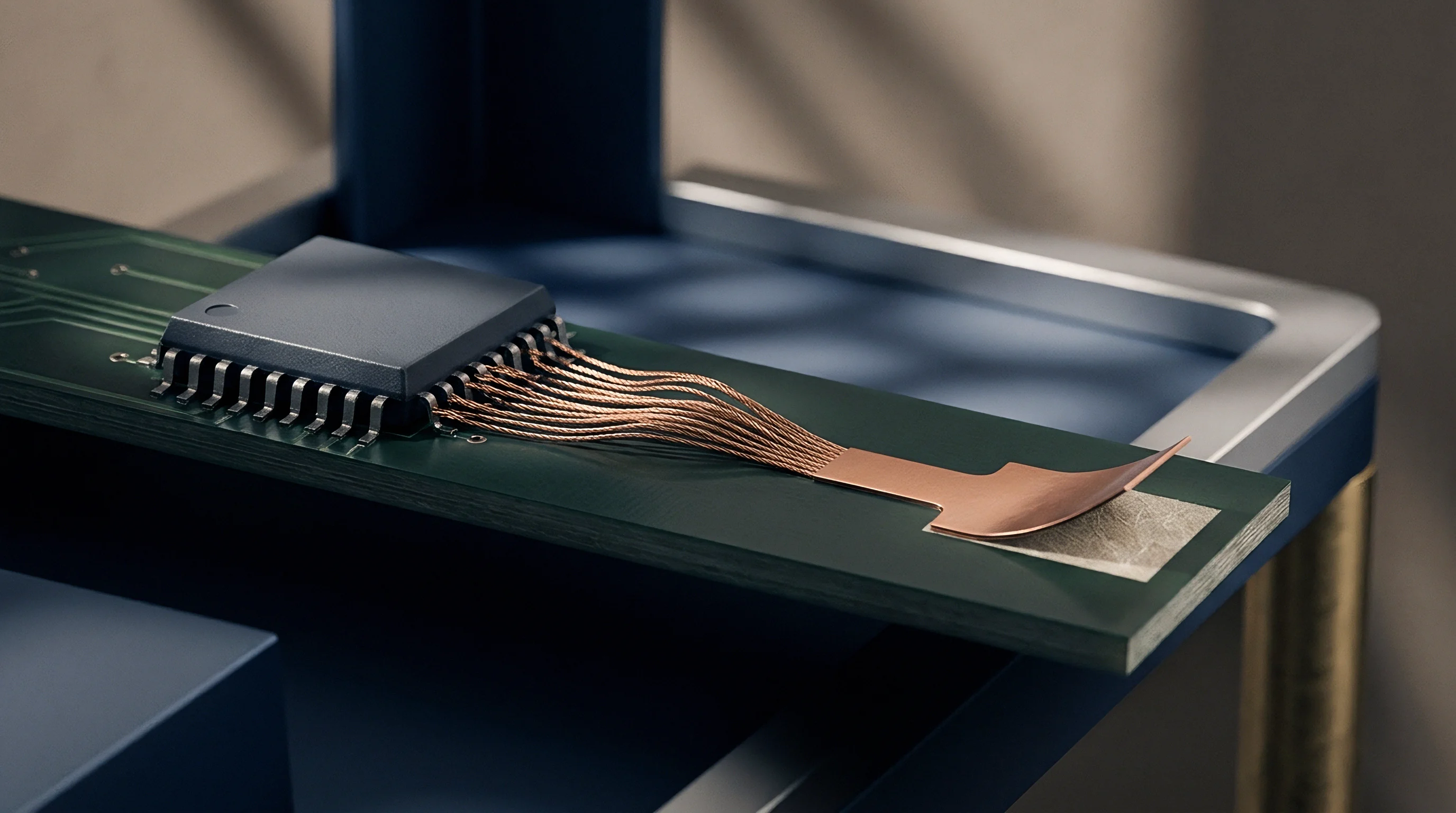
Statistical modeling translates bench breakdown measurements into batch acceptance criteria. Wide scatter in breakdown data occurs when solvent attack generates non-uniform microvoid distributions. Acceptance sampling plans demand rigorous guard banding to account for early breakdown tail risks.
Weibull Parameter Shifts under Solvent Attack
Failure distributions change predictably when environmental fluid exposure introduces structural defects. Two-parameter Weibull probability distributions model dielectric breakdown data across insulation lots. Unexposed polyimide exhibits a steep characteristic shape parameter beta between twelve and eighteen, indicating tight breakdown clustering around high mean values.
Solvent penetration lowers the Weibull scale parameter eta, shifting characteristic breakdown strength toward lower kilovolt limits. Simultaneously, shape parameter beta drops below three, widening dataset spread and elevating early failure probability. Lower beta values signal multi-mode failure mechanisms driven by microcracks, void formation, and variable solvent density profiles across production lots.
Guard Bands and Batch Lot Acceptance
Deriving lower tolerance limits prevents marginal insulation lots from reaching final assembly. Quality control protocols calculate lower one percent breakdown probability thresholds using Weibull fit parameters. If exposure drops characteristic strength values close to peak operating stress lines, inspectors reject the entire lot.
Guard bands prevent field escapes.
- Statistical Process Limits require tracking mean breakdown values alongside standard deviation shifts across solvent-washed coupons.
- Sample Size Calibration forces test counts up when shape parameter beta falls below five to hold statistical power steady.
- Thermal Recovery Auditing verifies that post-wash baking steps return dielectric breakdown distributions to baseline limits.
- Destructive Coupon Testing isolates lot-specific solvent susceptibility before populating high-cost active components onto flex circuits.
Citing standard IPC-2221 without specifying post-exposure bake duration leaves dielectric clearance claims legally undefended during humidity and solvent audit failures.
Ignoring solvent-induced Weibull tail shifts leads to premature field failures when surge transients trigger breakdown along low-strength insulation channels.
Conformity
Regulatory declarations demand comprehensive test evidence across all chemical exposure states. Technical dossiers supporting product compliance require validated proof that polyimide insulation retains rated electrical properties throughout manufacturing wash steps and operational exposures. Documentation must cover material declarations, safety testing, and environmental chemical restrictions.
Technical Dossier Requirements for High-Voltage Flex Assemblies
Documentation files for high-reliability circuits contain validated electrical withstand reports after solvent exposure. Standard declarations of conformity under European Low Voltage Directive 2014/35/EU demand verification of electrical creepage and clearance metrics under worst-case environmental conditions. Test evidence verifying dry unwashed polyimide performance fails to demonstrate conformity for assemblies subjected to solvent wash processes.
UL 746E qualification protocols evaluate industrial laminates under chemical exposure. Technical dossiers must document maximum permissible solvent exposure limits, validated cleaning chemistries, and minimum bake recovery schedules. Engineering change orders modifying cleaning chemistries require formal re-qualification of polyimide breakdown parameters to maintain UL certification validity.
| Quality Assurance Option | Test Hours per Batch | Screening Cost per 10k Units | Escaped Defect Rate | Warranty Risk Exposure |
|---|---|---|---|---|
| Unverified Clean (No Solvent Controls) | 0.0 | $0 | 2.40% | $480,000 |
| Visual Inspection + Basic Hi-Pot | 1.5 | $450 | 0.65% | $130,000 |
| Weibull Coupon Sampling + Post-Bake SIR | 12.0 | $2,800 | 0.02% | $4,000 |
| Full Qualification (IEC 60243 + NMP Audit) | 48.0 | $8,500 | 0.00% | $0 |
Regulatory Compliance and Material Declarations
Global directives restrict specific chemical compounds used in electronic manufacturing processes. REACH Annex XVII places strict usage limitations on N-Methyl-2-pyrrolidone due to reproductive toxicity concerns. Importers must track residual NMP content within polyimide flex layers to ensure concentration levels stay under zero point one percent by weight.
Compliance technical files require full chemical disclosure declarations from flexible laminate suppliers. Raw material specifications must identify polyimide imidization percentages, cross-linking density ranges, and synthetic precursor ratios. Verification dossiers verify that substitute cleaning solvents meet chemical restrictions while preserving dielectric strength limits across production batches.
Residual cleaning solvents inside sealed flex-rigid enclosures continuously degrade polyimide breakdown strength over months of thermal cycling.
Establishing traceable lot verification logs connects factory solvent controls directly to field warranty reserves and international declaration filings.