Mechanical Fatigue
Interconnect durability in grid array assemblies represents the structural capacity of spherical solder connections to withstand environmental and operating stresses without electrical separation. To evaluate bga solder joint reliability, assemblies undergo accelerated thermal cycling to simulate the thermal stresses of repeated power cycles. This testing determines the number of cycles to failure under defined temperature limits.
Stress Distribution
Differential expansion across the package assembly generates localized stresses that accumulate during operational cycles. The resulting deformation concentrates at the boundary between the solder and the copper pad, where fragile intermetallic bonds are vulnerable to fracture. Under constant thermal swings, the ductile tin matrix undergoes creep, leading to grain coarsening and subsequent microvoid formation.
These voids coalesce to form cracks that propagate under mechanical load or continued thermal strain, eventually resulting in an open circuit. Stiff epoxy underfills are frequently applied to distribute these loads away from the solder balls and onto the package body.
Failure Verification
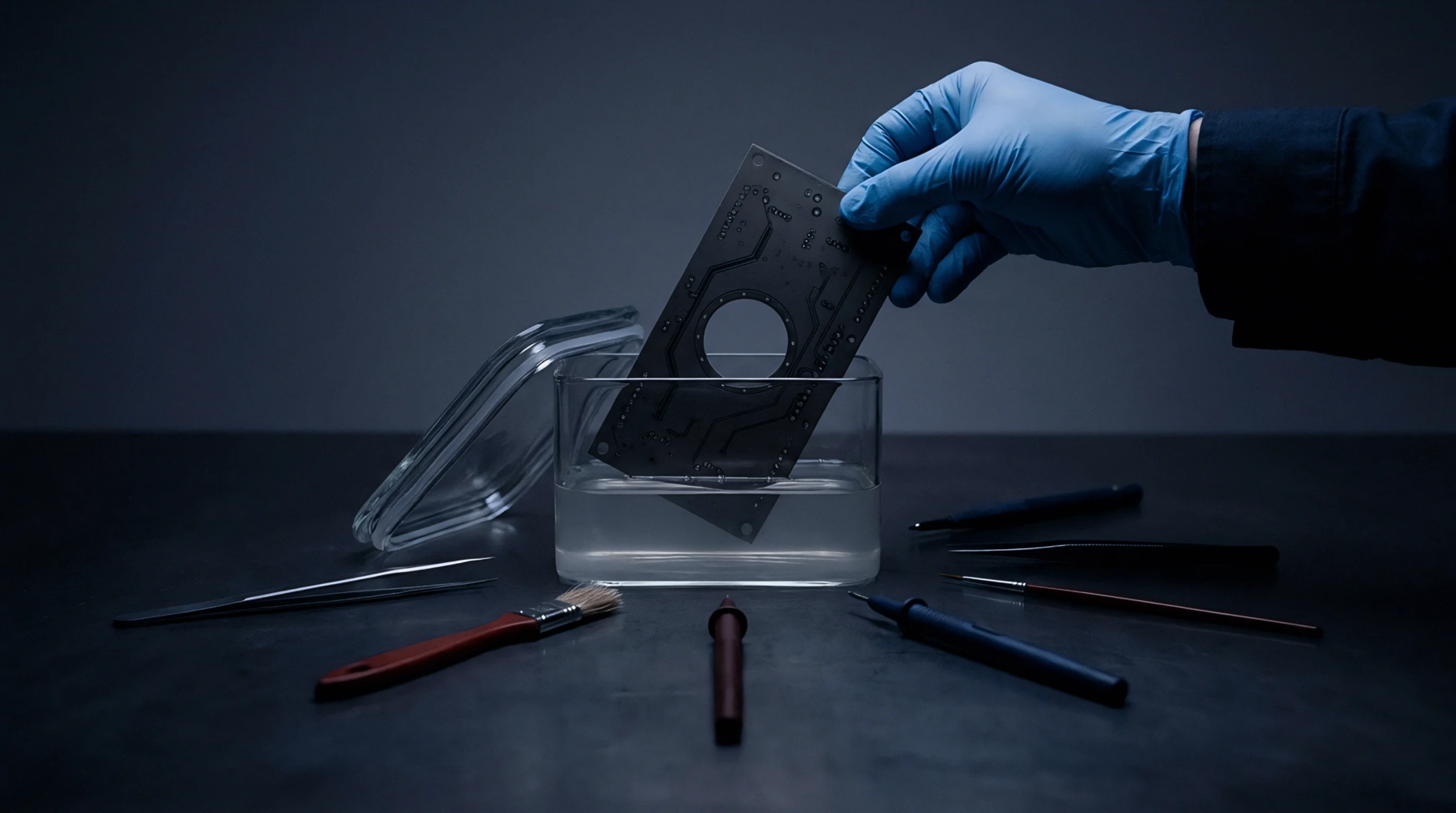
Inspection techniques for area-array solder integrity combine non-destructive and destructive analysis to verify manufacturing quality. Dye-and-pry testing exposes microcracking across the entire array, while cross-sectional microscopy allows the examination of intermetallic layers at high resolution. Automated X-ray inspection provides rapid screening for voiding and complete opens on the production line.
These testing methods establish the baseline for long-term product viability in field applications.