
Optimizing Prepreg Rheology for High Density Microvia Filling Performance
Optimize prepreg rheology for microvias by matching press heating rates to low-viscosity flow windows and maintaining resin content above sixty-five percent.
Optimize prepreg rheology for microvias by matching press heating rates to low-viscosity flow windows and maintaining resin content above sixty-five percent.
Acoustic phase inversion at 230 MHz confirms sub-micron microvia target pad separation after reflow stress, isolating latent defects standard Kelvin tests miss.
Empirical blind microvia thermal fatigue models use modified Coffin-Manson equations to correlate CTE strain mismatch with cyclic interconnect survival.
Chemical desmear for semi-additive packaging balances sub-180 nm surface roughness with via cleaning to prevent high-frequency loss and flash-etch undercut.
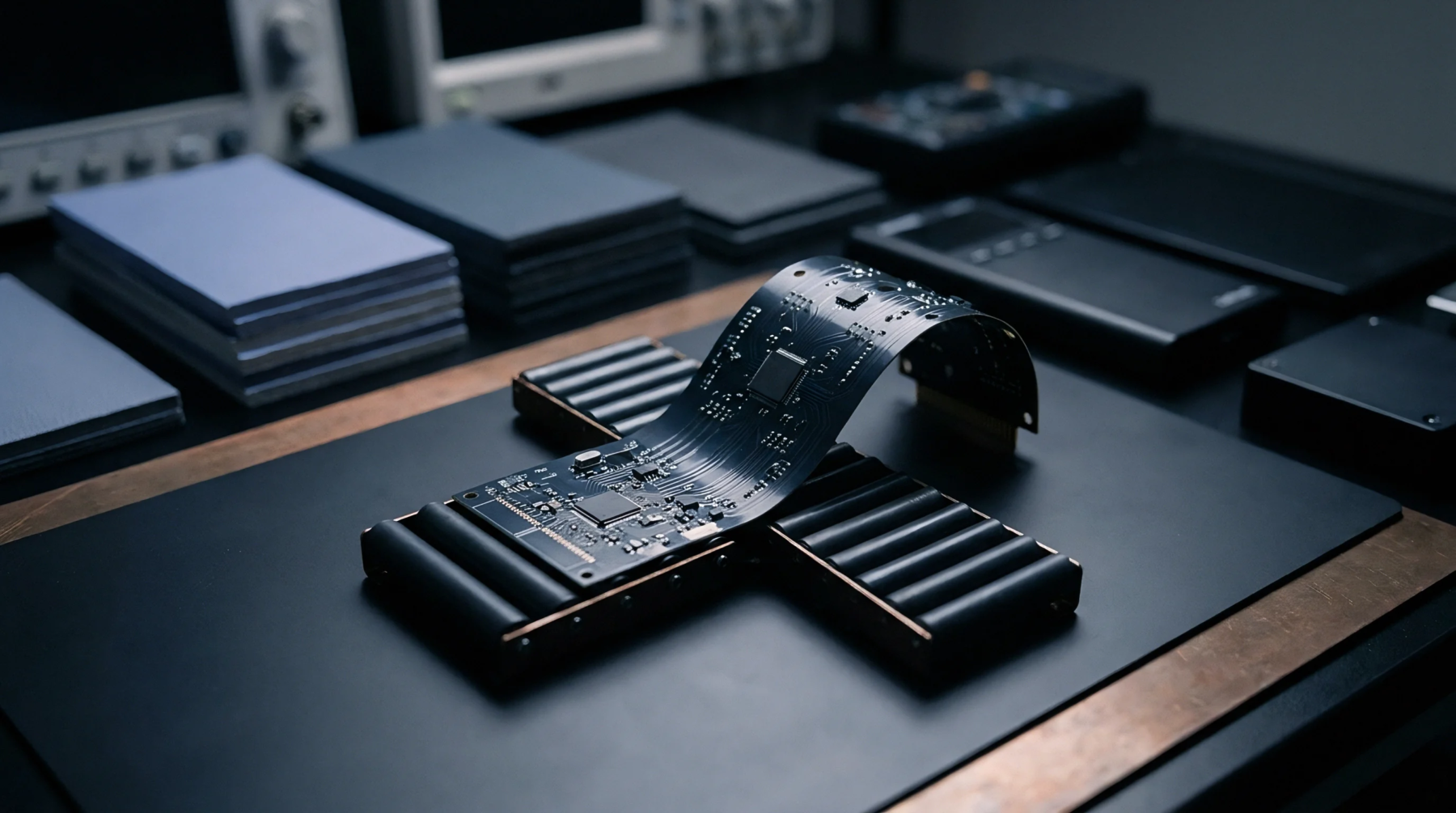
Acoustic phase-inversion scanning detects latent interlaminar delamination in HDI circuits before thermal reflow turns unbonded interfaces into open circuits.
Statistical registration stacking balances drill wander and core movement, defining annular ring limits that protect Class 3 reliability and production yield.
Expertise is a utility, not a secret. sentiention™ publishes its working knowledge as open reference: intelligence layer covering the materials it sources, the markets it enters, and the reference that serves both.