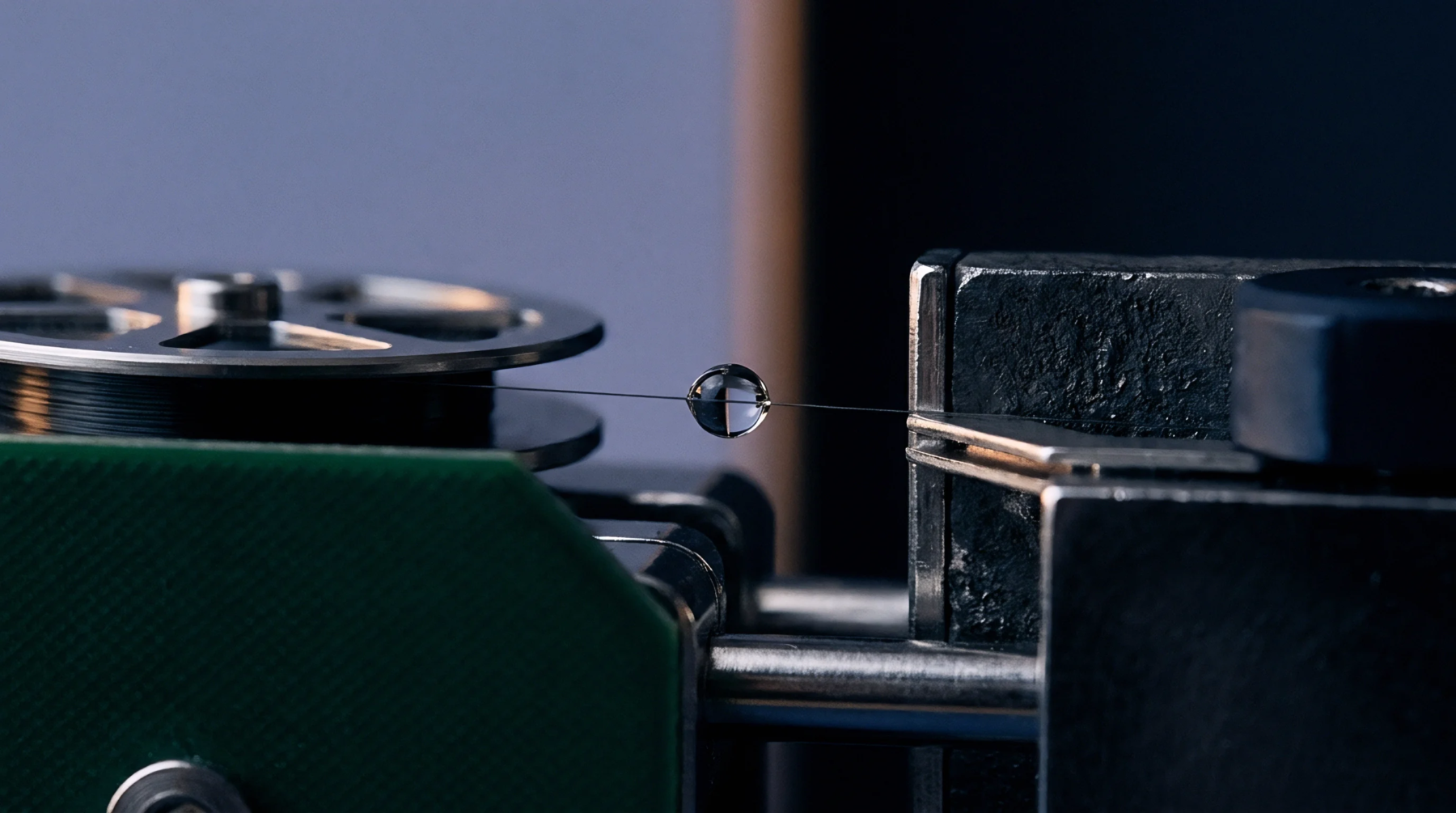
Tensile Evaluation
Destructive mechanical testing against standardized force thresholds evaluates the tensile strength of individual solder spheres attached to circuit substrate pads. Performing a cold bump pull test applies vertical lifting force to a solder ball at ambient room temperature until mechanical separation occurs. The procedure measures peak force and categorizes the physical failure mode of the interconnect.
Fabricators record breaking force values to verify surface finish integrity and pad metallization adhesion.
Failure Kinematics
Specially designed jaw jaws clamp around the solder bump profile before pulling vertically at a set speed. Executing a cold bump pull test reveals whether the failure occurred within the bulk solder, at the pad intermetallic layer, or through substrate pad cratering. Ductile solder tearing demonstrates healthy intermetallic bonding, while clean interfacial detachment indicates surface contamination or plating defects.
Automated test equipment plots force displacement curves to detect brittle failure initiation. Processing results across multiple package arrays isolates weak pad plating batches prior to final component integration.
Test Boundary
Ambient temperature testing does not replicate thermal strain experienced during elevated operating conditions. Soft lead-free alloys exhibit higher yield strength at room temperature than at operational limits. High-temperature pull testing remains necessary to evaluate elevated thermal performance.