Chemical Consumption
Gravimetric loss per unit surface area over a timed chemical exposure defines the removal velocity of drill-softened dielectric polymer from blind and through-hole circuit vias. Operating inside the wet processing line of printed circuit board fabrication, desmear etch rate governs how aggressively an alkaline permanganate or plasma cycle clears resin residue from exposed inner-layer copper landing pads. Insufficient material clearance leaves dielectric smear that coats the copper interface, causing open circuits or high interfacial resistance following electroless deposition.
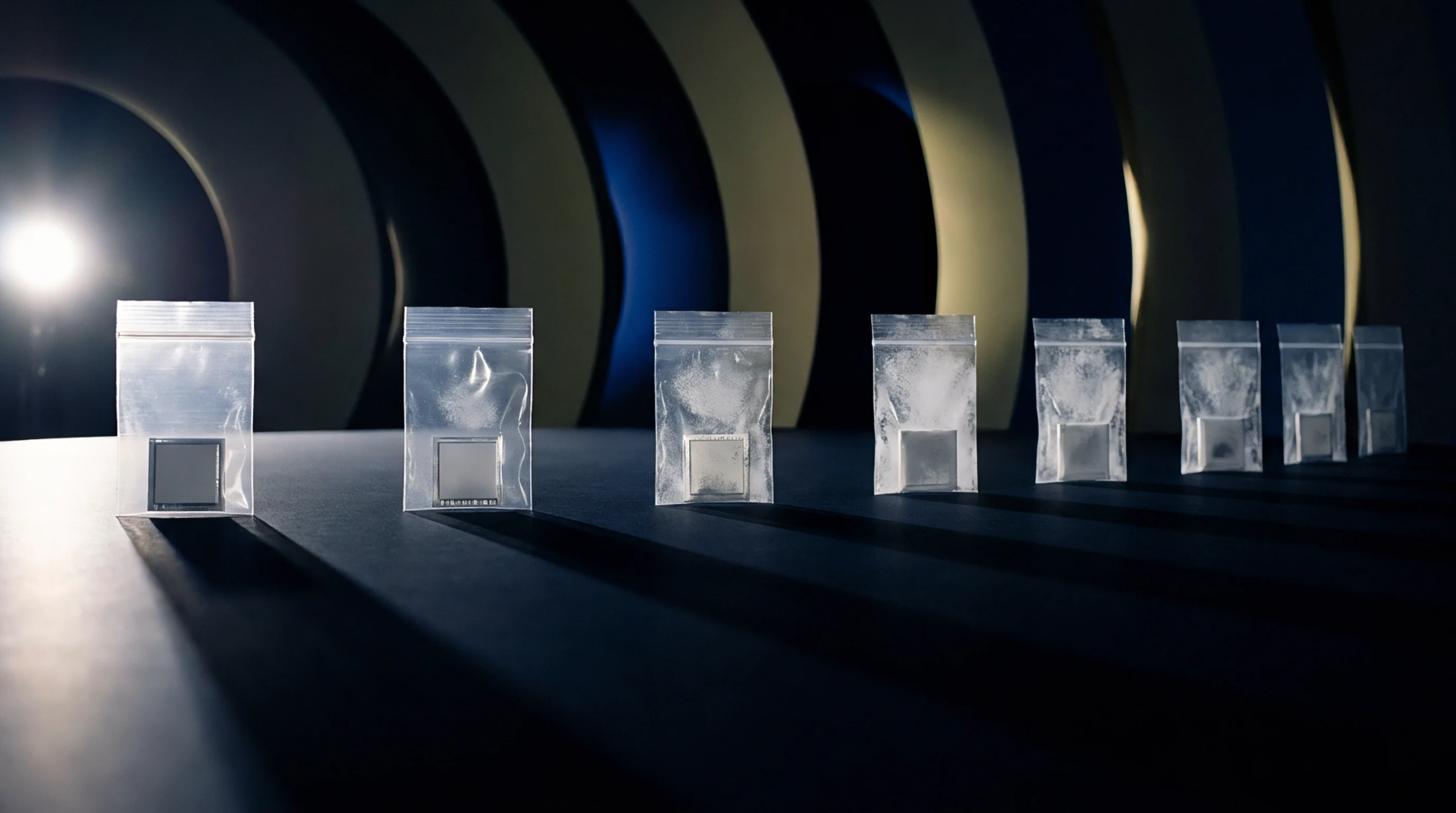
Excessive chemical activity creates excessive hole wall topography, dielectric wedge voids and glass fiber pull-out. Chemical laboratories determine this removal velocity through test coupons weighed before and after immersion, with values typically reported in milligrams per square decimeter or micrometers of planar resin depth removed.
Permanganate Control
Active oxidizer concentration dictates the bath kinetics alongside operating temperature and sodium hydroxide alkalinity. When the desmear etch rate slows below target specifications, the permanganate bath fails to expose sufficient inner-layer copper surface area or yield the micro-roughened topography required for electroless copper adhesion. Regeneration systems restore manganate back to permanganate electrochemically, preventing sluggish etching without dumping the solution.
Solution stagnation or depleted swelling agents yield uneven clearing across high-aspect-ratio holes. Verification requires vertical microsection inspection under optical microscopy to confirm clean copper post contact across every inner layer.
Process Limitation
Substrate chemistry sets the ceiling for resin dissolution across mixed-dielectric constructions. High-speed hydrocarbon or PTFE laminates respond poorly to standard alkaline chemistries, rendering permanganate velocity measurements meaningless for those layers. Plasma etching substitutes gas-phase oxidation, requiring distinct weight-loss coupons and alternative cycle timers.
Excessive dwell times degrade the adhesion of the barrel metallization by creating deep voids behind broken glass filaments. The metric applies strictly to resin removal on hole walls prior to electroless copper seeding and has no bearing on copper foil etching or surface finish preservation.