Metrological Topology
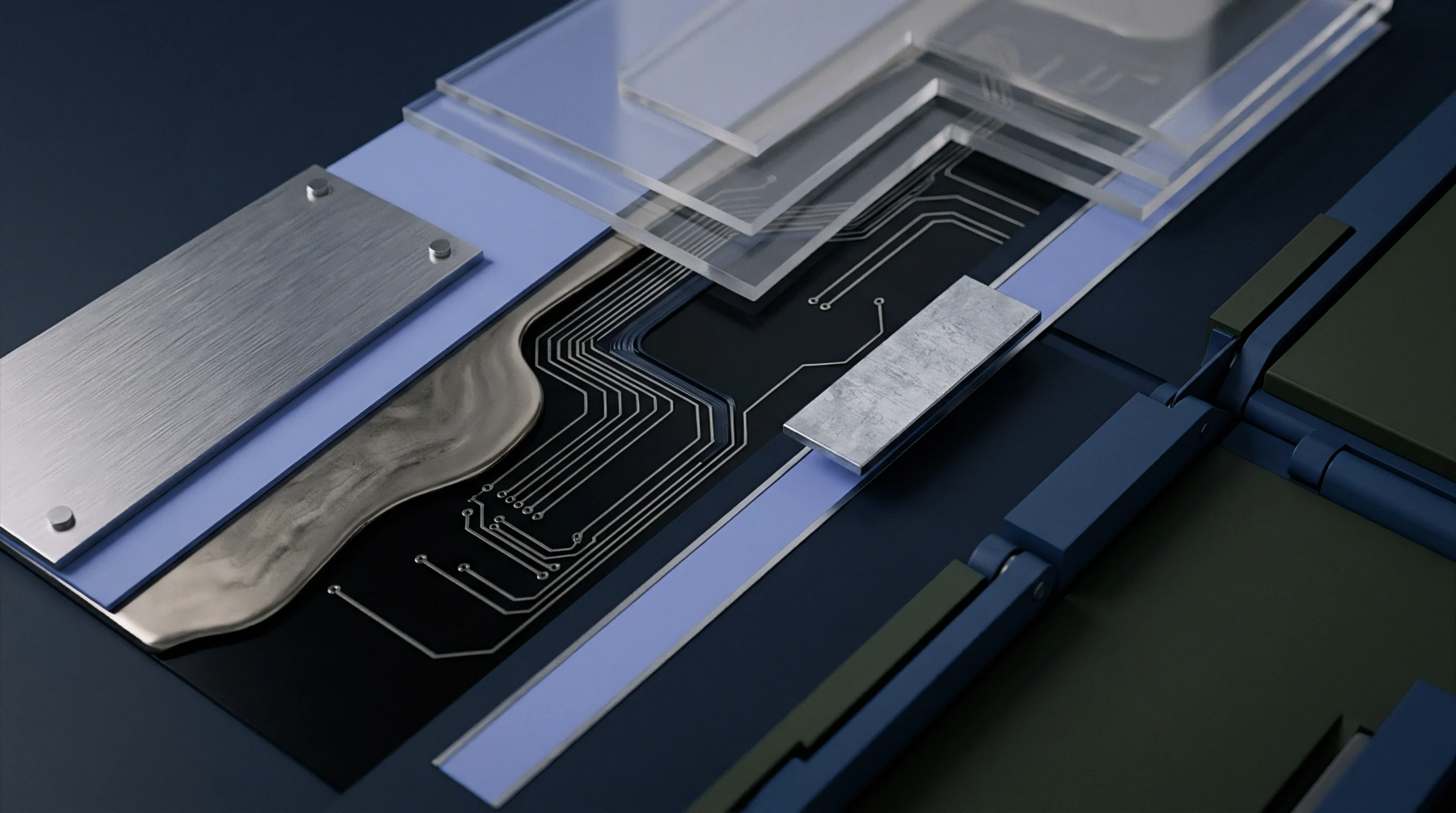
Four-wire kelvin monitoring operates as an advanced resistance measurement technique deployed during printed circuit board fabrication to eliminate parasitic lead resistance errors from low-value trace evaluations. External source connections drive a known test current through the copper feature while separate internal sense connections measure the resulting voltage drop directly across the target span. High input impedance voltmeters draw negligible current through the sense lines, rendering wire length and contact resistance entirely irrelevant to the arithmetic result.
Manufacturing facilities apply this method to verify internal plane continuity and extreme low-ohm shunt resistors before component attachment begins. Operators deploy the setup during bare board electrical testing to catch trace neckdowns and micro-cracks that standard two-wire meters misread due to probe tip contact instability.
Thermal Drift
Copper resistance varies linearly with ambient temperature shifts, introducing substantial measurement error during high-precision verification unless compensated by internal bridge algorithms or controlled environmental chambers. Self-heating from the test current itself changes the resistivity of thin traces during prolonged connection cycles, distorting low-ohm readings on high-density interconnects. Thermal EMF voltages generated at dissimilar metal junctions between copper planes and steel test pins add unwanted offsets that obscure true milliohm values.
Automated test equipment subtracts these thermoelectric voltages by reversing polarity during the measurement cycle and averaging the paired results before reporting final pass thresholds.
Assembly Calibration
Surface mount placement machines and reflow ovens impose mechanical stress and thermal shock on finished printed circuit boards, altering the initial resistance values established during bare board screening. Final functional test fixtures utilize spring-loaded Kelvin pins to contact gold-plated test pads, verifying that solder joints maintain adequate conductivity under operational loads. Production lines reject assemblies exhibiting high contact impedance at power delivery network connections, preventing catastrophic field failures caused by marginal solder wetting.
Calibration standards require periodic verification against traceable shunt resistors to maintain measurement accuracy across high-volume electronics manufacturing operations.