Electrical Deviation
Local fluctuations of the relative permittivity across a printed circuit board substrate impact the characteristic impedance of transmission lines. Minimizing dielectric constant variance is necessary for maintaining signal integrity in high-frequency applications. This parameter is influenced by the heterogeneous nature of the glass-resin composite.
It determines how much the signal speed deviates from the design target.
Physical Influence
The distribution of glass fibers and resin pockets creates localized zones with different electrical properties. Factors contributing to dielectric constant variance include resin content fluctuations and glass weave patterns. A signal traveling over a glass bundle sees a higher permittivity than a signal traveling over a resin-rich area.
This mismatch leads to phase distortion and increased jitter in high-speed digital links.
Mitigation
Specifying spread-glass fabrics or using multiple plies of thin prepreg helps smooth out the permittivity profile. Regular dielectric constant variance can be further reduced by rotating the signal traces relative to the material grain. Advanced laminates with lower resin-to-glass ratios or filled resin systems offer more stability.
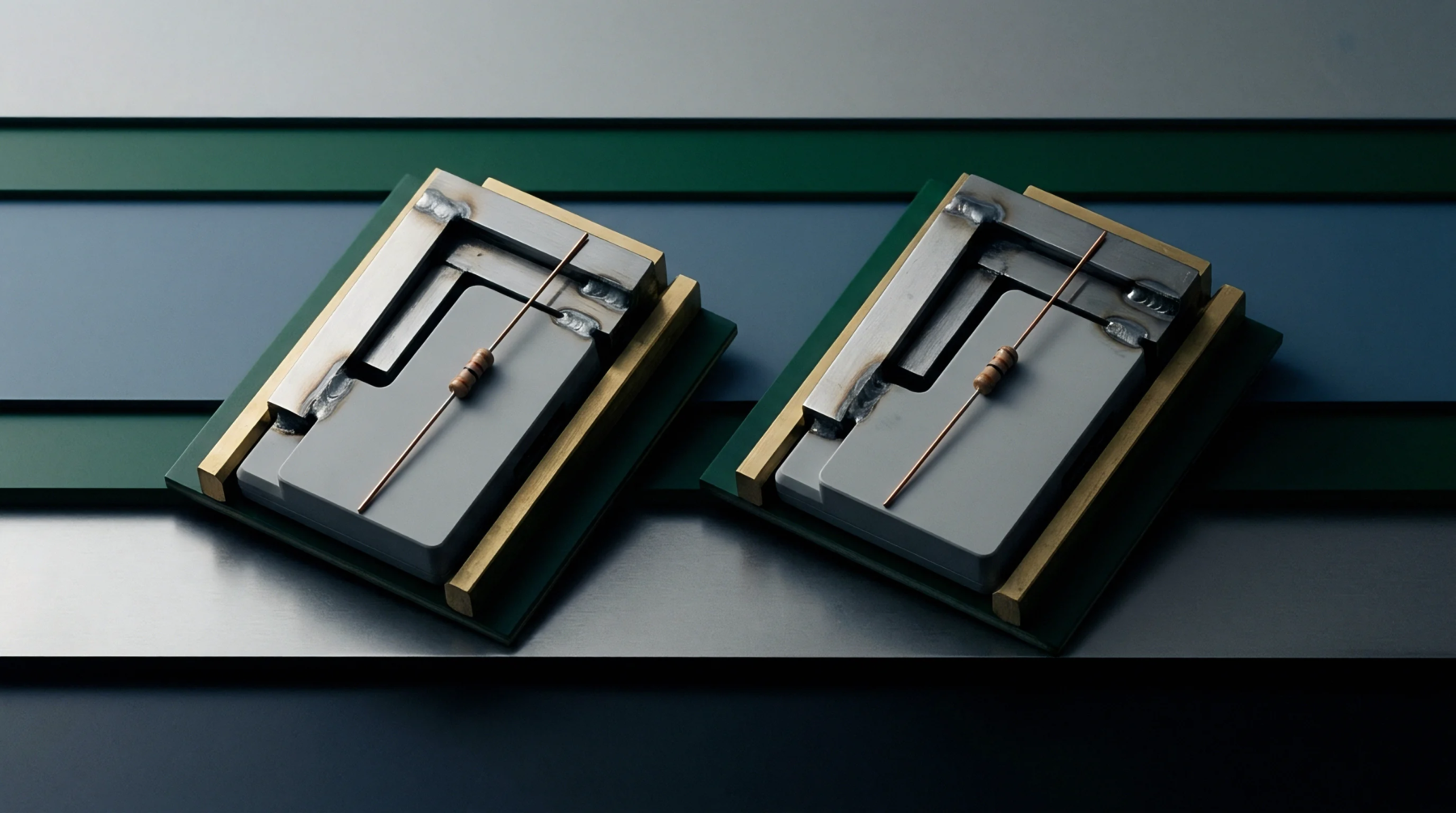
Test coupons like the spp or set2dil are used to measure these variations across a production lot. Reliable high-speed performance depends on the predictability of the substrate. Automated measurement systems provide the data required to verify that the manufactured lot meets the electrical specifications.